

![Della Porta, Giambattista [Ioh. Baptistae Portae Neapolitani]: Magiae Naturalis libri viginti. [Lugd. Batavorum, 1651. Apud Petrum Leffen.]](https://kozpontiantikvarium.hu/sites/default/files/2026-05/magiaenaturalis_cimlap.jpg "Della Porta, Giambattista [Ioh. Baptistae Portae Neapolitani]: Magiae Naturalis libri viginti. [Lugd. Batavorum, 1651. Apud Petrum Leffen.]")
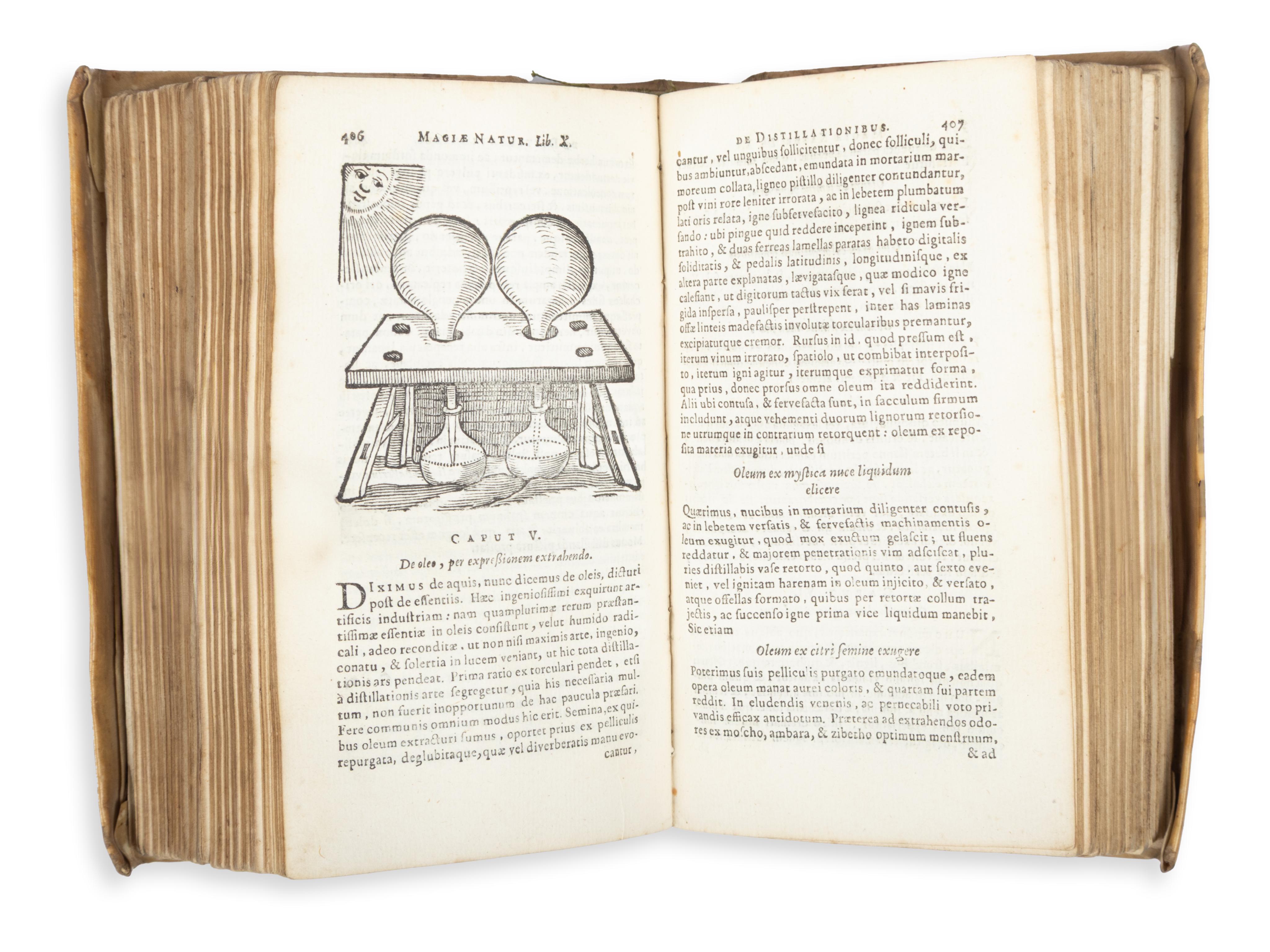
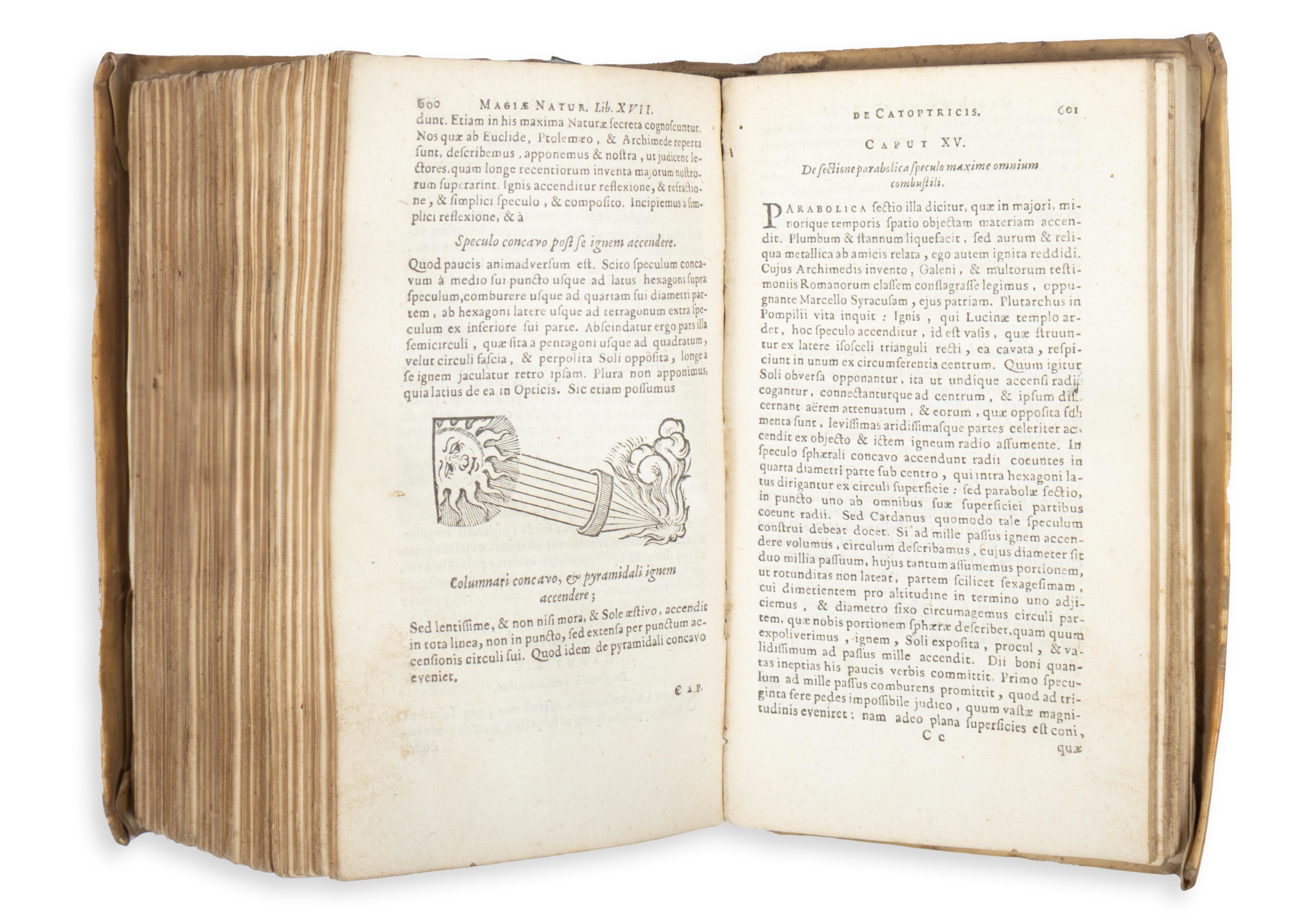
Magiae Naturalis libri viginti.
[Lugd. Batavorum, 1651. Apud Petrum Leffen.]1t. rézmetszetű díszcímlap + [XIV] + 670p. + [XXII]. A főcímlap és az utolsó üres levél hiányzik.
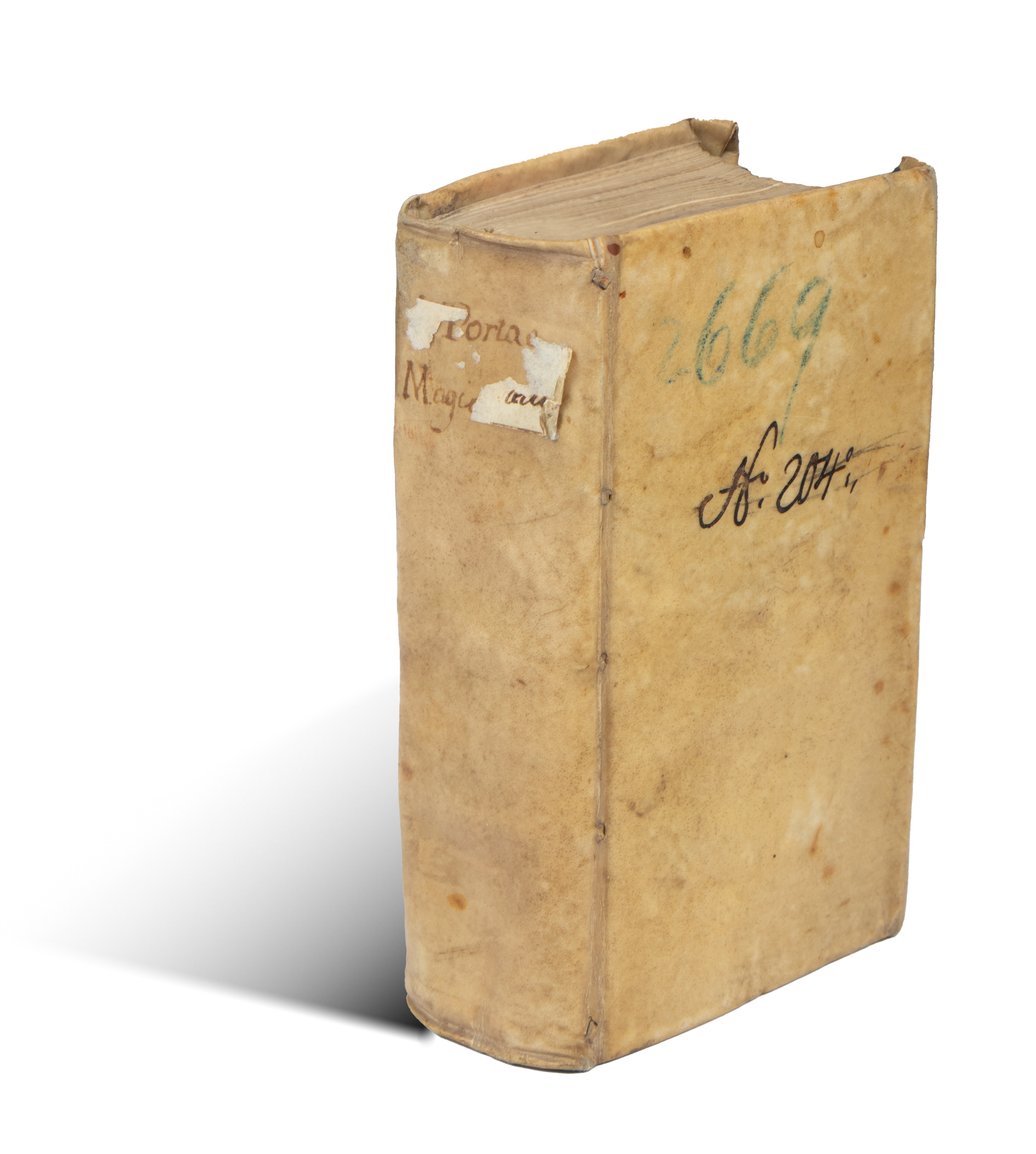
Kiegészítő rézmetszetű címlap 1650-es évszámmal, XVII. századi, tintás poss. bejegyzésekkel; ajánlólevél és előszó; a kötet végén tárgymutató. Philippe de Croy nyomdászjelvénye az utolsó mutatóoldalon. Számos szövegközti fametszetű illusztrációval és táblázattal, valamint minden fejezet elején virágmotívumos iniciálékkal. Rendkívül tiszta példány, korabeli pergamenkötésben, gerincén tintás címfelirat és vignetta nyoma. Első kötéstábla belsején régi poss. bejegyzés. A szövegben helyenként tintás aláhúzások.
Giambattista della Porta (1535–1615) olasz filozófus, alkimista, komédiaíró, tudós és polihisztor volt. Számos művet írt az emlékezetről, az arcvonástanról (fiziognómiáról), a filozófiáról és a mágiáról. A Magiae Naturalis eredetileg négy könyvből állt, és először 1558-ban adták ki, 1589-ben aztán húsz könyvre bővítették. A mű Európa-szerte népszerű volt, és korabeli modern európai nyelvekre is lefordították (olaszra, franciára, hollandra és angolra).
A mű olyan témákkal foglalkozik, mint a népszerű tudományok, kozmológia, geológia, optika, növényi termékek, orvoslás, mérgek, főzés, alkímia, lepárlás, üvegfestés, mázak és kerámiák, mágneses tulajdonságok, kozmetikumok, puskapor és kriptográfia. Giambattista della Porta egyaránt merít ókori szerzők – mint Arisztotelész és Theophrasztosz – munkáiból, valamint a mágiával és tudománnyal foglalkozó kortárs művekből, azonban kerüli a vallás és a ceremoniális mágia tárgyalását. Porta megvédi a természetes mágiát – megkülönböztetve azt az általa démonológiai eredetűnek tartott babonaságtól –, kutatási területét a filozófiára is kiterjesztve, abban a reményben, hogy azt a gyakorlatba is átültetheti. Porta számára a mágia nem az önfejlesztés és az istenivel való kommunikáció eszköze volt, hanem egy módja annak, hogy ravasz trükkökkel manipulálja mind az embereket, mind a dolgokat. A természetmágust Porta egyfajta trükkös mesterként írja le, aki rendelkezik az alkimista tapasztalatával, a humanista műveltségével, valamint kiemelkedően ért a matematikához és az asztrológiához. Porta szerint – amint az a Magiae Naturalis első könyvének második fejezetében (Quid fit Magia) olvasható – a mágusnak gazdagnak, jól képzettnek és szorgalmasnak kell lennie. Ebben a műben kapcsolódási pontokat is találhatunk Agrippa von Nettesheim De occulta philosophia című munkájával.
A kötet a XVIII. század óta magyar használatban volt, izgalmas magyar possessorokkal. Utolsó bejegyzés Skublics Károlytól.
Ferguson, II, 216. Duveen 481. Caillet 8852.
Additional engraved title page, dated 1650 with small handwritten inscriptions of previous owner; dedicatory letter and preface; index at the end of the volume. Printer s device of Philippe de Croy on final index page. Roman letters, in Latin. Numerous woodcut illustrations and tables in the text and floriated initials at the beginning of each book.
A fine and very clean copy in contemporary full vellum bidning. In contemporary vellum binding, with traces of an ink title and a label on the spine. Old poss. inscription on the front pastedown. Occasional ink underlining in the text.
Giambattista della Porta (1535 1615) was an Italian philosopher, alchemist, comedy writer, scientist and polymath. He was the author of a number of works on memory, physiognomy, philosophy and magic. The Magiae Naturalis, or Natural Magic, was originally composed of four books and it was first published in 1558. It was then expanded to twenty books in 1589. The work was popular in Europe and it was translated in modern European languages (Italian, French, Dutch and English). The work deals with popular science, cosmology, geology, optics, plant products, medicine, poisons, cooking, alchemy, distillation, glass colouring, glazes and ceramics, magnetic properties, cosmetics, gunpowder and cryptography. Giambattista della Porta draws both on the works of Ancient authors, such as Aristotle and Theophrastus, and contemporary works on magic and science but avoids discussing religion and ceremonial magic. Porta defends natural magic, distinguishing it from the superstitious he deems of demonological origin, by extending its field of investigation to philosophy, hoping to translate it into action. For Porta, magic was not a way to improve one s self and to communicate with the divine, but a means to manipulate both men and things with crafty tricks. The natural magus is described by Porta as a trickster with the experience of the alchemist, with the education of a humanist and with a strong command of mathematics and astrology. According to Porta, as outlined in the second chapter of the first book of the Magiae Naturalis (Quid fit Magia) the magus must be rich, well-educated and hard working. In this work, we find points of contact with Agrippa von Nettesheim's De occulta philosophia.
Bibliography: Ferguson, II, 216. Duveen 481. Caillet 8852.