

![Dictys, Cretensis – Dares, Phrygius – Libanius: Dictys Cretensis De bello Troiano libri VI. Q. Septimio Romano interprete. Daretis Phrygii De excidio Troiae liber, interprete Cornelio Nepote. Declamationes Tres eiusdem ferè argumenti, prima Libanii Sophistae reliquae incerti autoris ab Erasmo Roterodamo, latio donatae. Basileae, 1529. [Andreas Cratander].](https://kozpontiantikvarium.hu/sites/default/files/2026-06/dictys_cimlap.jpg "Dictys, Cretensis – Dares, Phrygius – Libanius: Dictys Cretensis De bello Troiano libri VI. Q. Septimio Romano interprete. Daretis Phrygii De excidio Troiae liber, interprete Cornelio Nepote. Declamationes Tres eiusdem ferè argumenti, prima Libanii Sophistae reliquae incerti autoris ab Erasmo Roterodamo, latio donatae. Basileae, 1529. [Andreas Cratander].")
Dictys Cretensis De bello Troiano libri VI. Q. Septimio Romano interprete. Daretis Phrygii De excidio Troiae liber, interprete Cornelio Nepote. Declamationes Tres eiusdem ferè argumenti, prima Libanii Sophistae reliquae incerti autoris ab Erasmo Roterodamo, latio donatae.
Basileae, 1529. [Andreas Cratander].106 fol. AA6 B-N8 O4. 8° (17 x 11 cm.)
Dictys Cretensis (Krétai Diktüsz) Idomeneusz legendás társa volt a trójai háború alatt, egyben egy, az eseményeket megörökítő napló feltételezett szerzője, amely ugyanazon anyagok egy részét használta fel, mint amelyeket Homérosz is feldolgozott az Iliászban. A napló történetét – amely egy tájékozott alexandriai közönségnek szánt szórakoztató fikció volt – a késő ókorban kezdték történelmi tényként kezelni. A Kr. u. 4. században egy bizonyos Q. Septimius hat könyvben adta ki a Dictys Cretensis Ephemeris belli Trojani című munkát, amely állítása szerint a görög eredeti latin fordítása volt. A mű legfőbb jelentősége abban rejlik, hogy – amint a görög nyelv ismerete hanyatlásnak indult, majd eltűnt Nyugat-Európában – ez a munka, valamint Dares Phrygius De excidio Trojae című írása szolgáltak azon forrásokként, amelyeken keresztül a homéroszi legendák átöröklődtek a középkori lovagregényekbe és románc-irodalomba. Az első nyomtatott kiadás igen korai, legkésőbb 1471-ben megjelent. A modern kutatók között sokáig vita tárgyát képezte, hogy valóban létezett-e egyáltalán görög eredeti. Minden ezzel kapcsolatos kétséget eloszlatott azonban egy görög nyelvű töredék felfedezése a Tebtünisz-papiruszok között.
Dares Phrygius Homérosz szerint Héphaisztosz trójai papja volt. Később úgy tartották, hogy ő írt egy beszámolót Trója pusztulásáról. Jelen latin nyelvű kötet, állítólag ezen írás fordításaként készült, mely rendkívül sokat olvastak a középkorban. A munkát akkoriban Cornelius Neposnak tulajdonították, aki a szöveg szerint Sallustiusnak ajánlotta azt; nyelvezete azonban egy Nepos koránál jóval későbbi időszakhoz (valószínűleg a Kr. u. 5. századhoz) sokkal jobban illik. Mindkét mű a középkorban igen sokakra hatott és a későbbi trójai történetek és históriák forrásává vált. Az szöveg első kritikai kiadása: Meister Ferdinand - Daretis Phrygii de excidio Troiae historia címmel adta ki Lipcsében 1873-ban.
A kötet végén Rotterdami Erasmus közlése és fordítása nyomán Libanus (Kr. u. kb. 314–393) szofista egy, illetve két ismertlen szerzőjű szónoklatot tartalmaz.
A mű elején a kötet szerkesztőjéhez, a humanista tudós Franciscus Faragoniushoz szóló bevezető, aki már 1498-ban szerkesztette e mű egy kivonatos változatát:Historia Troiana. Tr: Lucius Septimius. Ed: Franciscus Faragonius. Messina, Guilelmus Schonberger,1498.
A címlapon katolikus monostórium könyvtári bejegyzése 1693 évszámmal és névvel, a verzón kivakart pecséttel, pici hiánnyal. A hátsó tábla verzóján 1545-ös évszámmal. Pár levélen fametszetes iniciálé, korabeli tintás aláhúzás és rövid bejegyzés. Utolsó levélen fametszetes nyomdászjelvény.
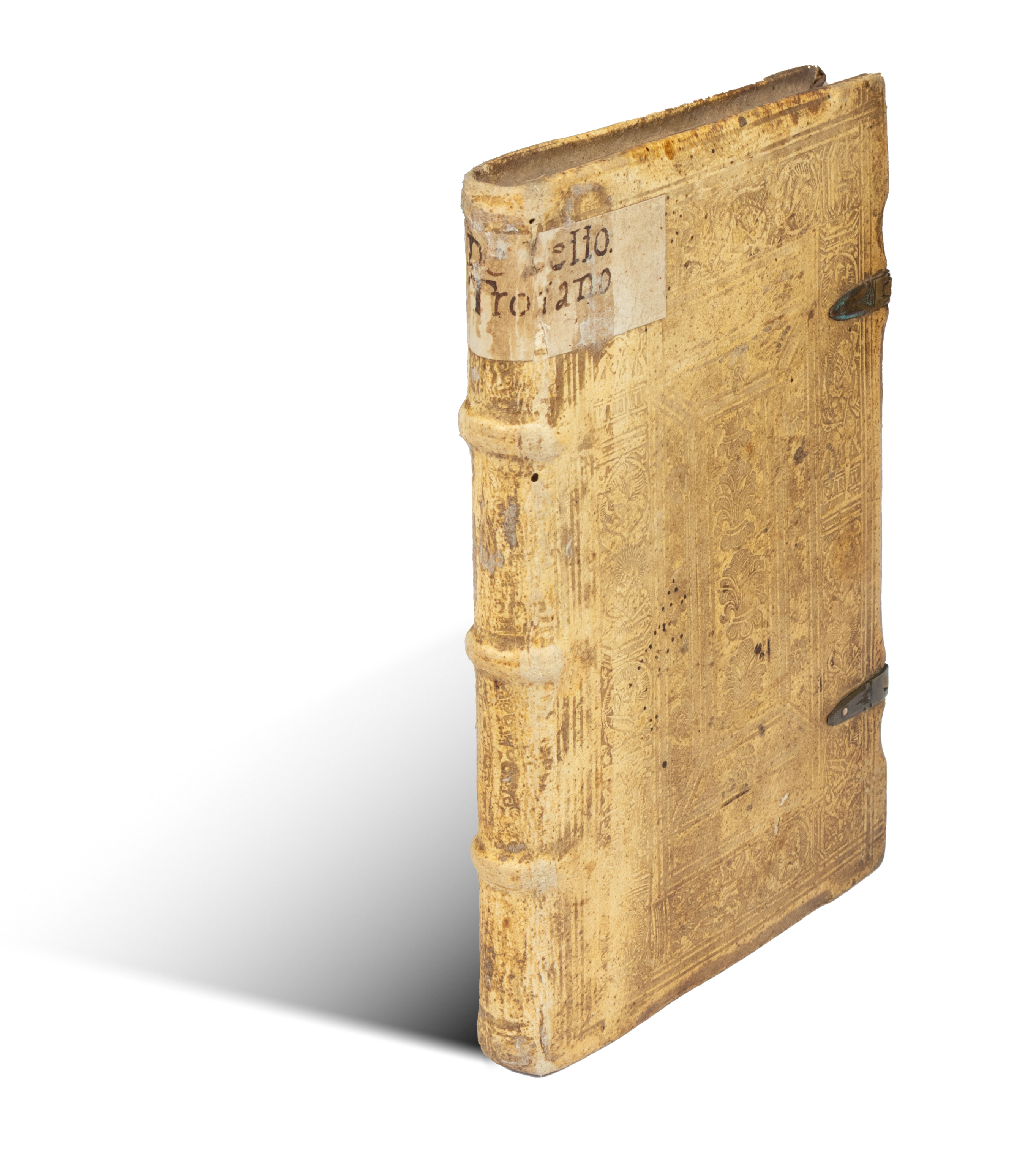
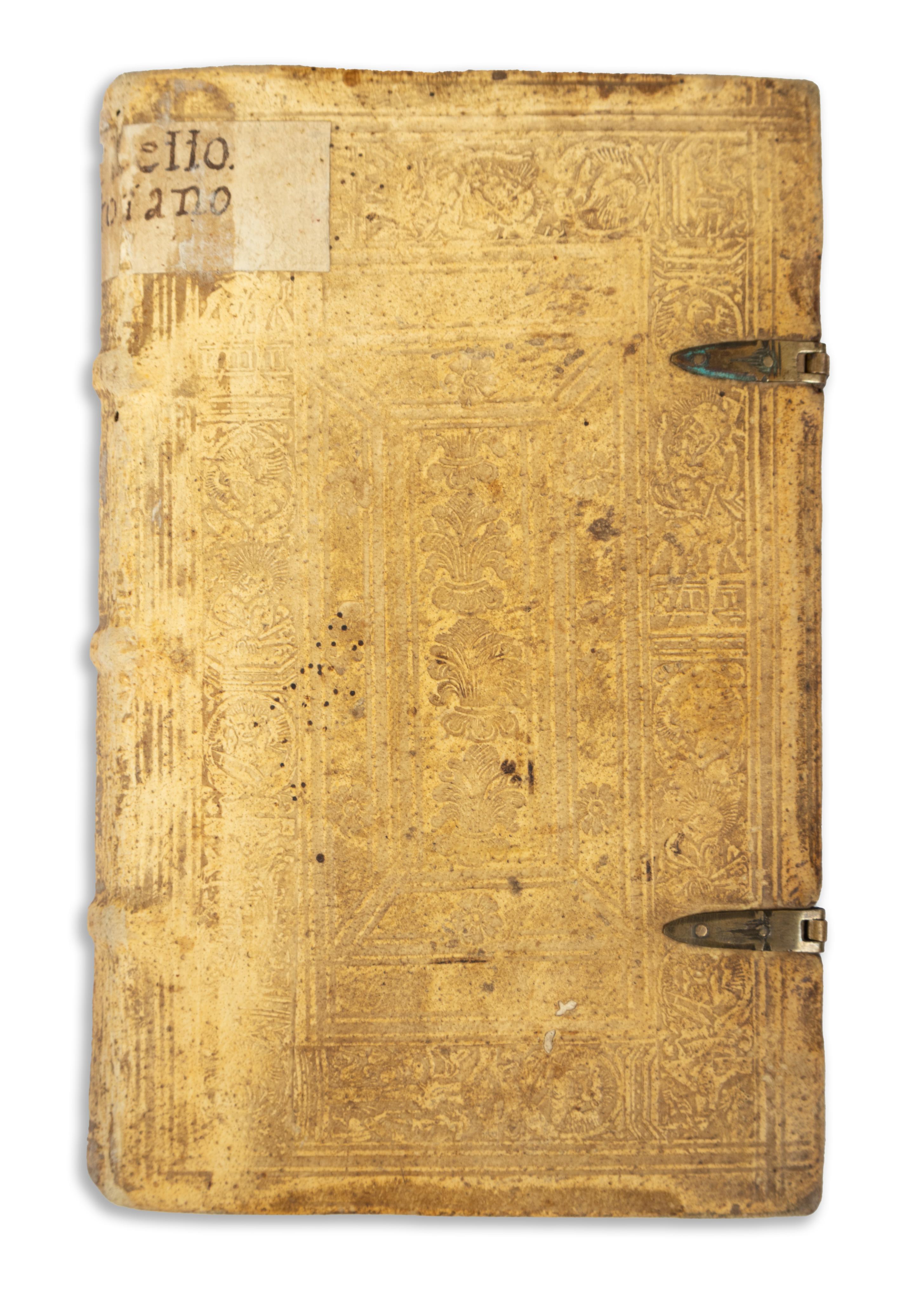
Korabeli, bordázott gerincű, préselt és vaknyomásos mintákkal gazdagon díszített egész pergamenkötésben, a gerincen felragasztott papírcímkével, két jól záródó bőrszíjas rézcsattal. Elől és hátul a táblák és a gerinc találkozásánál apró szújárat. Széles margójú, stabil kötésű, ritka munka tiszta levelekkel és szép állapotban.
USTC No. 636376; VD16: D 1407; BV011418993
Dares Phrygius, according to Homer, was a Trojan priest of Hephaestus. It was later believed that he wrote an account of the destruction of Troy. The present Latin-language volume was ostensibly produced as a translation of this writing, which was read extensively in the Middle Ages. At the time, the work was attributed to Cornelius Nepos, who, according to the text, dedicated it to Sallust; its language, however, fits much better with a period significantly later than Nepos's era (probably the 5th century AD). Both works influenced many in the Middle Ages and became the source for later Trojan stories and histories.
At the end of the volume, featuring the publication and translation by Erasmus of Rotterdam, the book contains one declamation by the sophist Libanius (c. 314–393 AD) and two by an unknown author.
At the beginning of the work is an introduction addressed to the volume's editor, the humanist scholar Franciscus Faragonius, who had already edited an abridged version of this work in 1498: Historia Troiana. Tr: Lucius Septimius. Ed: Franciscus Faragonius. Messina, Guilelmus Schonberger, 1498.
On the title page, there is a library inscription from a Catholic monastery with the year 1693 and a name; on the verso, there is an erased stamp with a tiny loss of paper. On the inside of the rear board, the year 1545 is inscribed. There are woodcut initials on a few leaves, along with contemporary ink underlining and short annotations. A woodcut printer's device is present on the final leaf.
Bound in a contemporary full parchment (vellum) binding with raised bands, richly decorated with pressed and blind-tooled patterns, an affixed paper label on the spine, and two well-closing brass clasps on leather straps. There are tiny wormholes at the hinges where the boards meet the spine, both at the front and the rear. A rare work with wide margins, a firm binding, clean leaves, and in beautiful condition.