

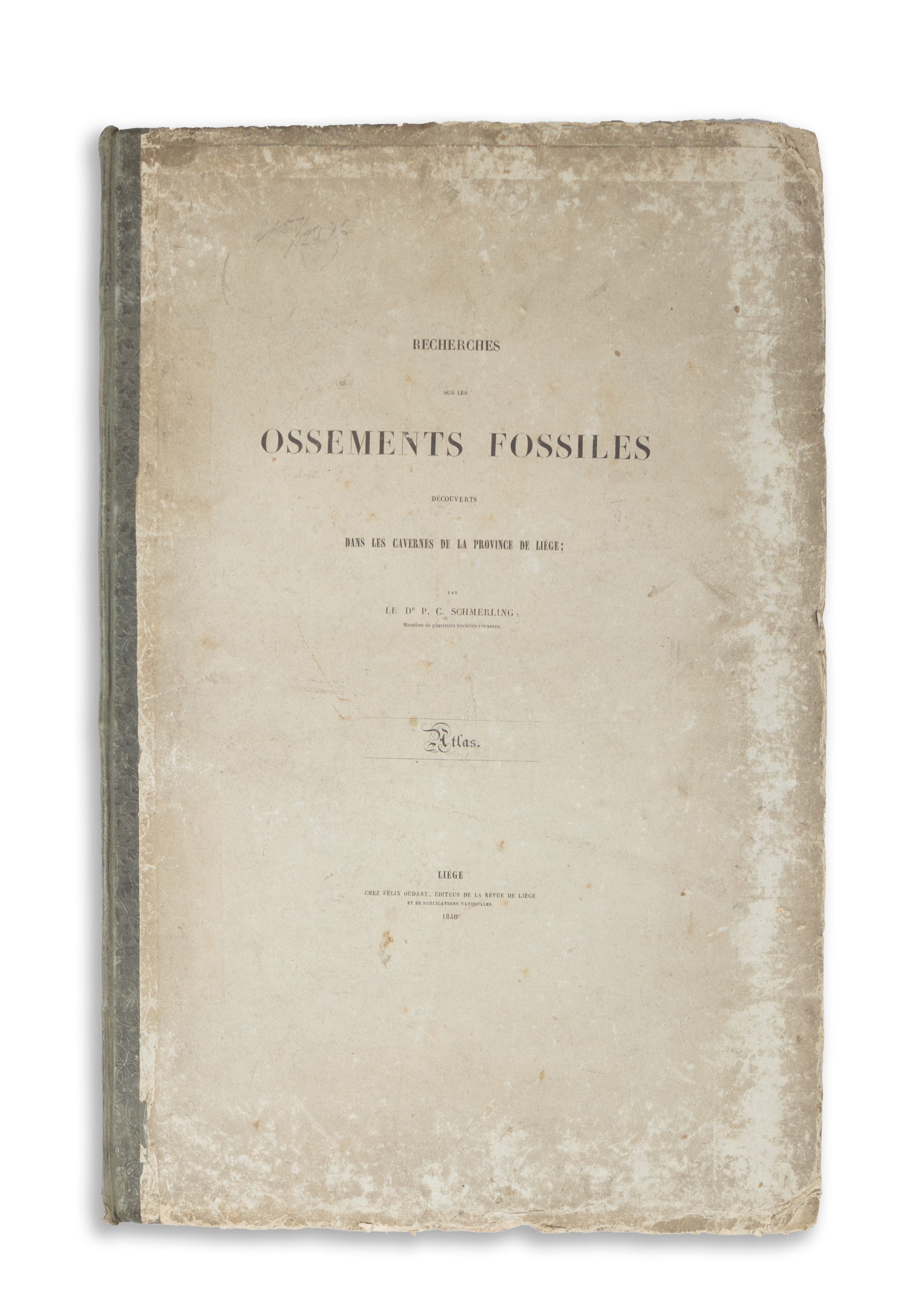
Recherches sur les Ossements fossiles decouverts dans les cavernes de la Province de Liège.
Liège, 1846. Felix Oudart.Az egyik első olyan tudományos munka képi anyagát tartamazó ritka atlasz-melléklet, mely tényleges régészeti bizonyítékokkal támasztotta alá, hogy az ember a bibliai 6000 évnél sokkal régebben él a Földön.
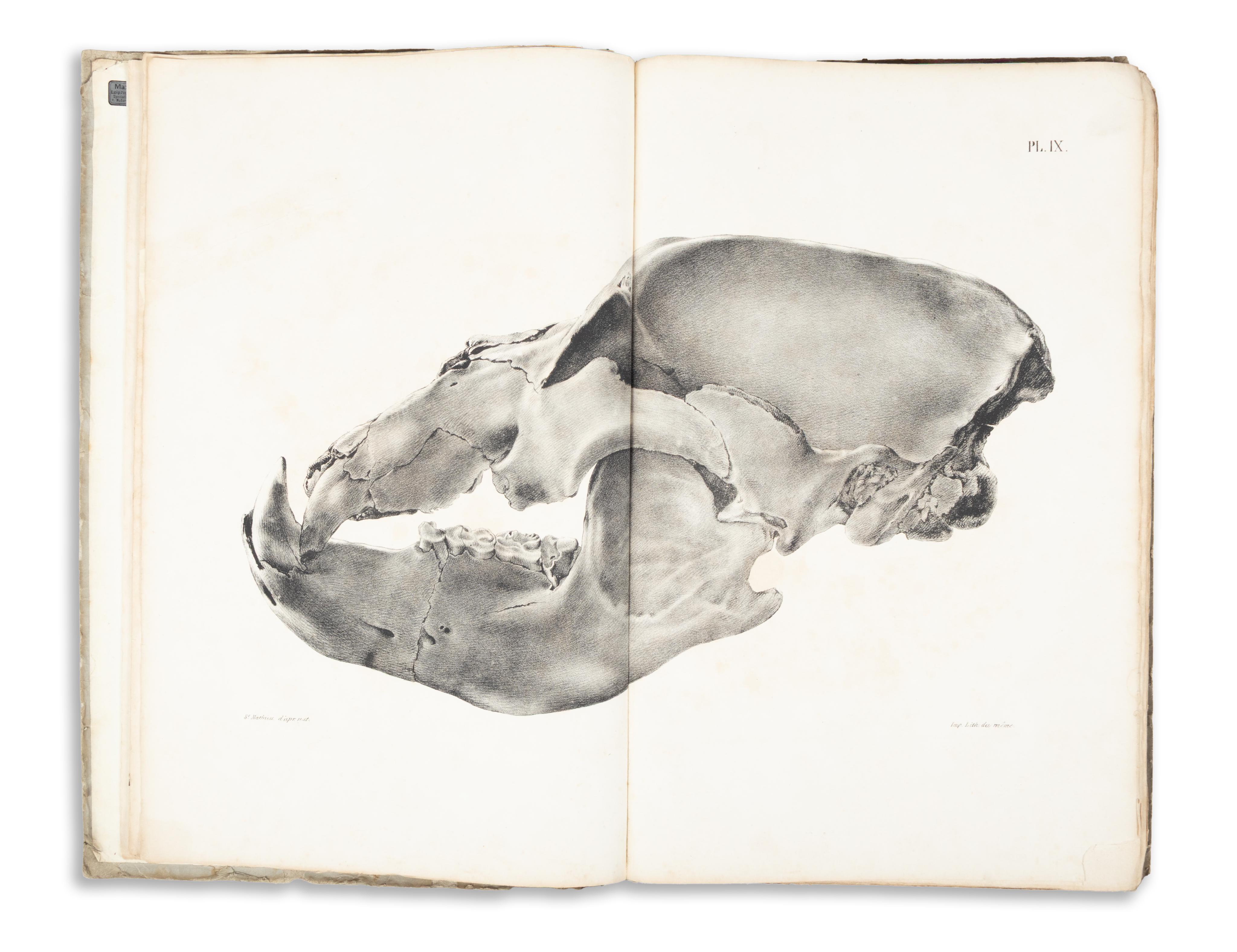
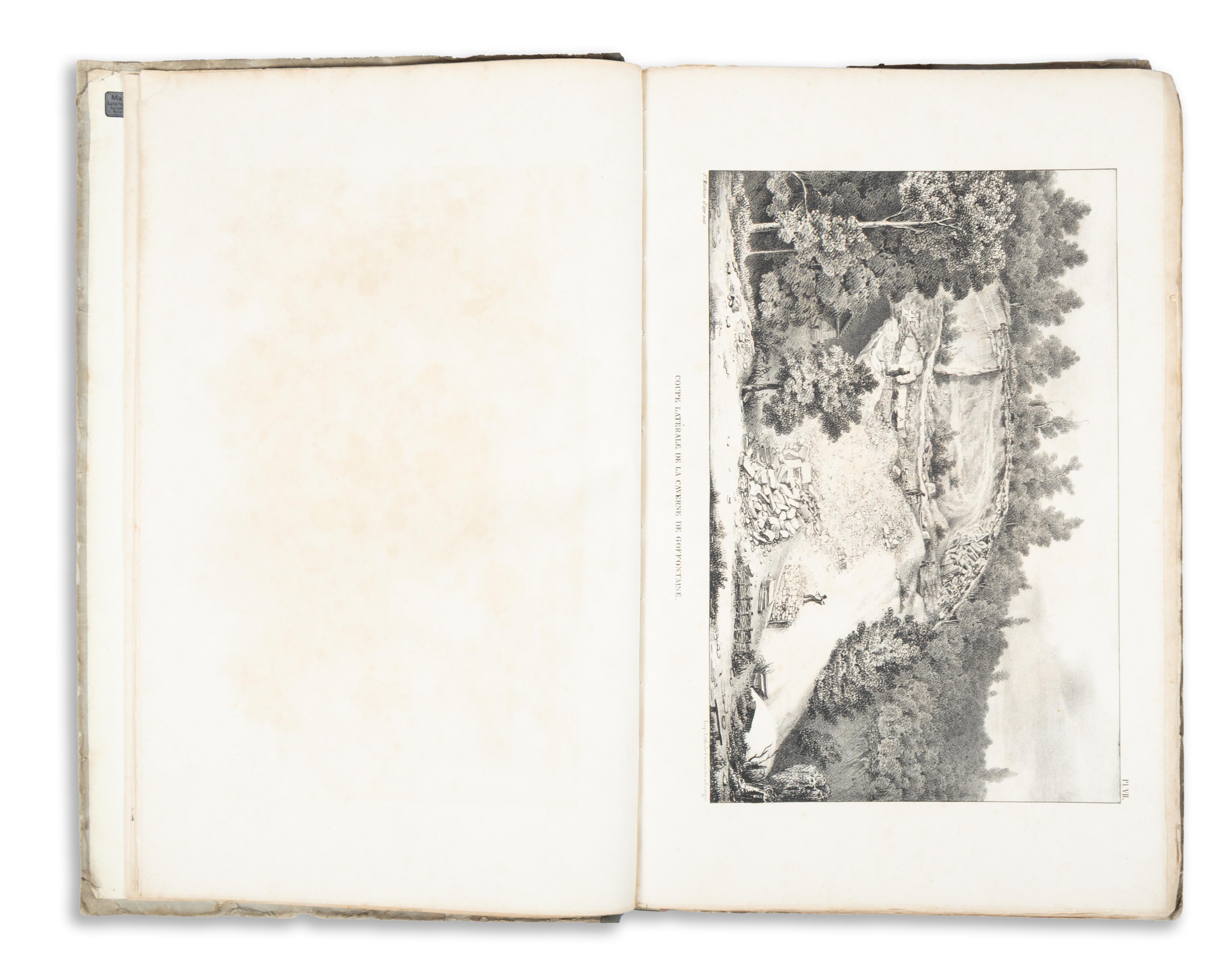
A kötet 74 (34+40) egész oldalas és kétoldalas, impozáns kőnyomatokkal illusztrálja Philippe-Charles Schmerling (1791–1836) – akit gyakran a paleontológia atyjaként is emlegetnek – Recherches sur les ossemens fossiles két kötetes művében közölt, forradalmi felfedezéseit.
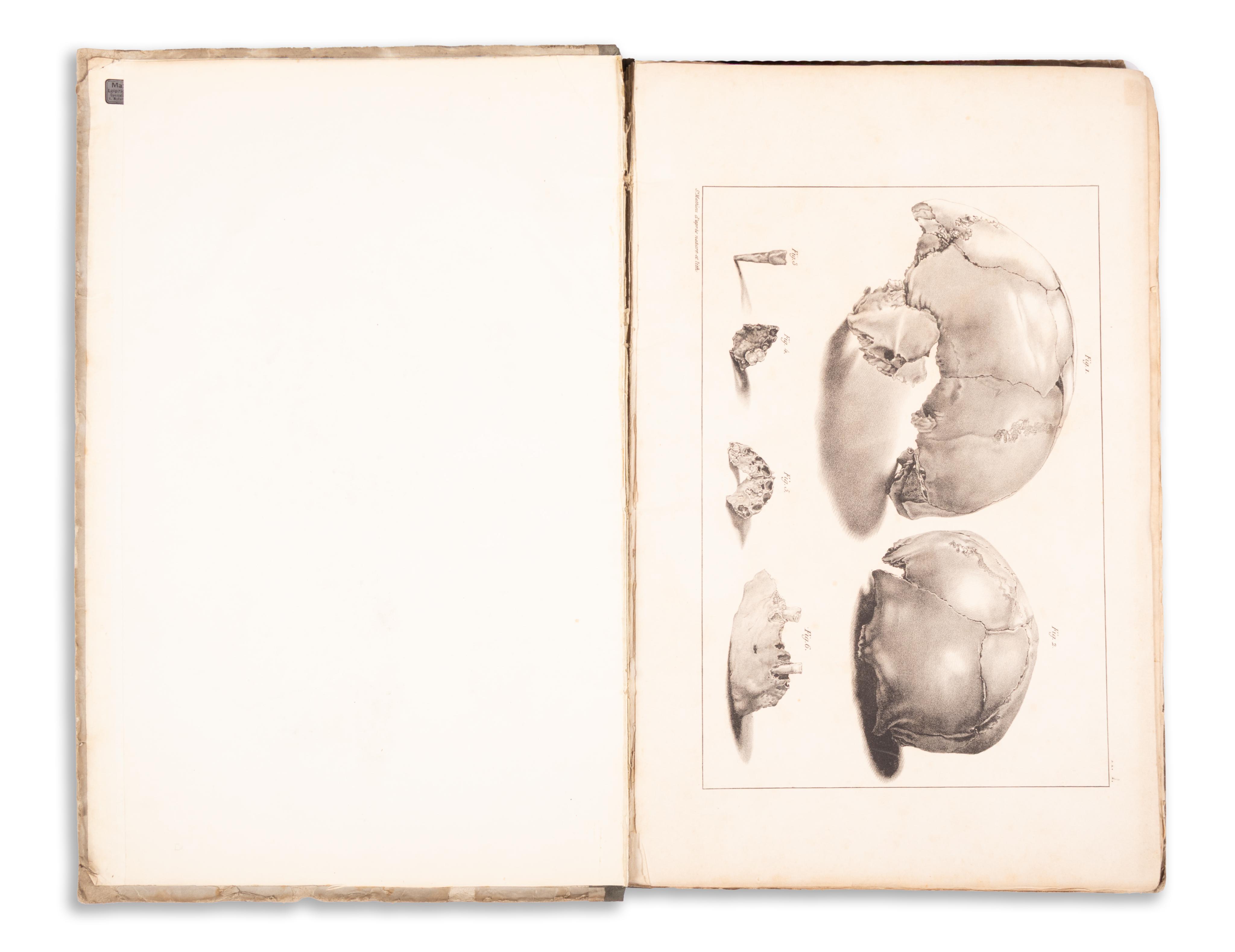
A belga orvos és amatőr régiségbúvár Liège-ben élt, és szabadidejét a régió mészkőbarlangjainak feltérképezésének szentelte, régészeti leletek után kutatva. 1830 körül, egy Engis falu melletti barlang feltárása során Schmerling kihalt állatok, például barlangi medvék és hiénák csontjaira bukkant, olyan pattintott kovakövek társaságában, amelyeket primitív kőeszközökként azonosított. Legmegdöbbentőbb felfedezése azonban három emberi koponya volt: két felnőtté és egy gyermeké.
1833–34-ben Schmerling publikálta felfedezéseit élte fő művében, a Recherches sur les ossemens fossiles (Kutatások a fosszilis csontokról) három részes publikációban. A 19. század elején a tudományos világ – élén a korszak zsenijével, Georges Cuvier-vel (1769-1832) – váltig állította: "L'homme fossile n'existe pas". Úgy hitték, az ember csak a legutóbbi geológiai korszakban jelent meg. Schmerling felfedezései azonban ezt cáfolták. Schmerling legfontosabb felismerése az volt, hogy a maradványokat ugyanabban a rétegben (úgynevezett stratigráfiai egységben) találta meg, ahol a kihalt mamutok és barlangi medvék csontjait. Ez bizonyította, hogy az ember kortársa volt ezeknek az állatoknak. Az Atlaszban szereplő kőeszközök leírásával ő volt az egyik első, aki felismerte az emberi tevékenység nyomait a pleisztocén rétegekben. Bár Schmerling még nem tudta, hogy egy külön emberfajról van szó, az általa leírt gyermekkoponya volt az első neandervölgyi lelet, amit tudományosan publikáltak (több mint 20 évvel a híres Neander-völgyi felfedezés előtt). Az ő precíz rajzai az Atlaszban tették lehetővé, hogy később, a fejlődéselmélet térnyerésekor a kutatók visszanyúljanak ezekhez az adatokhoz.
Schmerling munkásságának elismerését kétségtelenül hátráltatta, hogy nem sokkal művének megjelenése után elhunyt. Bár megfigyeléseit könnyű lett volna a gyakorlatban is ellenőrizni, kollégái inkább hagyták azt a feledés homályába veszni. Téziseit valószínűtlennek tartották, és inkább meghajoltak Cuvier tekintélye előtt, aki ekkoriban valóságos rémuralmat gyakorolt a tudományág felett: aki nem osztotta a nézeteit, attól megvonták a publikálási jogot, és elzárták előle a gyűjteményeket. Schmerling úttörő munkája így a maga korában szinte semmilyen elismerésben nem részesült; egy 1944-ben, a Bulletin de la société préhistorique de France című folyóiratban megjelent feljegyzésében Louis Eloy azt állította, hogy a kiadás nagy részét papírhulladékként adták el, mivel a szerző nem tudta kifizetni a kiadóját. Csak harminc évvel később, 1863-ban, a modern geológia atyja, Sir Charles Lyell ismerte el nyilvánosan, hogy Schmerlingnek volt igaza, és meglátogatta a liège-i gyűjteményt.
Nagyon ritka!
Eredeti félvászon kötésben. Folio. Rozsdafoltos, Tom. 1/8-9es táblán szakadás, javítva. Könyvtest elválófélben. Imperial folio.
The volume features 74 (34+40) impressive full-page and double-page lithographs illustrating the revolutionary discoveries of Philippe-Charles Schmerling (1791–1836) – often regarded as the father of paleontology – published in his two-volume work, "Recherches sur les ossemens fossiles".
The Belgian physician and amateur antiquarian lived in Liège, and devoted his free time to exploring the region's limestone caves in search of artifacts. While excavating a cave near the village of Engis around 1830, Schmerling uncovered the bones of extinct animals, such as cave bears and hyenas, alongside flaked flints that he recognized as primitive stone tools. His most astonishing discovery, however, consisted of three human skulls: two adults and one juvenile.
In 1833–34, Schmerling published his discoveries in his magnum opus, the three-part publication Recherches sur les ossemens fossiles (Researches on Fossil Bones). In the early 19th century, the scientific worl – led by the genius of the era, Georges Cuvier (1769-1832) – adamantly maintained: "L'homme fossile n'existe pas". They believed that man had only appeared in the most recent geological epoch. Schmerling's discoveries, however, refuted this. Schmerling's most important realization was that he found the remains in the same layer (so-called stratigraphic unit) as the bones of extinct mammoths and cave bears. This proved that humans were contemporaries of these animals. By describing the stone tools featured in the Atlas, he was one of the first to recognize traces of human activity in Pleistocene strata. Although Schmerling did not yet know that it belonged to a distinct human species, the juvenile skull he described was the first Neanderthal remain to be scientifically published (more than 20 years before the famous Neanderthal discovery). His precise drawings in the Atlas enabled later researchers, during the rise of evolutionary theory, to refer back to this data.
The recognition of Schmerling's work was undoubtedly hindered by his death shortly after the publication of his work. Although his observations would have been easy to verify in practice, his colleagues preferred to let them fade into obscurity. His theses were deemed implausible, and they instead bowed to the authority of Cuvier, who at the time reigned a veritable terror over the discipline: those who did not share his views were denied the right to publish and had collections closed off to them. Thus, Schmerling's pioneering work met with almost no recognition in its time; in a note published in 1944 in the Bulletin de la société préhistorique de France, Louis Eloy claimed that a large part of the edition had been sold as waste paper, as the author was unable to pay his publisher. It was only thirty years later, in 1863, that the father of modern geology, Sir Charles Lyell, publicly acknowledged that Schmerling had been right and visited the Liège collection.
Very rare!
Original half-cloth binding. Folio. Foxing throughout, tear on plates 8-9, restored. bookblock a little loose.