

![Justus Lipsius - Laskai János [ford.]:: Justus Lipsiusnak a’ polgari tarsasagnak tudomanyárol irt hat könyvei... Bártfa, 1641. Klösz Jakab.](http://kozpontiantikvarium.hu/sites/default/files/2024-11/IMG_0095%20kicsi.jpg "Justus Lipsius - Laskai János [ford.]:: Justus Lipsiusnak a’ polgari tarsasagnak tudomanyárol irt hat könyvei... Bártfa, 1641. Klösz Jakab.")
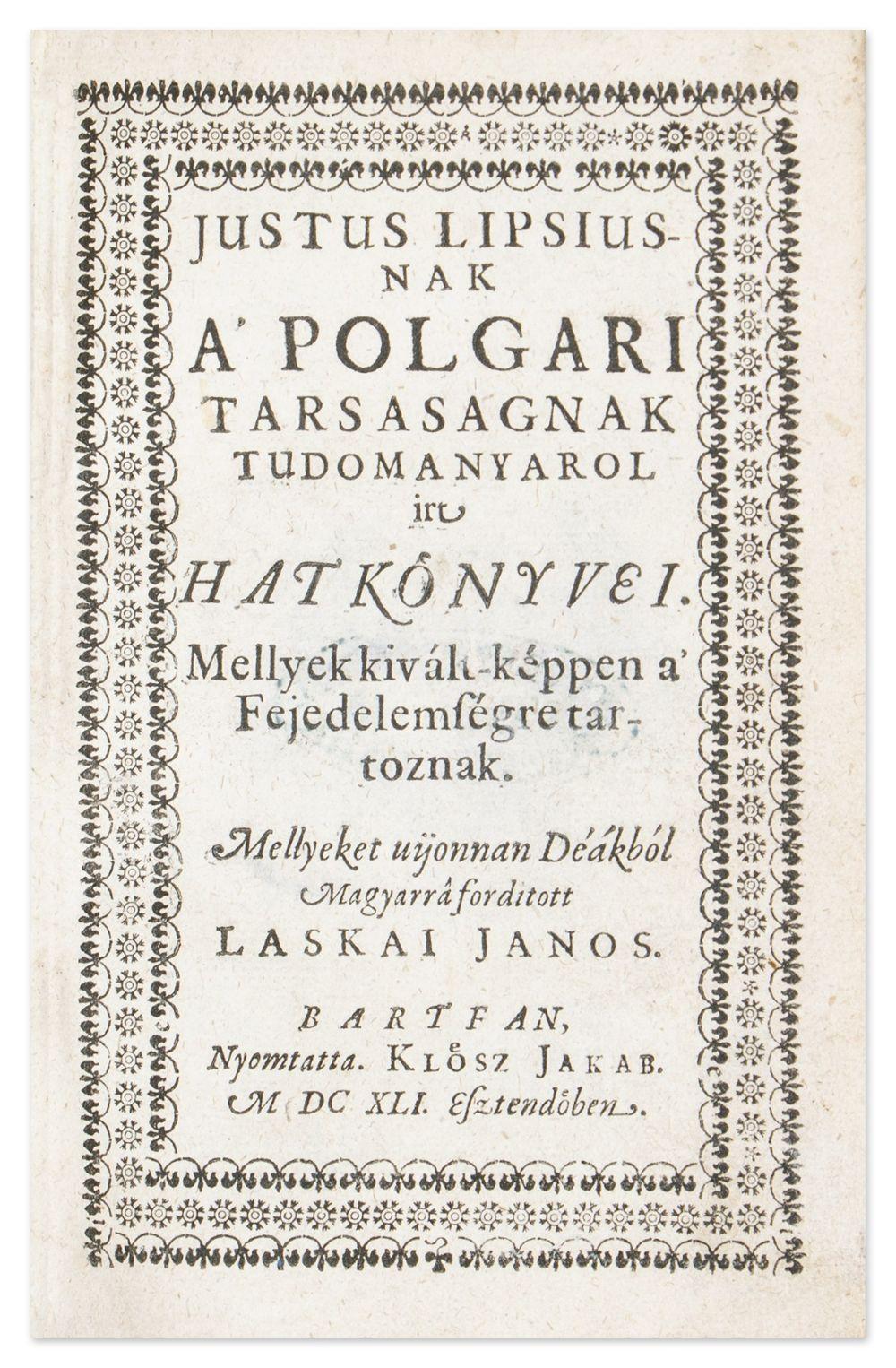
Justus Lipsiusnak a’ polgari tarsasagnak tudomanyárol irt hat könyvei...
Bártfa, 1641. Klösz Jakab....Mellyek kivált-képpen a Fejedelemségre tartoznak. Mellyeket uijonnan Déákból Magyarrá forditott Laskai Janos.
Tartalmilag is fontos mű, páratlanul becses korabeli kötésben! Laskai János (1605?- 1657 után?) református püspök, majd Bethlen István udvarához tartozó költő, teológus, többszörös portai követ. Leideni tanulóévei alatt ismerkedett meg Justus Lipsius (1547 - 1606) holland jogfilozófus, korszakának legjelentősebb filológusának munkásságával. Laskai több Lipsius könyvet is fordított, jelen kötetünk a Politicorum sive civilis doctrine libris sex (Leiden, 1589) című munkáját teljes egészében ültette át magyar nyelvre. Ez a mű tekinthető Lipsius fő művének, amely hosszú ideig befolyásolta az európai politikai gondolkodást. A könyv egyaránt szólt az elméleti gondolkodóknak és a politikát csinálóknak, nagy hangsúlyt fektet a mindenkori politikai vezető ideális portréjának felrajzolására. A könyvet Laskai Madarasz Györgynek, eperjesi kereskedőnek, I. Rákoczi György bizalmasának ajánlotta. A fordítás nagy hatással volt az erdélyi és a magyar társadalomra, politikai közéletre. Egykorú olajbogyó színű, dúsan aranyozott, legyeződíszes maroquin-kötésben! A táblákon középütt aranyozott szirmokra osztott virágmotívum, melyek meghosszabbításában kis vasakkal (petits fers) létrehozott aranyozás. Térkitöltésül a palmettához alul-felül hegyes díszítőelem illeszkedik. A sarkokon a középdísszel megegyező szirmokból kialakított negyedkörök. A táblák többszörös, kis vasakkal, illetve görgővel kialakított aranyozott keretben. A gerinc bordázott; a négy rekeszben görgődíszes aranyozás rombusz alakú aranyozott mintát övez. A lapszélek aranyozottak, de a szokásos vésett díszítés nélkül. A legyeződíszes kötések tipikusan „udvari kötések”: nem az olvasóközönség számára előállított tartós és olcsó kötések, hanem a mecénások (a királyok, királyok feleségei mellett az uralkodó környezetében élő előkelők, nagyon gyakran főúri hölgyek) számára készültek. Ezek a kötések anyagukban éppúgy, mint az anyag feldolgozásában és díszítésében méltó részei a barokk élet káprázatos pompájának. Hazánkban, pontosabban Erdélyben, egyedülálló módon Kolozsvárott, a francia barokk pompát kedvelő Apafi Mihály, illetve a fejedelemasszony udvari kötészetének munkái között találunk példákat eme kötéstípusra, az 1673-as évvel kezdődően. Kötésünk a munka megjelenési ideje, a stílusjegyek, illetve könyvkötővasak összehasonlítása alapján valószínűleg nem magyar, hanem francia vagy németalföldi munka. Legnagyobb sajnálatunkra a könyvben a kötést megrendelő luxuskedvelő magyar főúr személyére nem utal semmiféle possessori bejegyzés. Kereskedelmi forgalomban ezideig - leszámítva a szórványosan felbukkanó házasított (remboîtage) könyveket - nem találkoztunk sem legyeződíszes magyar nyelvű RMNY tétellel, sem pedig a mű másik példányával. Tételünk árverezése tehát mindenképpen antikvár szenzáció! A gerincen alul-felül alig észrevehető professzionális javítás, a kötés aranyozása kissé megkopott. A belívek figyelemre méltóan tiszták és frissek. Prov.: „Kassai Királyi Akadémia Könyvtára” feliratú XIX. századi gumibélyegző lenyomatával a címlap versóján, illetve az utolsó levélen.