

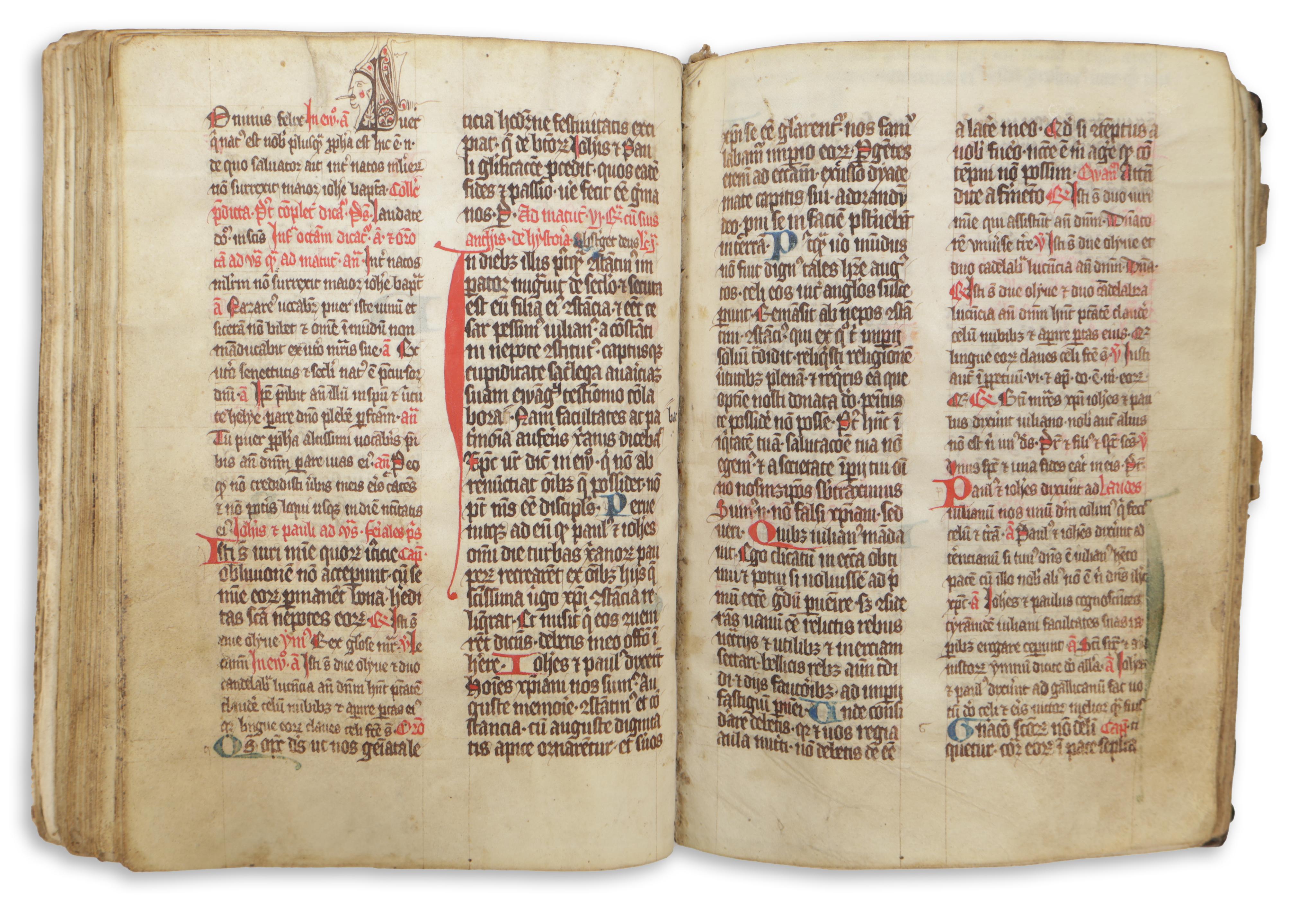
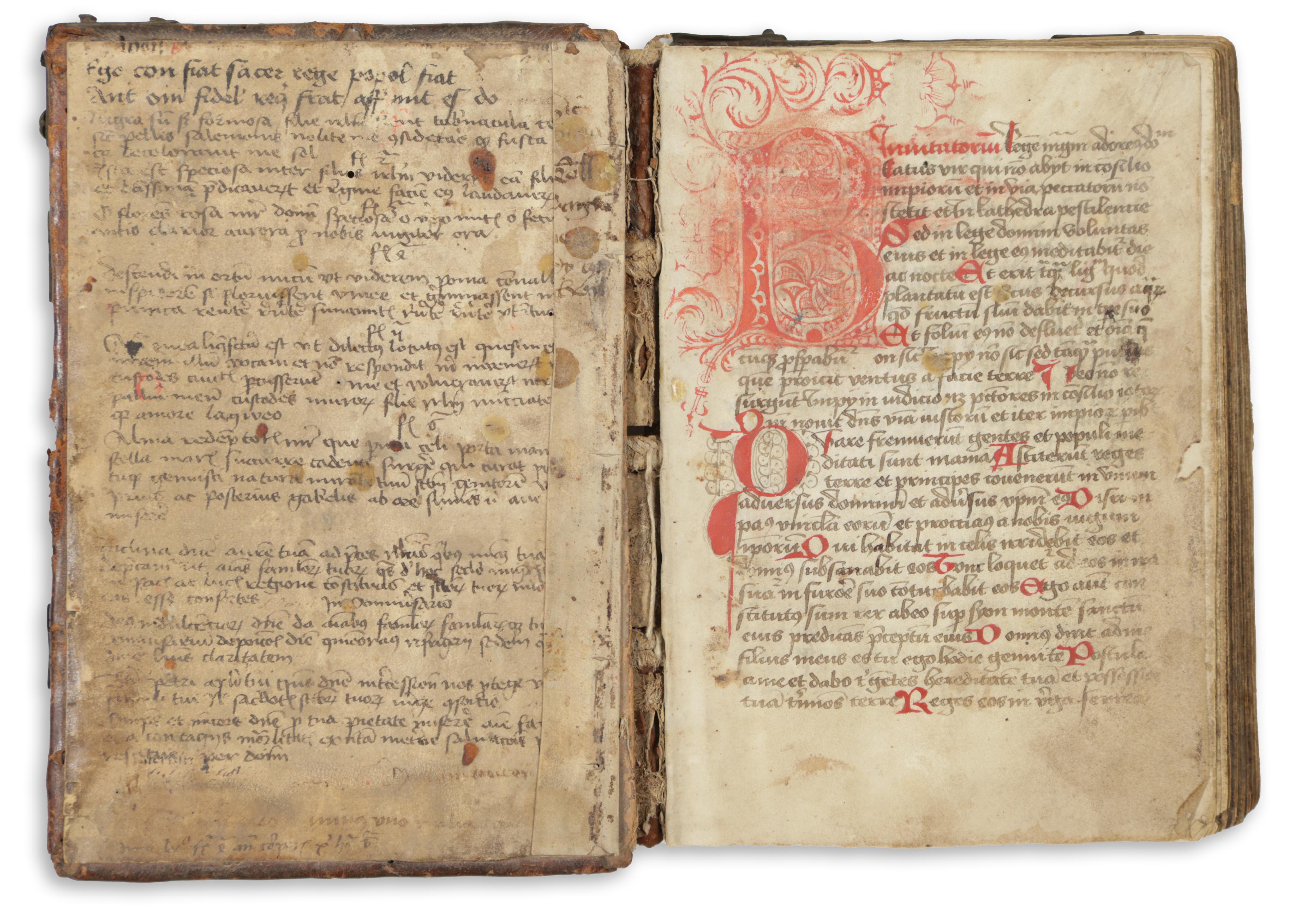
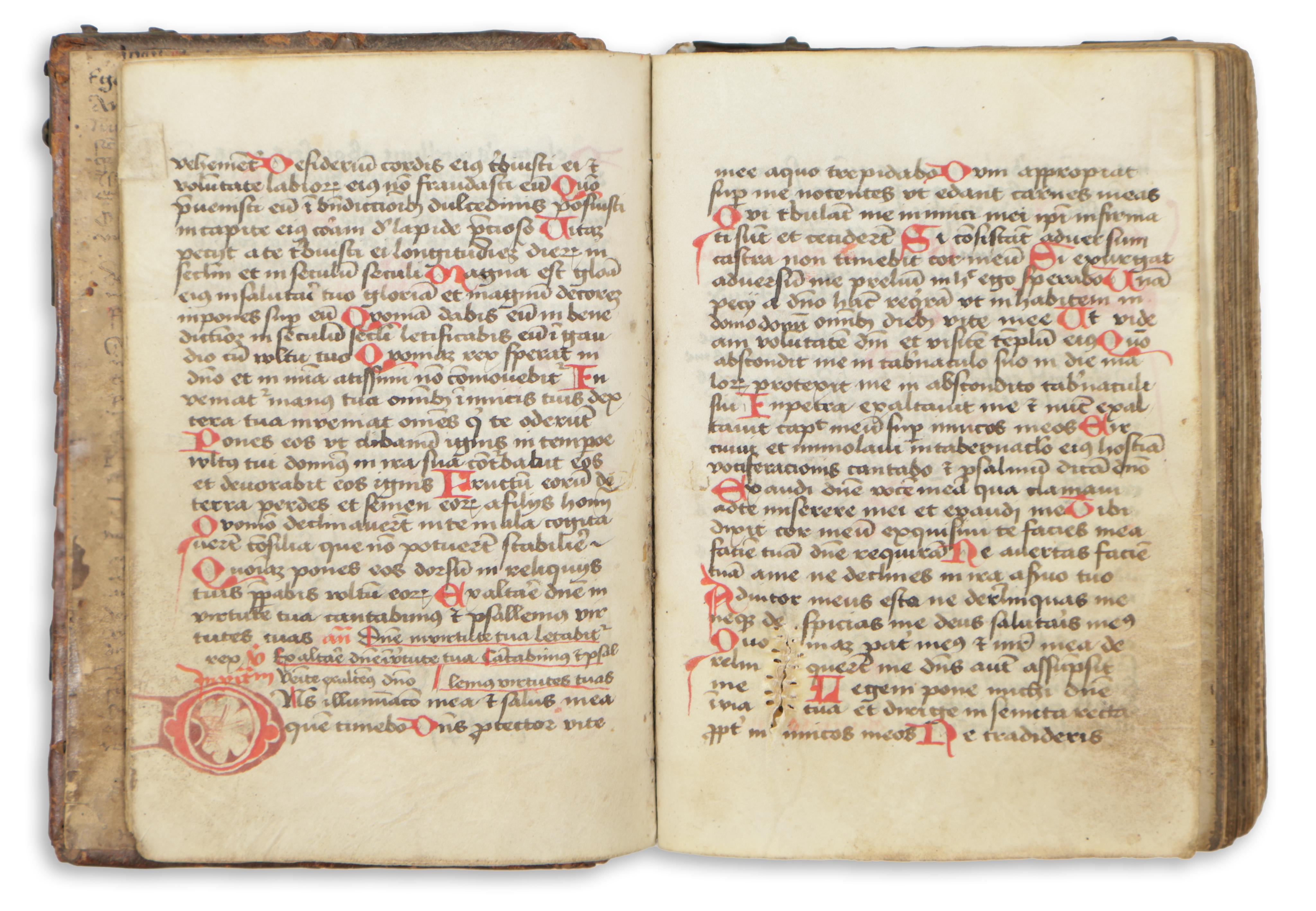
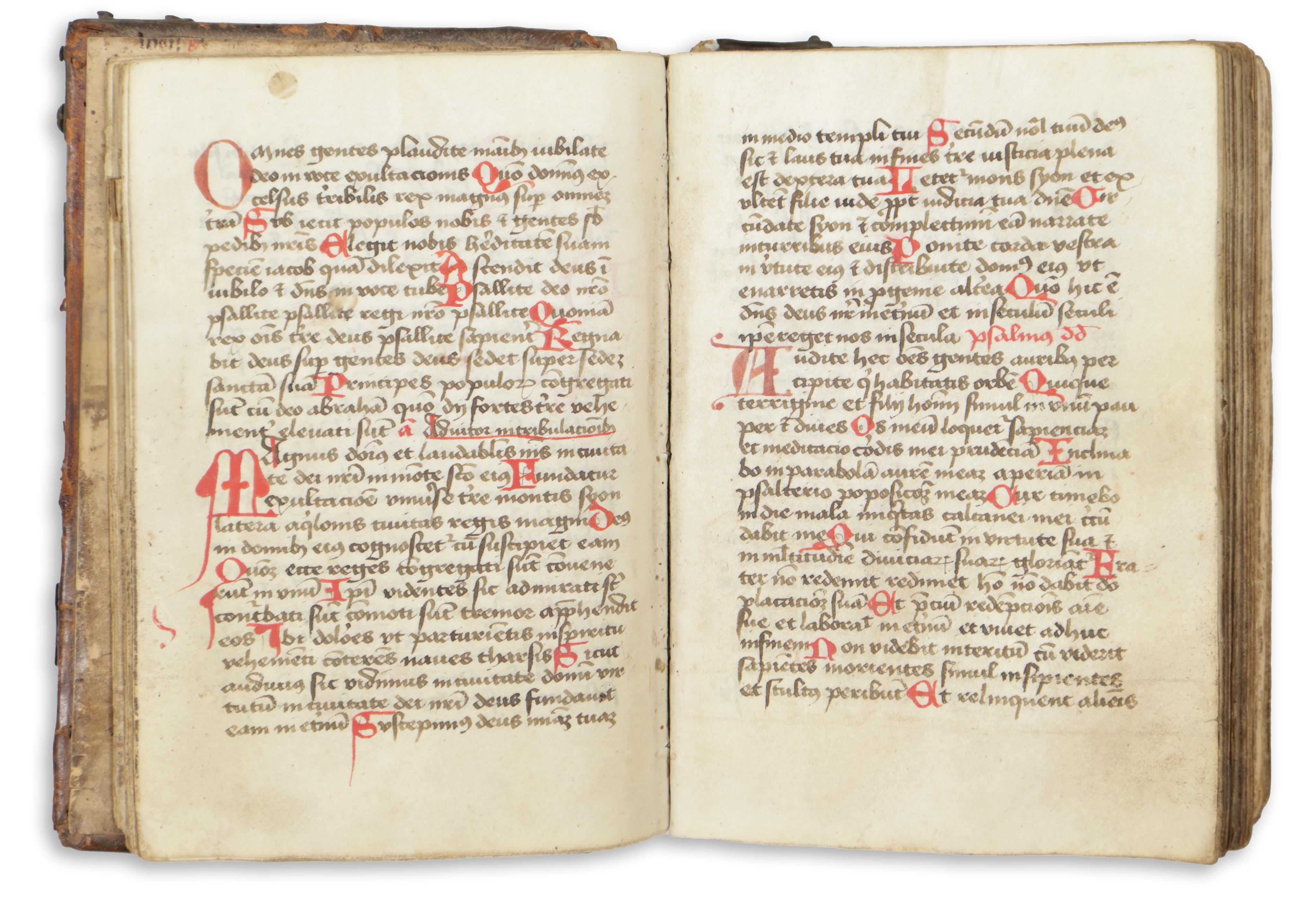
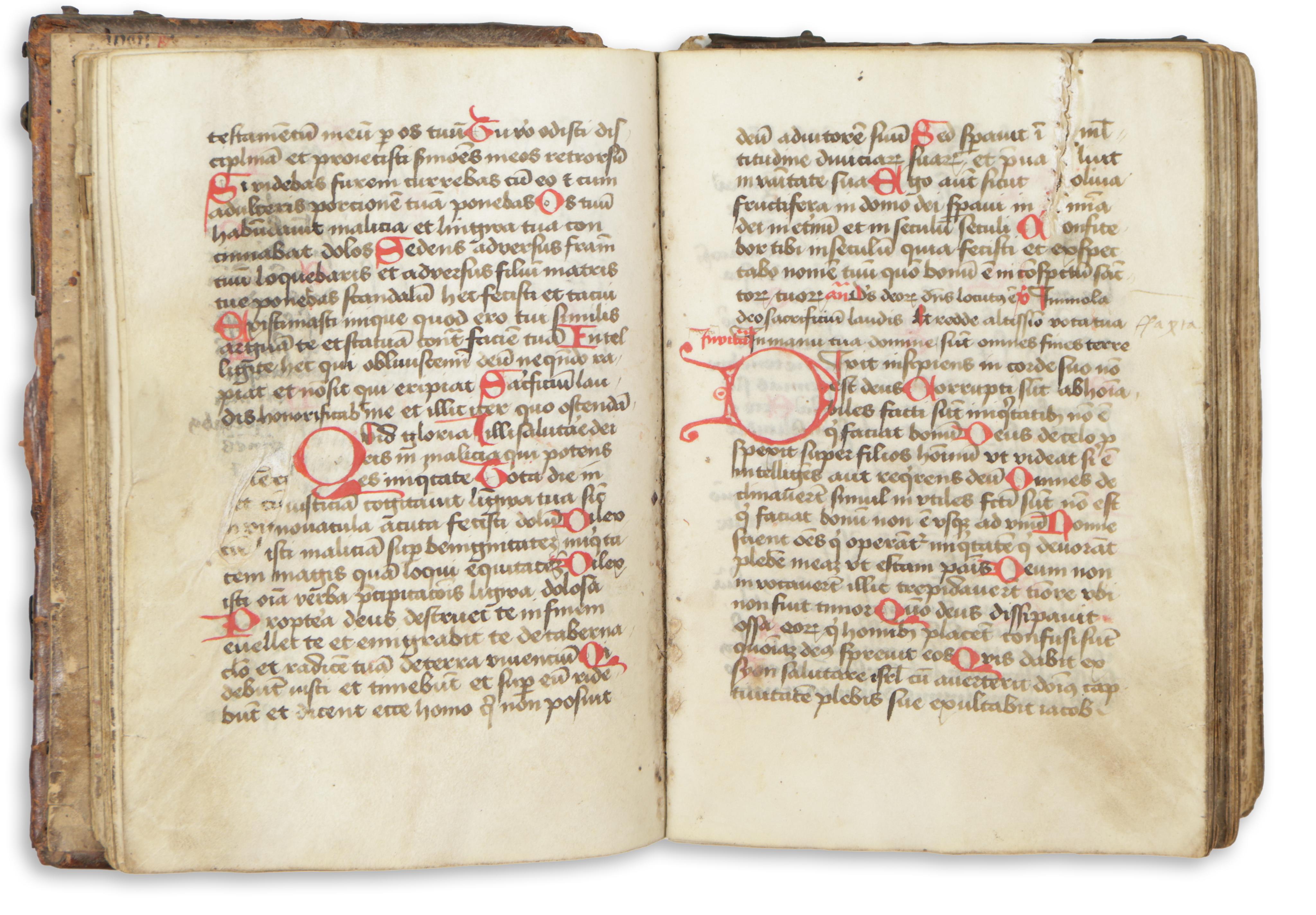
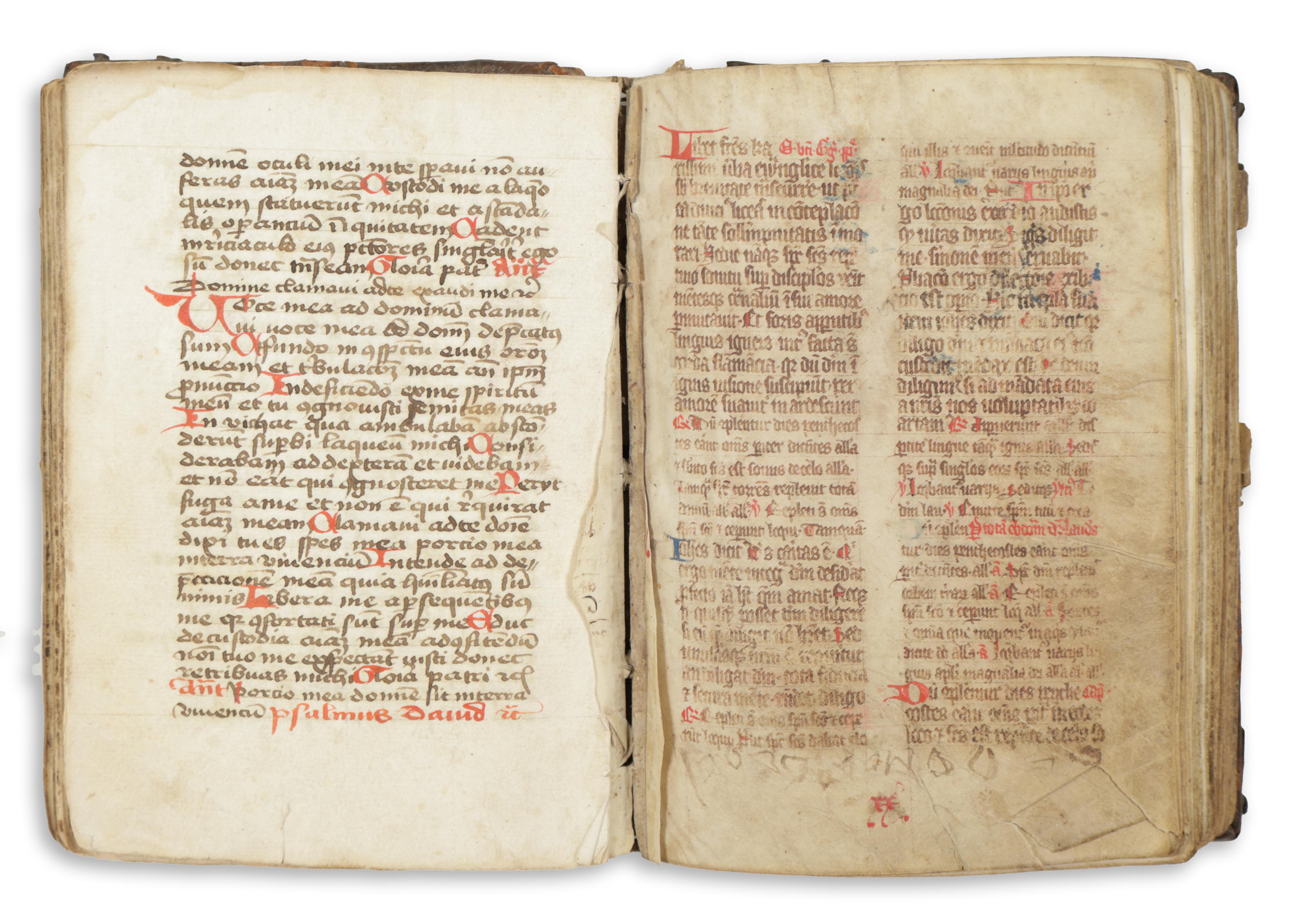
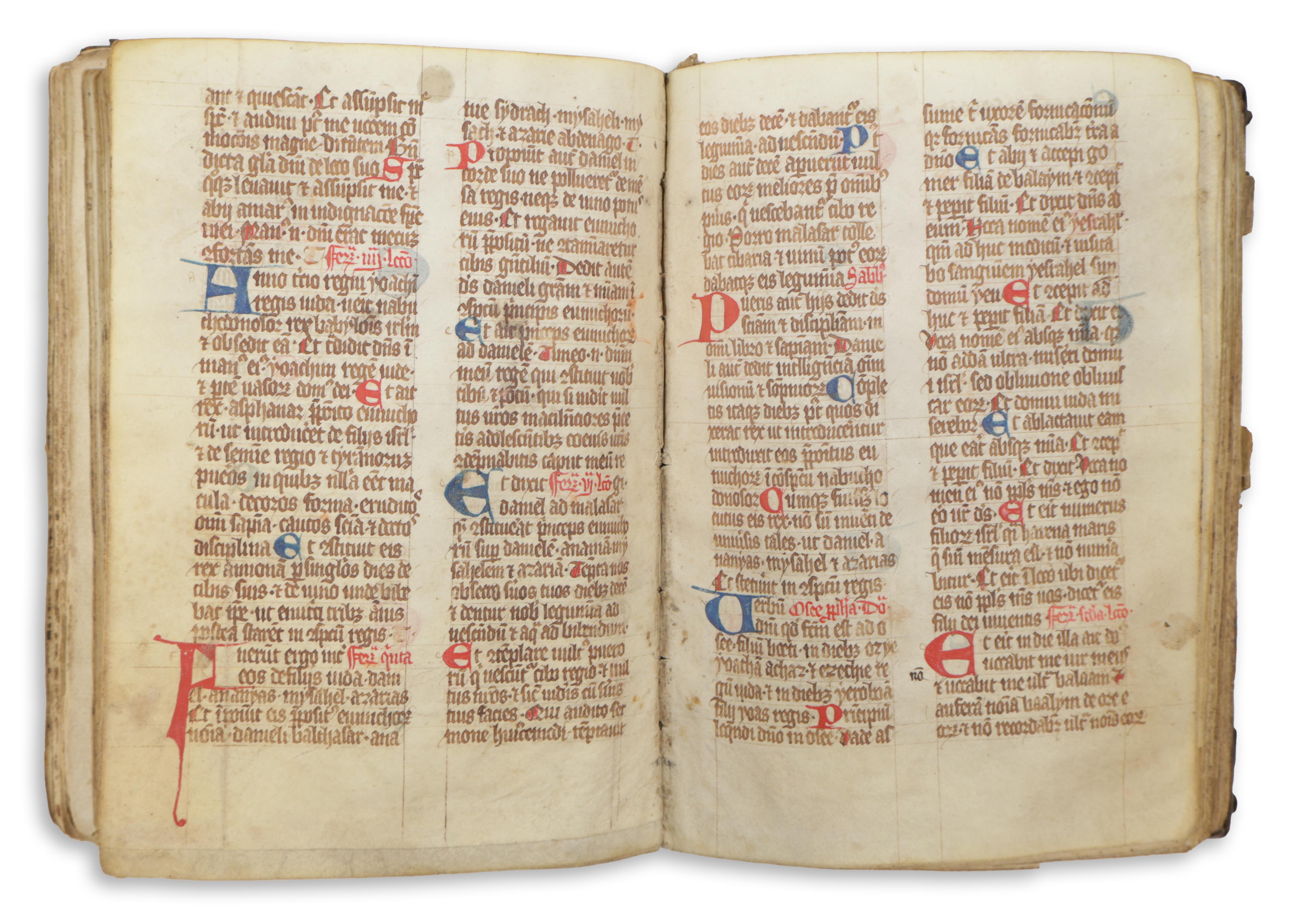
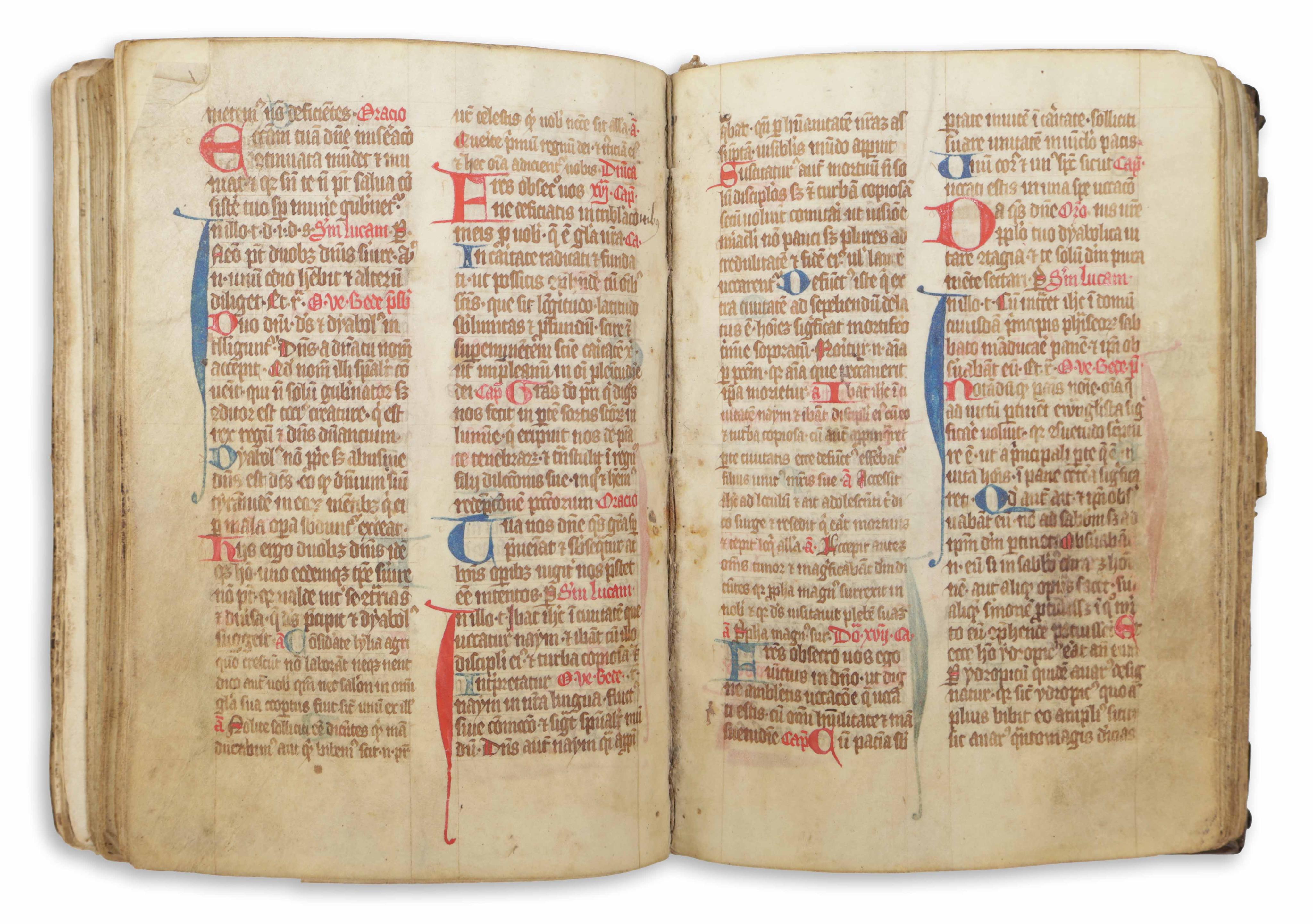
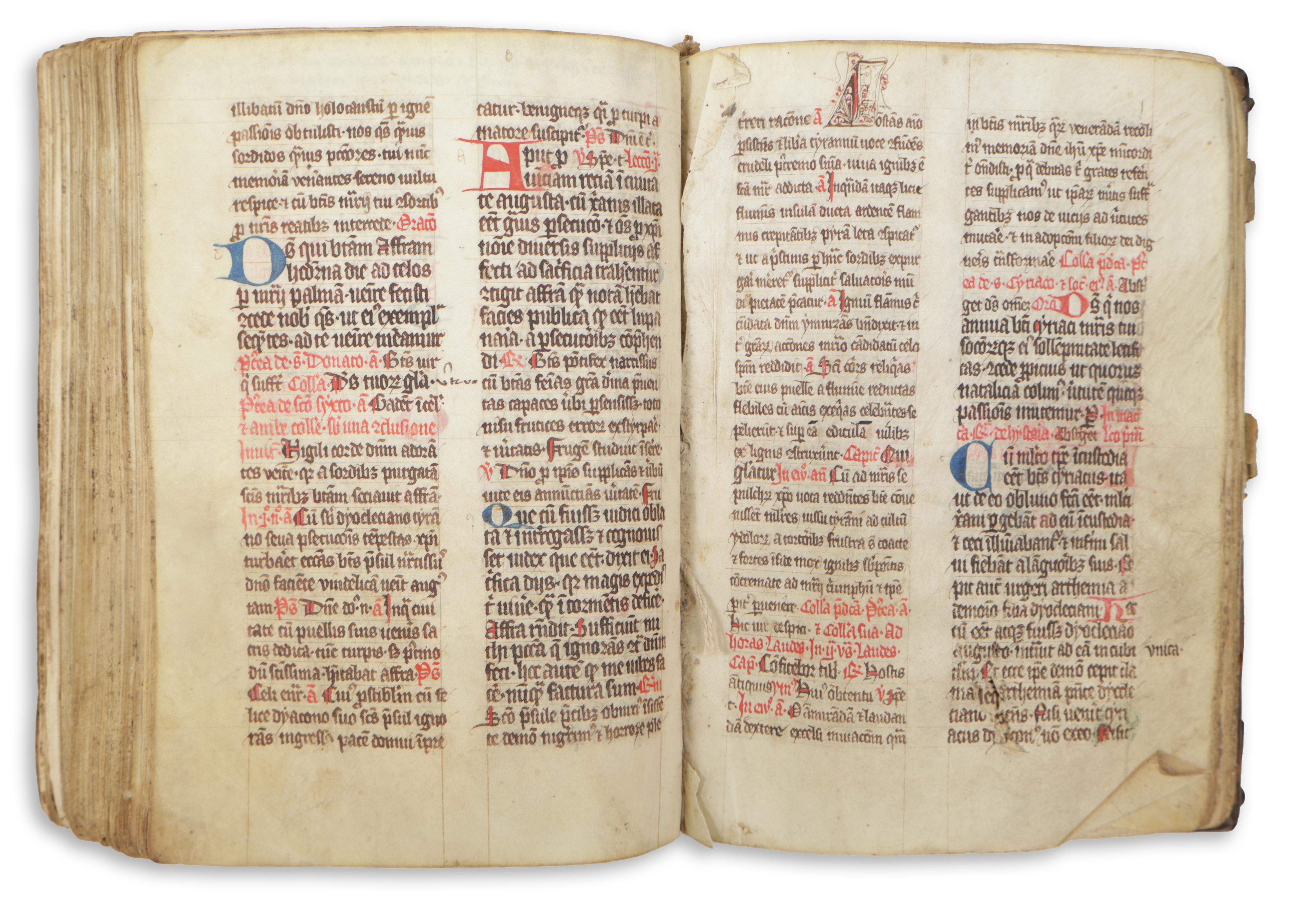
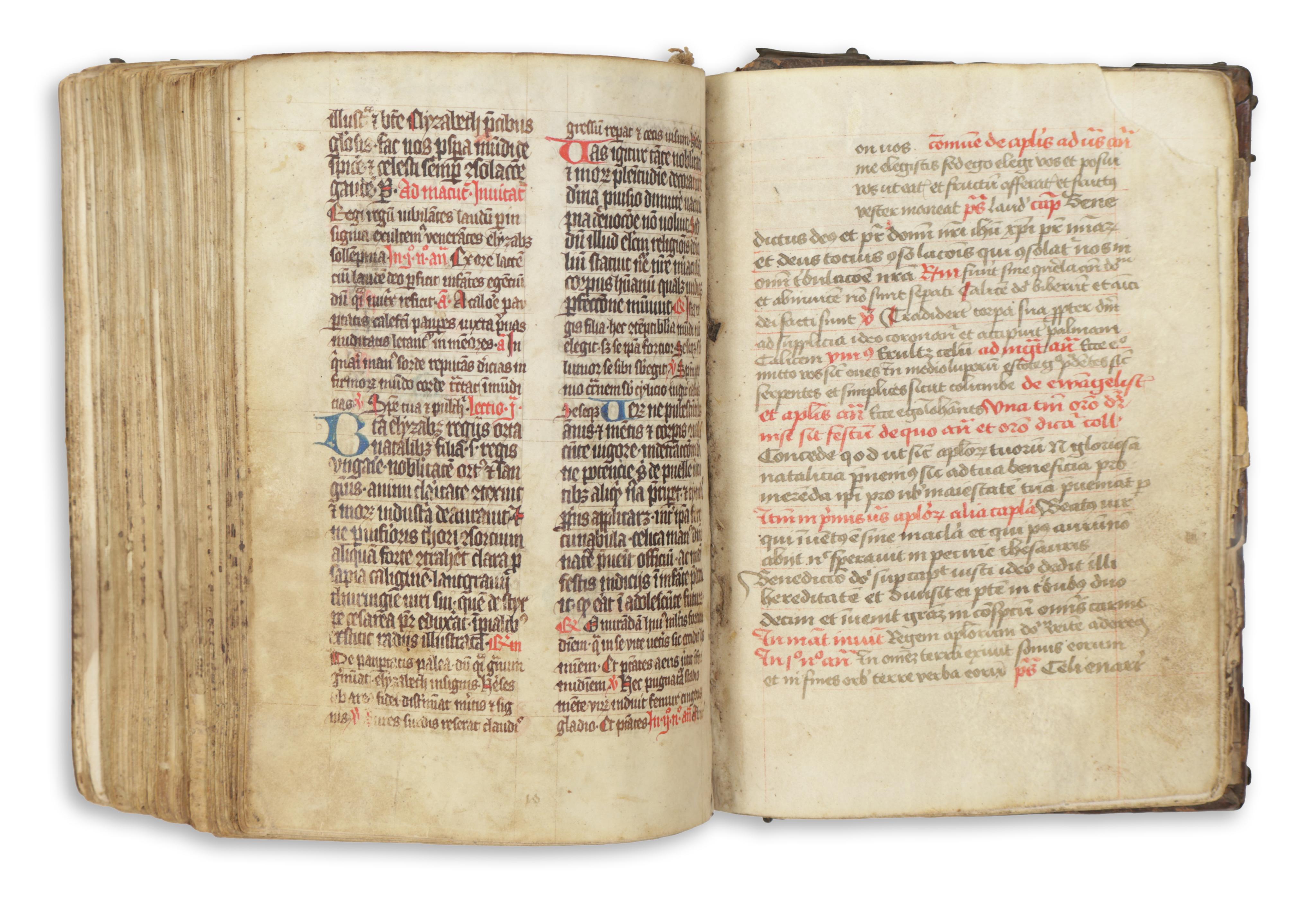
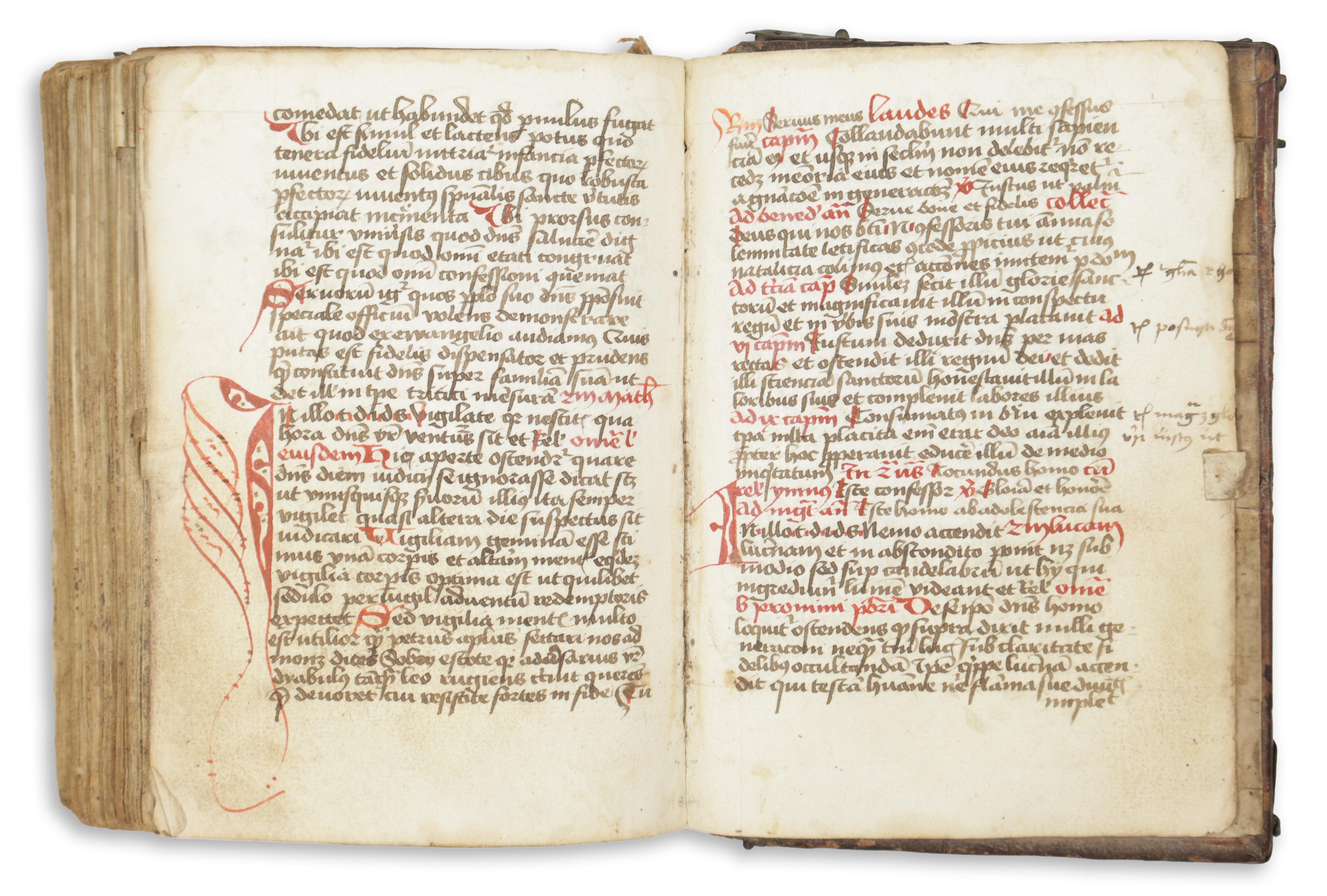
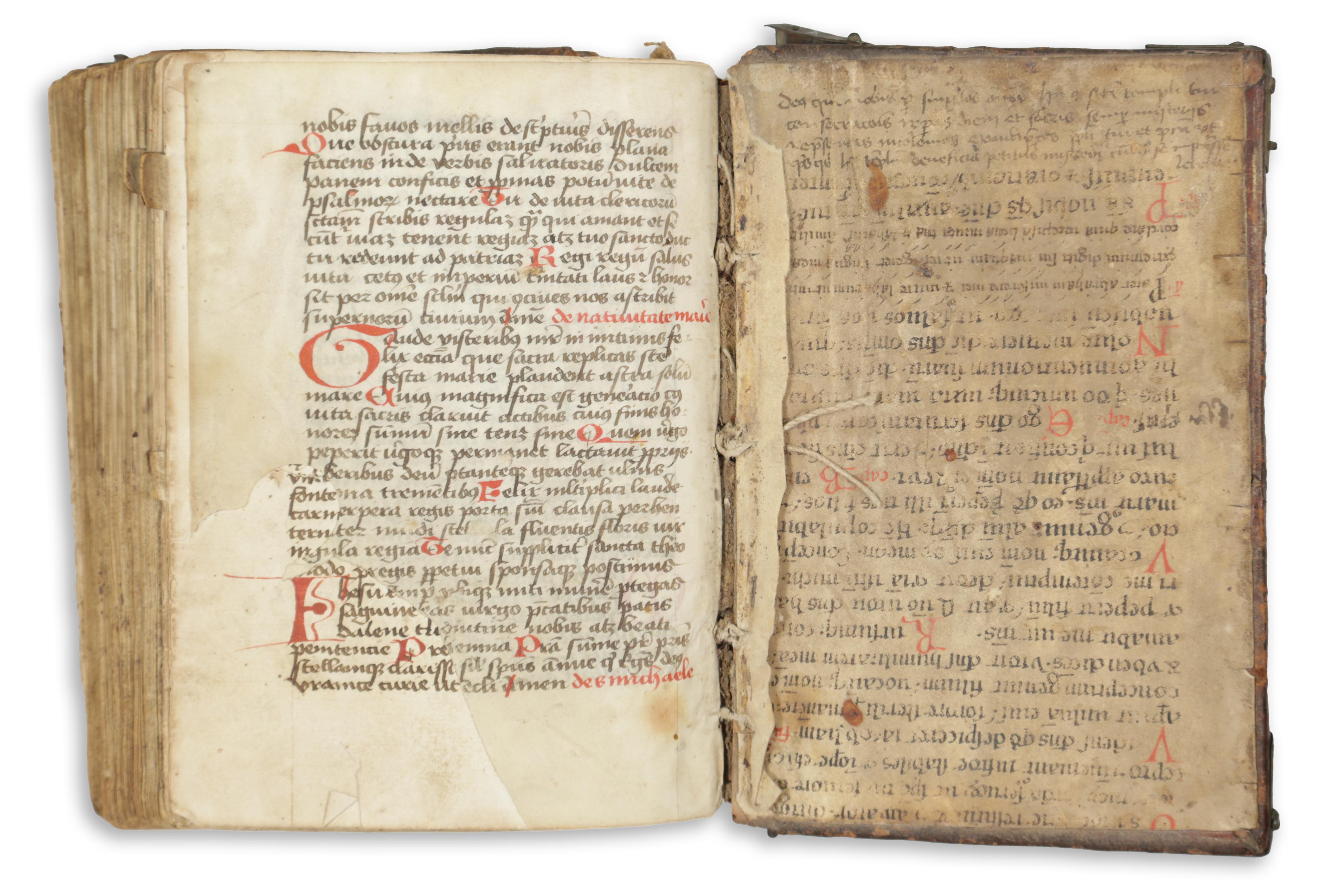
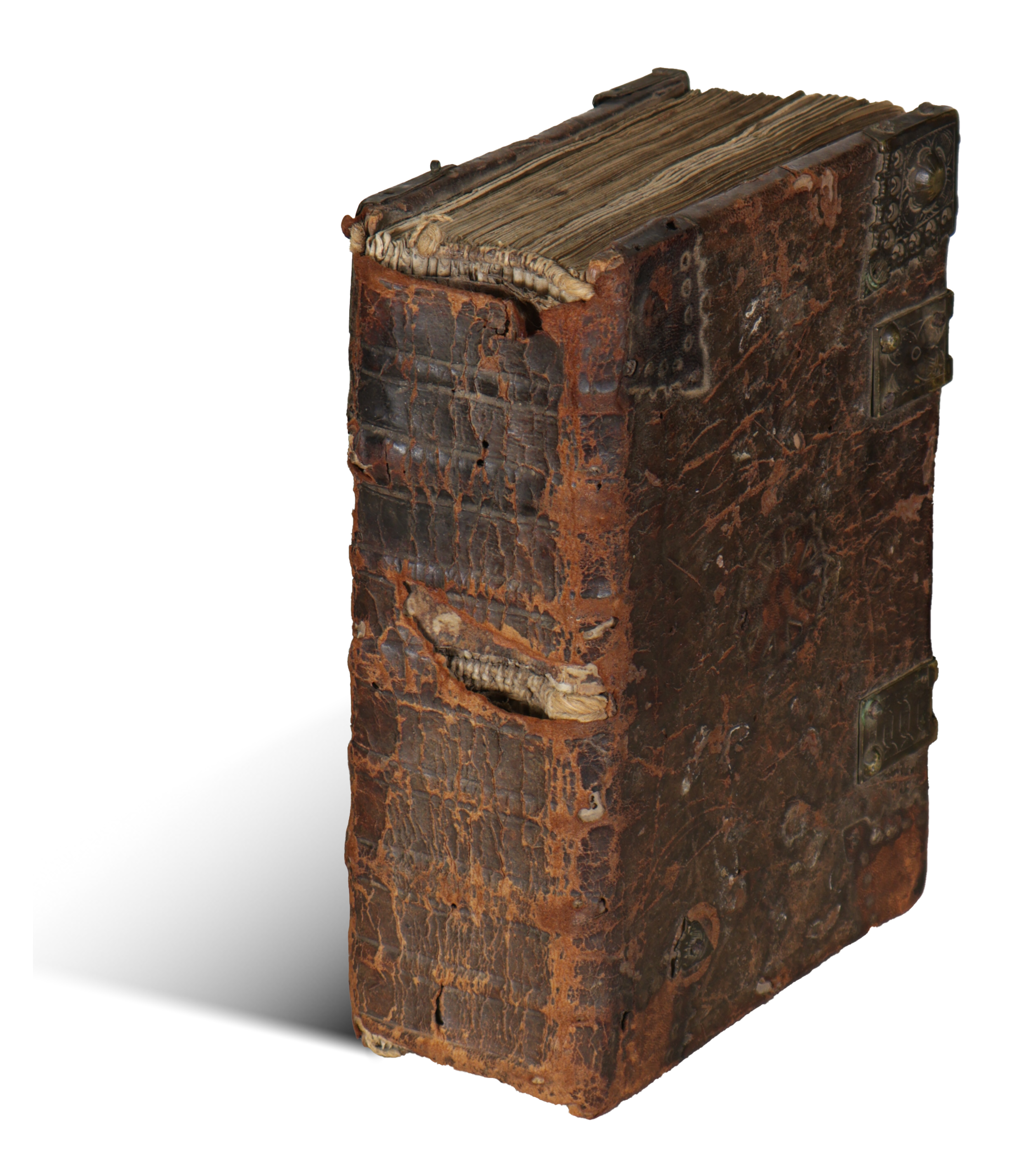
86 l. 15th century Latin prayer book + 109 l. 13th - 14th century breviary + 22 l. 15th century Latin prayer book.
It is a Latin-language breviary (breviarium), and its writing style date it to the 14th century, but a late 13th-century date cannot be ruled out. In addition to the Saints venerated throughout Western Europe (e.g. St. Margaret of Antioch, St. Stephen the protomartyr), there are a remarkably large number of saints who were popular mainly in German-speaking areas (St. Ulrich of Augsburg, St. Willibald, St. Kilian, St. Oswald of Northumbria, etc.). This fact therefore also indicates the probable place of origin of the codex. From a Hungarian point of view, it is noteworthy that the list of saints (on the last surviving page) includes St. Elizabeth of the House of Árpád, canonised in 1235, who was venerated not only in Hungary but also in the German-Roman Empire, among other places - she lived a short life largely on German soil, in Thuringia. In addition to the marginal notes, binding a 15th-century Latin prayer book before and after the codex is evidence of intensive later use.
15th. century leather binding with wooden boards and gothic decorations on the corners.
_______________________________________________
86 lev. XV. századi latin imádságos könyv + 109 lev. XIII.-XIV. századi breviárium + 22 lev. XV. századi latin imádságos könyv.
Latin nyelvű breviárium, írásképe alapján a XIV. századra datálható, de a XIII. század végi keletkezés sem zárható ki. A Nyugat-Európa-szerte tisztelt szentek (például Antiochiai Szent Margit, István protomártír) mellett feltűnően nagy számban szerepelnek olyanok, akik elsősorban a német területeken voltak népszerűek (Szent Ulrik, Willibald, Kilián, Oswald, stb.). Ez a körülmény tehát a kódex valószínű keletkezési helyét is kijelöli. Magyar szempontból figyelemre méltó, hogy a szentek sorában (az utolsó fennmaradt oldalon) helyet kapott az 1235-ben szentté avatott Árpád-házi Szent Erzsébet is, akit Magyarország mellett többek között a Német-római Birodalomban is tiszteltek – rövidre szabott életét is nagyrészt német földön, Türingiában élte le. A széljegyzetek mellett intenzív későbbi használatról tanúskodik, hogy a kódex elé és után egy XV. századi latin nyelvű imádságos könyvet kötöttek be.
XV. századi fatáblás bőrkötésben, sarkain gótikus veretekkel.