

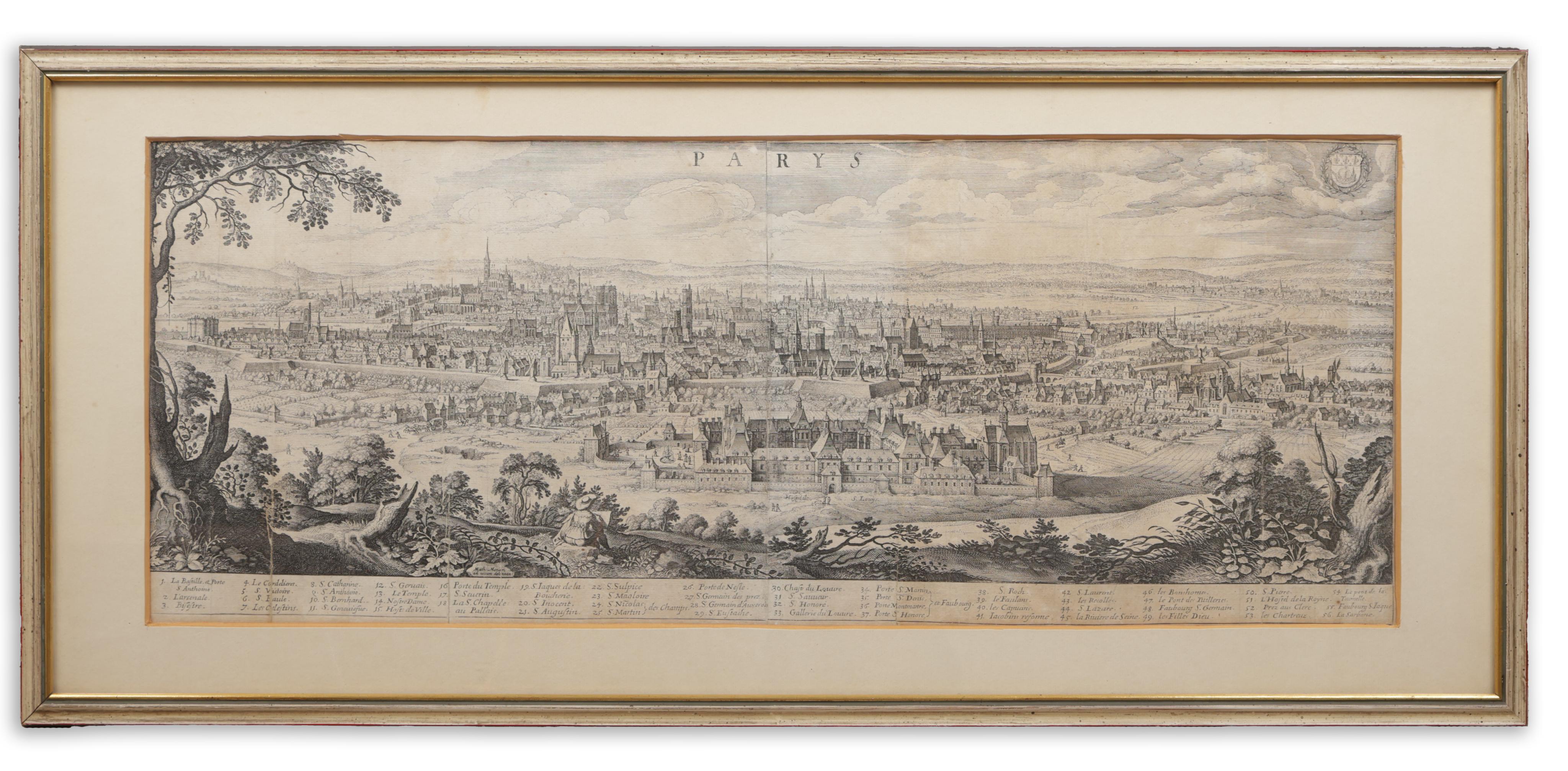
Matthäus Merian 1638-ban készített panorámaképe Párizsról, amelyet széles körben a legértékesebb városképek egyikének tartanak – részben azért, mert egyben önarckép is. A látkép délnyugati irányba tájolt, előtérben a Hôpital Saint-Louis épületével, mögötte pedig az egész város elénk táruló képével. Valószínűleg maga Merian rajzolta le a jelenetet a Chauve-Mont tetejéről, amelynek helyén ma a párizsi Parc des Buttes-Chaumont található. A Math. Merian as vivum delineav. latin felirat (élet után rajzolta Matthäus Merian) szinte biztossá teszi, hogy ő maga személyesen rajzolta meg a látképet. Ezt tovább erősíti, hogy saját magát is megörökítette a képen: egy sziklán ülve, nem messze a felirattól, épp a művet rajzolja maga előtt. Ahelyett, hogy stilizált vagy díszítő virágmotívumokkal keretezné a jelenetet, Merian a kilátópont félvad fáival és aljnövényzetét használja fel – újabb utalásként arra, hogy a rajz valóban a helyszínen készült.
Maga a látkép valóban kivételes. A kép alatt ötvenhat helyszínt és nevezetességet azonosít egy számozott kulcs. Könnyen felismerhető a Notre Dame, a Bastille, valamint számos más épület a városfalakon belül és kívül. A Szajna folyó kanyarog keresztül a városon, majd eltűnik a távolban. Apró alakok – gyalog, lóháton vagy hintóban – mozognak az utakon és a Hôpital Saint-Louis környékén, életet adva a jelenetnek.
Merian ezt a látképet az Archontologia cosmica című művéhez készítette, amelyet 1638-ban adtak ki Frankfurt am Mainban, későbbi kiadások 1646-ban és 1649-ben jelentek meg. A képet két külön rézlemezre nyomtatták, majd a kiadáskor illesztették össze. Halála után fia, Caspar Merian újra bevéste a képet egy második rézlemezre. Ez a változat 1620-as dátumot visel, de hiányzik róla az ad vivum felirat; ugyanakkor megtartja az idősebb Merian önarcképét. Caspar 1654-ben egy harmadik változatot is készített, amely már más perspektívából mutatja be a várost. Az eredeti, 1638-as lemez nyolc intézményi gyűjteményben található meg az OCLC nyilvántartása szerint.
Jó állapotban, aranyozott fakeretben: a hajtás mentén apróbb felületi szakadások, hiány nélkül.
OCLC: 500600151. Összevethető a Rumsey 13088.076 tétellel (2. tábla, kb. 1660).
The view itself is truly exceptional. Beneath the image, fifty-six locations and landmarks are identified with a numbered key. Notre Dame is easily spotted, as is La Bastille and numerous other buildings both within and beyond the city walls. The Seine winds through the city and recedes into the distance. Tiny figures—on foot, horseback, and in carriages—animate the roads and the grounds of the Hôpital Saint-Louis.
Merian produced this view for his "Archontologia cosmica", published in Frankfurt am Main in 1638, with later editions appearing in 1646 and 1649. After his death, his son Caspar Merian re-engraved the view onto a second plate. This version, dated 1620, omits the ad vivum inscription but retains the self-portrait of his father. Caspar also created a third version in 1654, presenting the city from a different perspective. The original 1638 plate is held in eight institutional collections, as listed in OCLC records.
Good condition, mended surface tears along the fold with no loss to the image. Printed to two separate plates, joined at publication. In gilt wooden frame.
OCLC 500600151. Compare with Rumsey 13088.076 (Plate 2, c. 1660).