

![Magyar használatú Missale Romanum [Védett tétel] Venetiis [Velence], 1519. Lucantonio Giunta](http://kozpontiantikvarium.hu/sites/default/files/2026-01/67.jpg "Magyar használatú Missale Romanum [Védett tétel] Venetiis [Velence], 1519. Lucantonio Giunta")
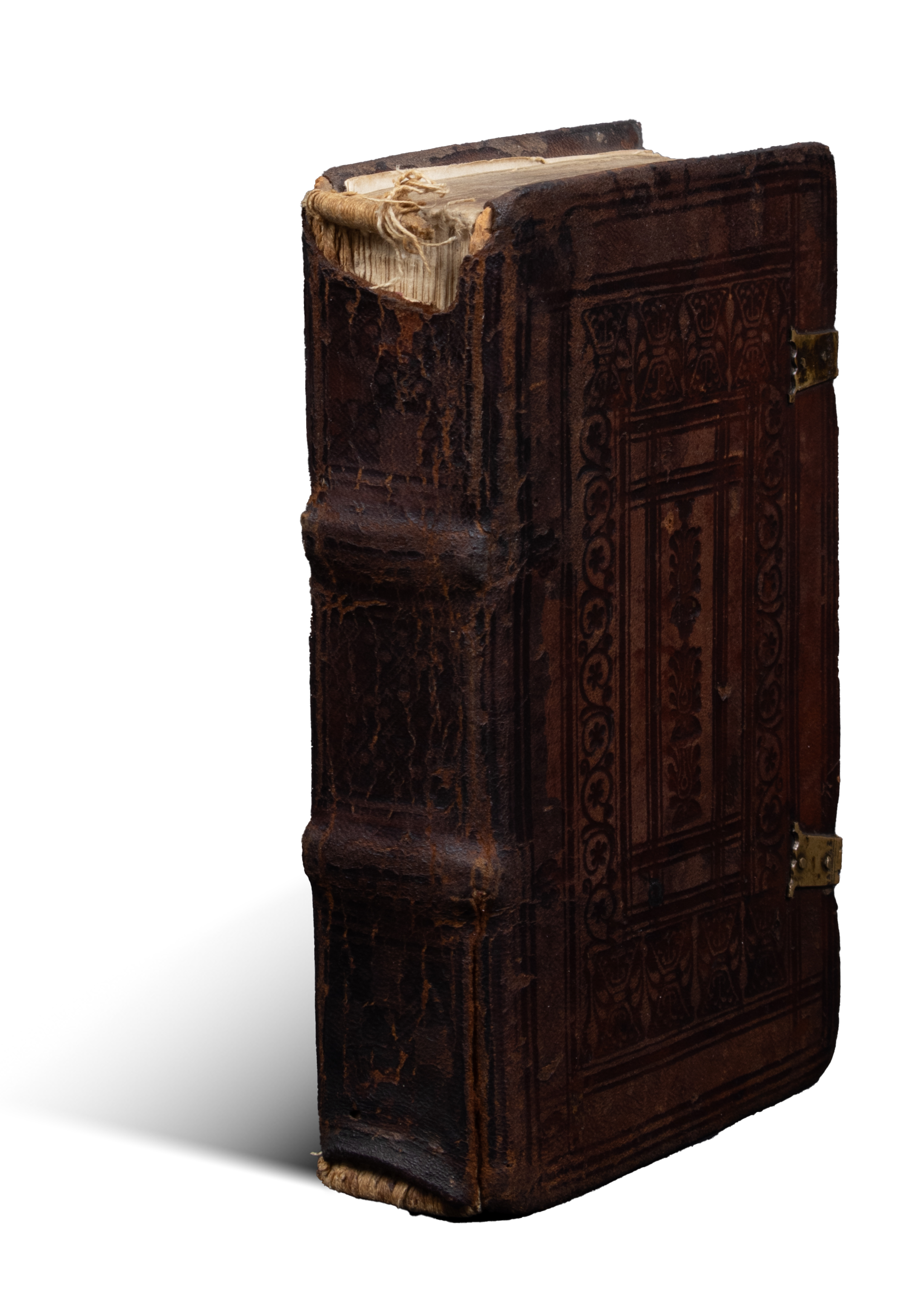
Magyar használatú Missale Romanum [Védett tétel]
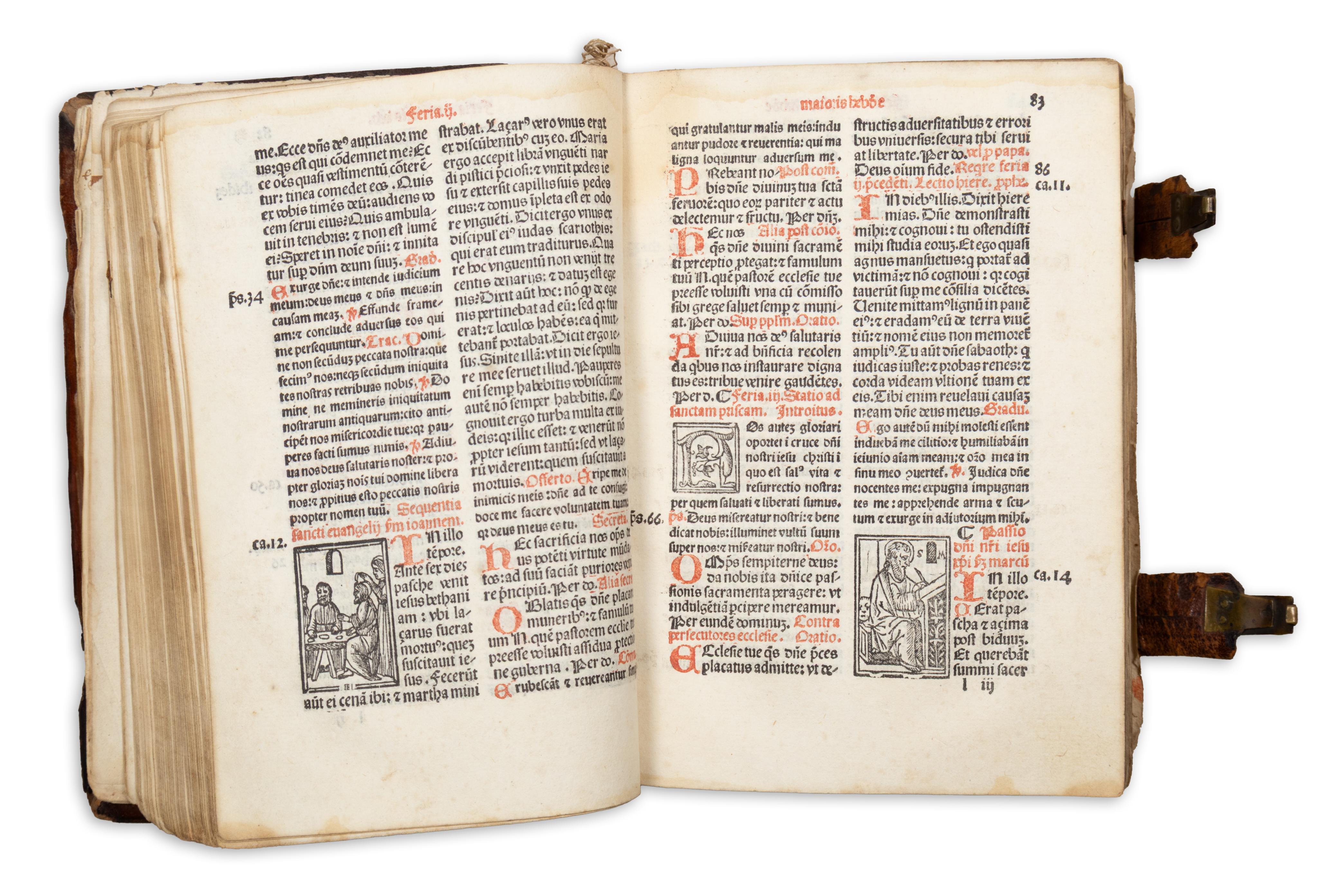
Venetiis [Velence], 1519. Lucantonio Giunta1t. (metszett díszcímlap) + [6] + 327 sz. lev. + [1]p.
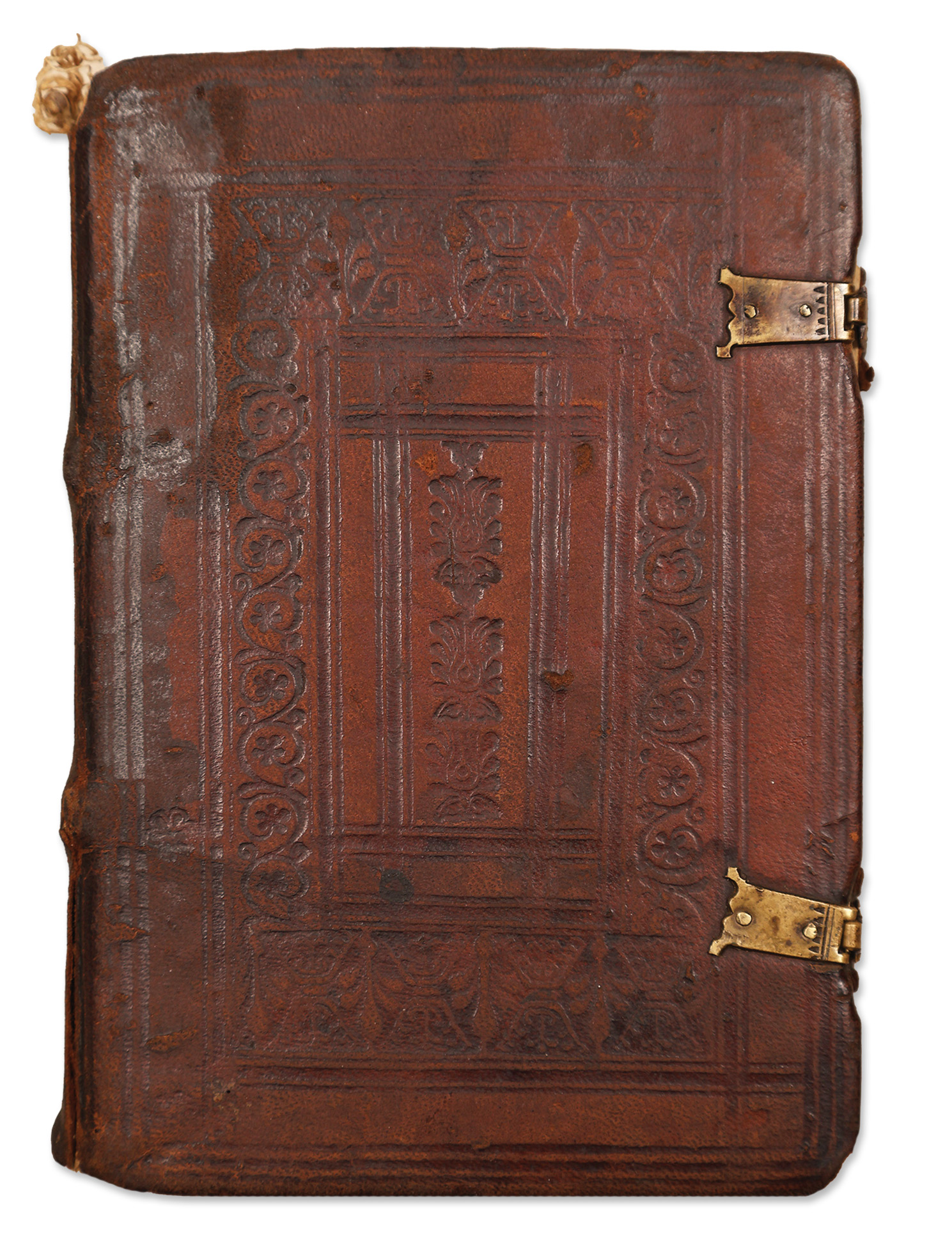
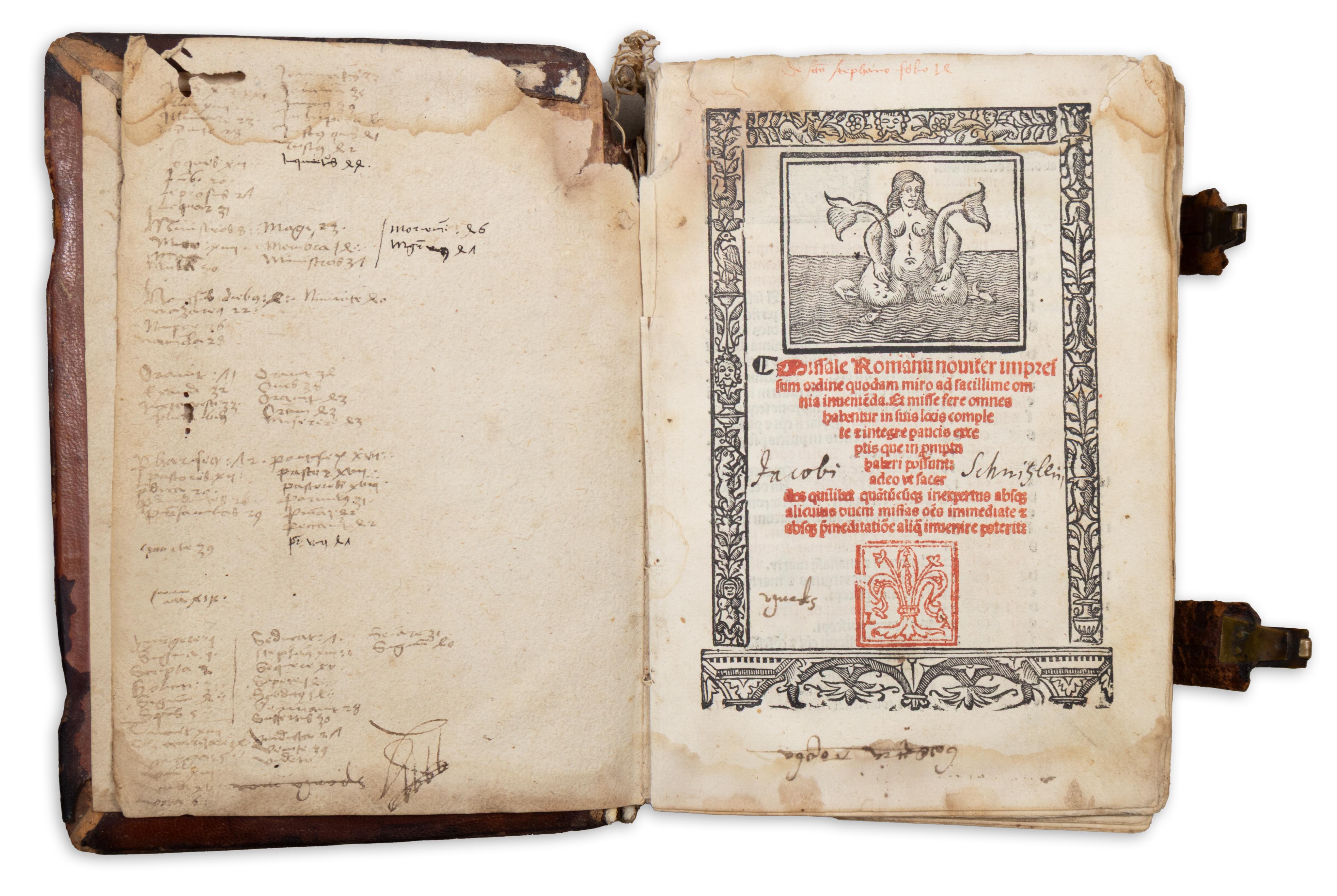
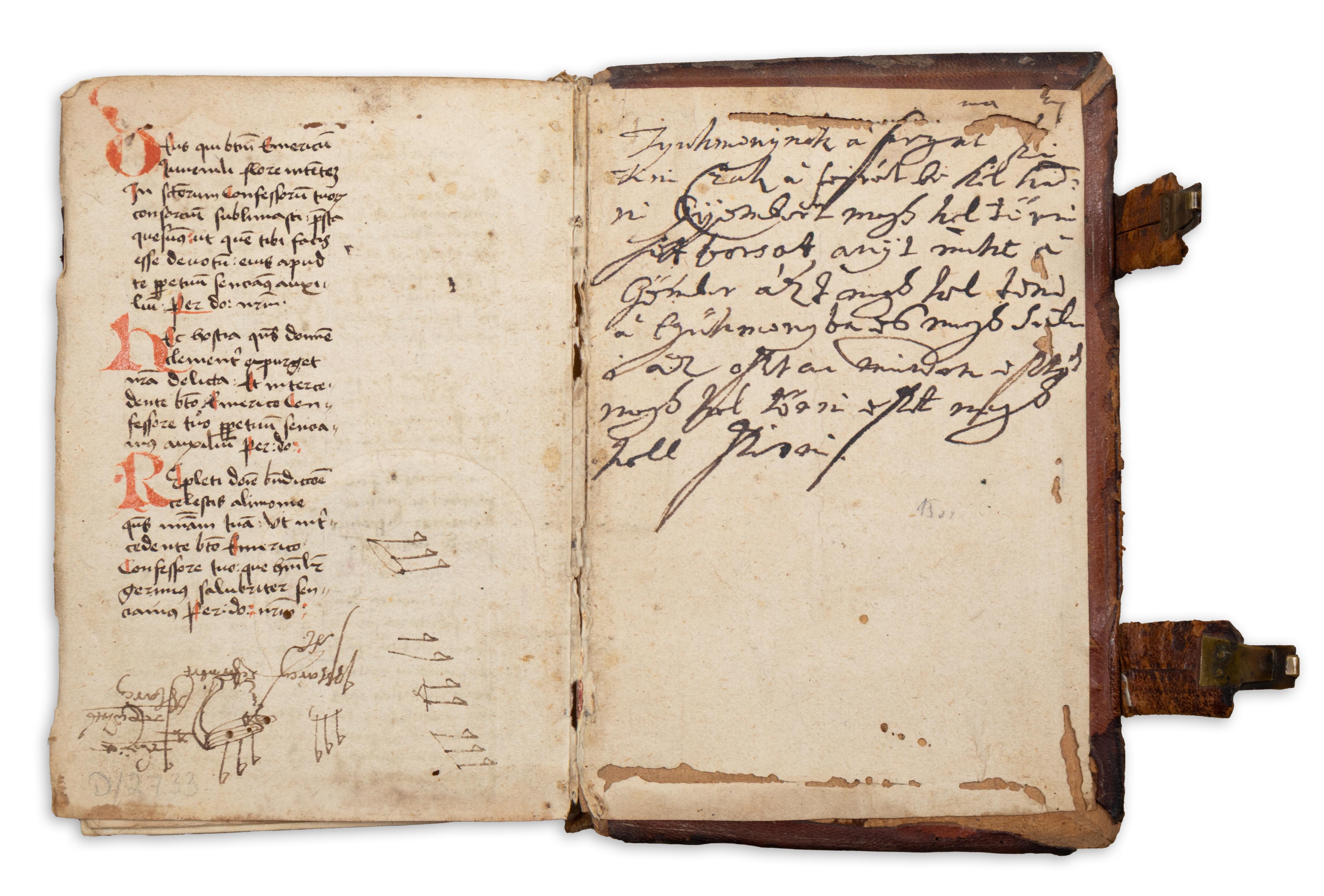
XVI. századi velencei misekönyv, a végén korabeli kézirat sequentia Szent István és Szent László királyról, azaz a mise menete közé iktatott ének az ünnep szentjéről. Jelen kötet több szempontból is fontos magyar művelődéstörténeti emlékünk: "A kötés a budai reneszánsz kötések egyik egyszerűbb, de jellegzetes példája, mégpedig a magyar nyelvemlékek (Virginia- és Nagy-szombati-kódex) csoportjából, illetve a könyv végén kézírásos Szt. István és Szt. László sequentia is a magyar használatot bizonyítja. A címlapon rubrummal beírta a használó, hogy »De Sancto Stephano folio 14«, felhívva az olvasó figyelmét István protomártírra, első királyunk védőszentjére. A háttábla kiragasztott előzékén magyar nyelvű recept olvasható későbbi időből." (Új Magyar Athenas 88–89).
XVI. századi befelé srégelt fatáblás, barna bőrkötés vaknyomással. Az elő- és háttábla azonos. Összesen ötféle minta díszíti. A két üres keret között látható az egyetlen díszített keret, amelynek rövidebb oldalain akantuszos-palmettás bélyegzők sorakoznak, a hosszabb oldalakon rozettás indadísz. A keskeny téglalap alakú középmezőben liliombélyegzők vannak. A bordavégeket kicsi szabad rozetták zárják. Két dupla bordára fűzték a könyvet, a három gerincmezőben a rácsdíszítmény alig kivehető. Az eredeti oromszegés fejnél felbomlott, lábnál kétszínű, sima varrott. Két rézkapoccsal záródik.
USTC No. 820130
USTC No. 820130