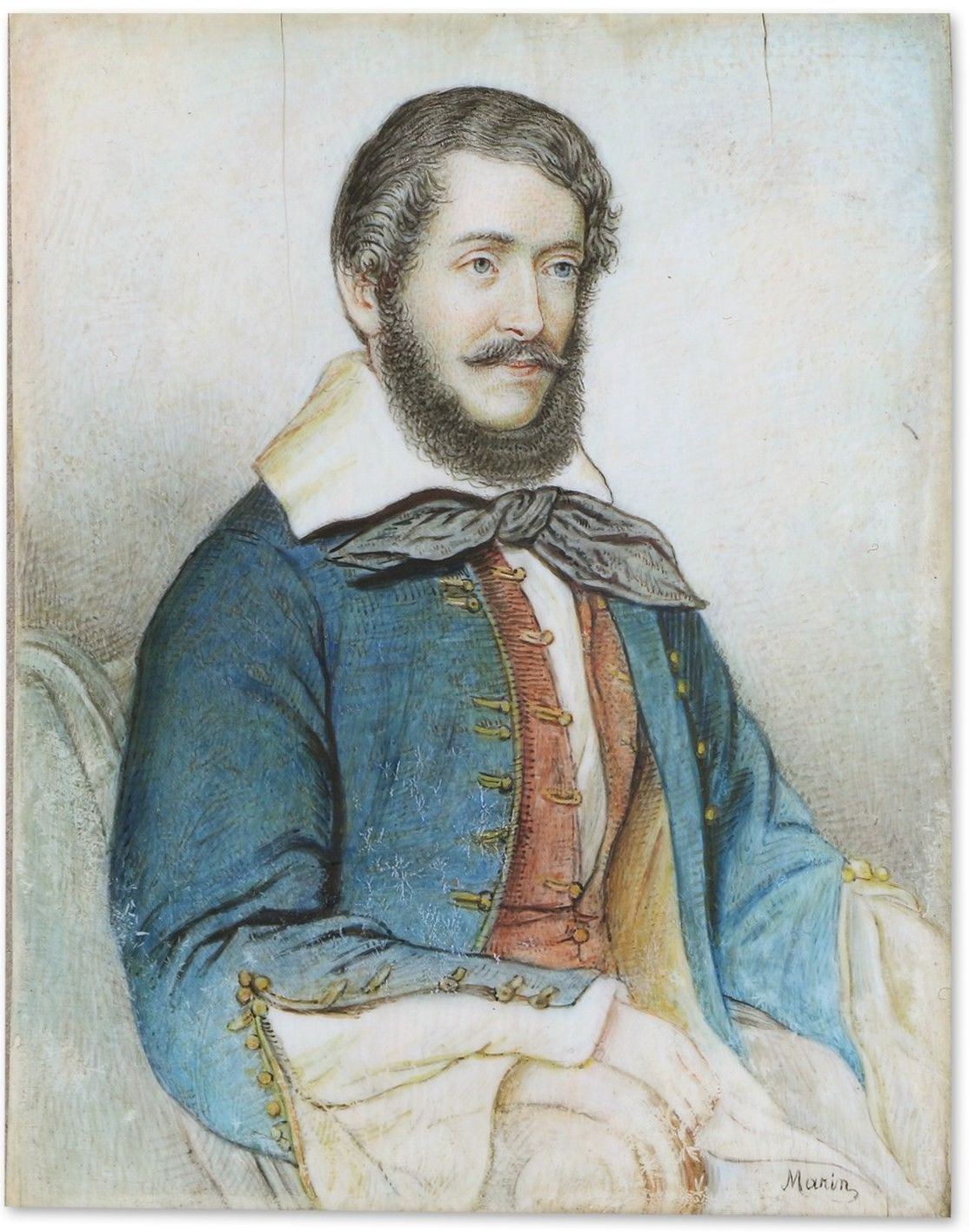
Kossuth Lajos festett portréja

Kossuth Lajos festett portréja

1841

Ár
HUF 750 000
Eladva
Category: Varia
ID
102673

E finom, ízléses, csontlemezre festett miniatűr nagy hasonlóságot mutat Eybl Ferenc (1806-1880), a Bécsi Akadémia nagy hírű festőjének 1841-es Kossuth litográfiájával. Eybl, aki ekkor még Bécsben működött, majd 1842-től hazánkban is, megbízást kapott több korabeli magyar politikus litográfiájának elkészítésére, Kossuthé mellett például Széchenyi Istvánéra is. Kossuth egy másik híres derékképe is osztrák kezekhez köthető: August Prinzhofer és Johann Rauh 1848-ban örökítette meg történelmünk (mondhatni) talán legismertebb politikusát. Bár a magyar reformkor nagyjának arcvonásait általában Barabás Miklós (1810-1898) ábrázolásainak közvetítésével őrizte meg a nemzeti emlékezet, Kossuth mindkét osztrák ábrázolása nevezetes a reformkor ikonográfiájában, sok művészi feldolgozás született belőlük. Kossuth az első újkori magyar politikusok egyike, akik tudatosan alakították ki a külvilág róluk alkotott képét. Vérbeli politikusként saját ábrázolásaira is mögöttes célokkal és számításokkal tekintett. Prinzhofer és Rauh elszánt, hősiesen előre tekintő, hazájának utat mutató Kossuthjával szemben Eybl bölcs nyugalommal ábrázolja a hatalmas népszerűségnek örvendő politikust. Valószínűleg Kossuth egy korabeli rajongója, egy ügyeskezű műkedvelő másolhatta le Eybl sokszorosított litográfiáját.
(A BTM Fővárosi Képtár Kossuth-ikonográfia leírásának felhasználásával.)

This fine, tasteful miniature painted on ivory was copied from the 1841 Kossuth-lithography by Franz Eybl (1806-1880), a famous painter of the Vienna Academy. Eybl, who worked in Vienna at the time, and then in Hungary from 1842, was commissioned to produce lithographs of several Hungarian politicians of the time, including István Széchenyi in addition to Kossuth's. Another famous portrait of Kossuth can be attributed to Austrian hands: August Prinzhofer and Johann Rauh immortalized perhaps the (arguably) best-known politician in our history in 1848. Although the facial features of the great Hungarian reformers were usually preserved in the national memory through the depictions of Miklós Barabás (1810-1898), Kossuth's depictions of both Austrians are notable in the iconography of the reform period, and many artistic adaptations were based on them. Kossuth is one of the first modern Hungarian politicians who consciously shaped his political image; he viewed his depictions with underlying goals and calculations. Eybl depicts the immensely popular politician with calm wisdom, in contrast to Prinzhofer and Rauh who portray him as determined, heroically forward-looking and showing the way for his country. Probably a contemporary fan of Kossuth, a dilettante art lover, could have copied Eybl's lithograph.
(Using the description of Kossuth-iconography of the BTM Capital Gallery.)
78mm x 100mm