

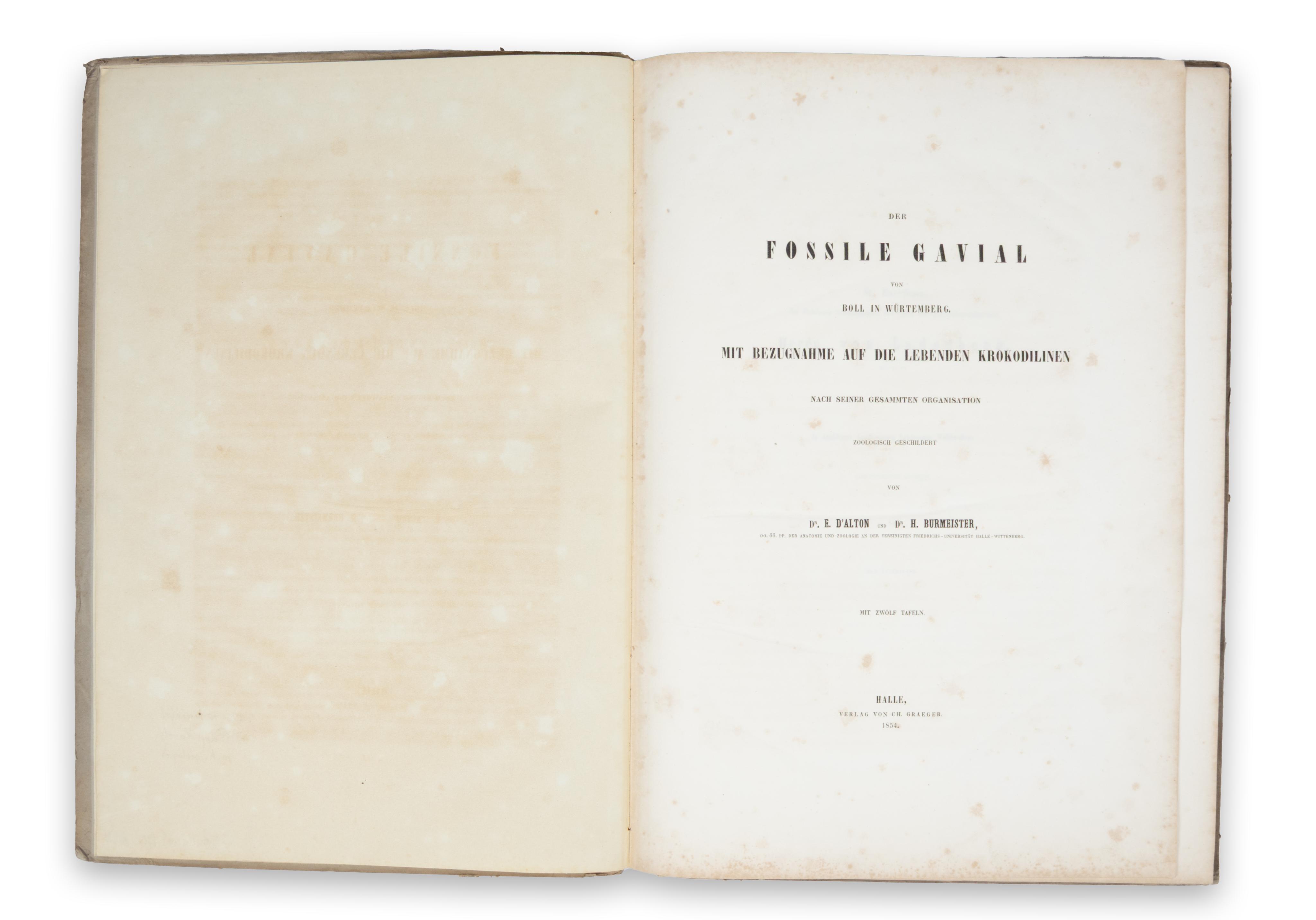
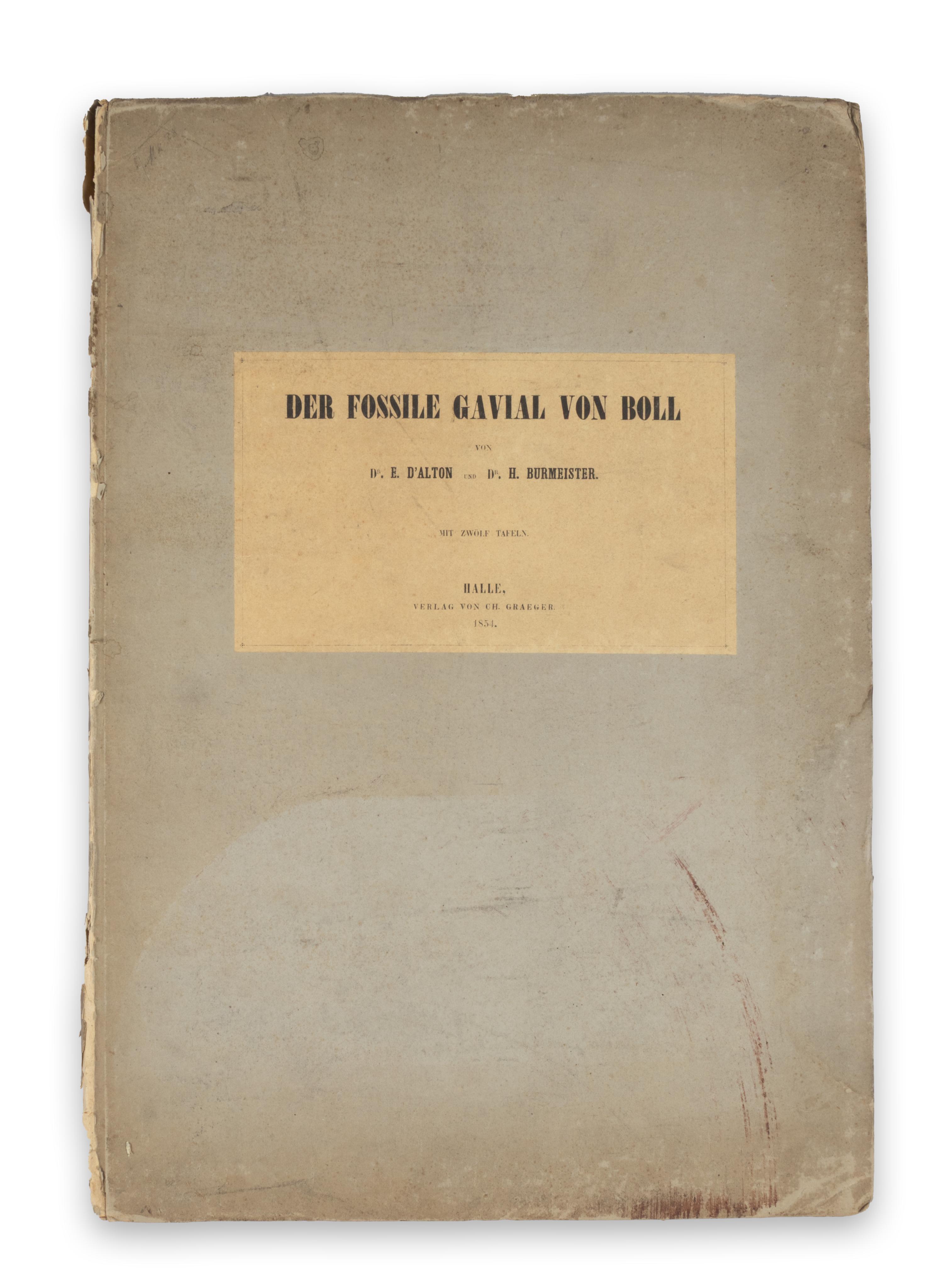
Der fossile Gavial von Boll in Würtemberg
Halle, 1854. Ch. Graeger.Jelentős őslénytani mű, amely átfogó anatómiai leírást ad a délnyugat-németországi Posidonia-palából előkerült jura kori tengeri krokodilokról.
A mű a neves anatómus, Eduard d’Alton (1803–1854) és a természettudós Hermann Burmeister (1807–1892) közös munkája. A d’Alton halálának évében megjelent kötet a ’bolli gaviál’ egyik legkorábbi, részletes összehasonlító elemzése (a fajt korábban Steneosaurus-ként azonosították, ma gyakran a Macrospondylus bollensis néven sorolják be). A szerzők a fosszilis csontvázszerkezetet aprólékos gondossággal vetik össze a ma élő krokodilfélék, különösen az indiai gaviál anatómiájával.
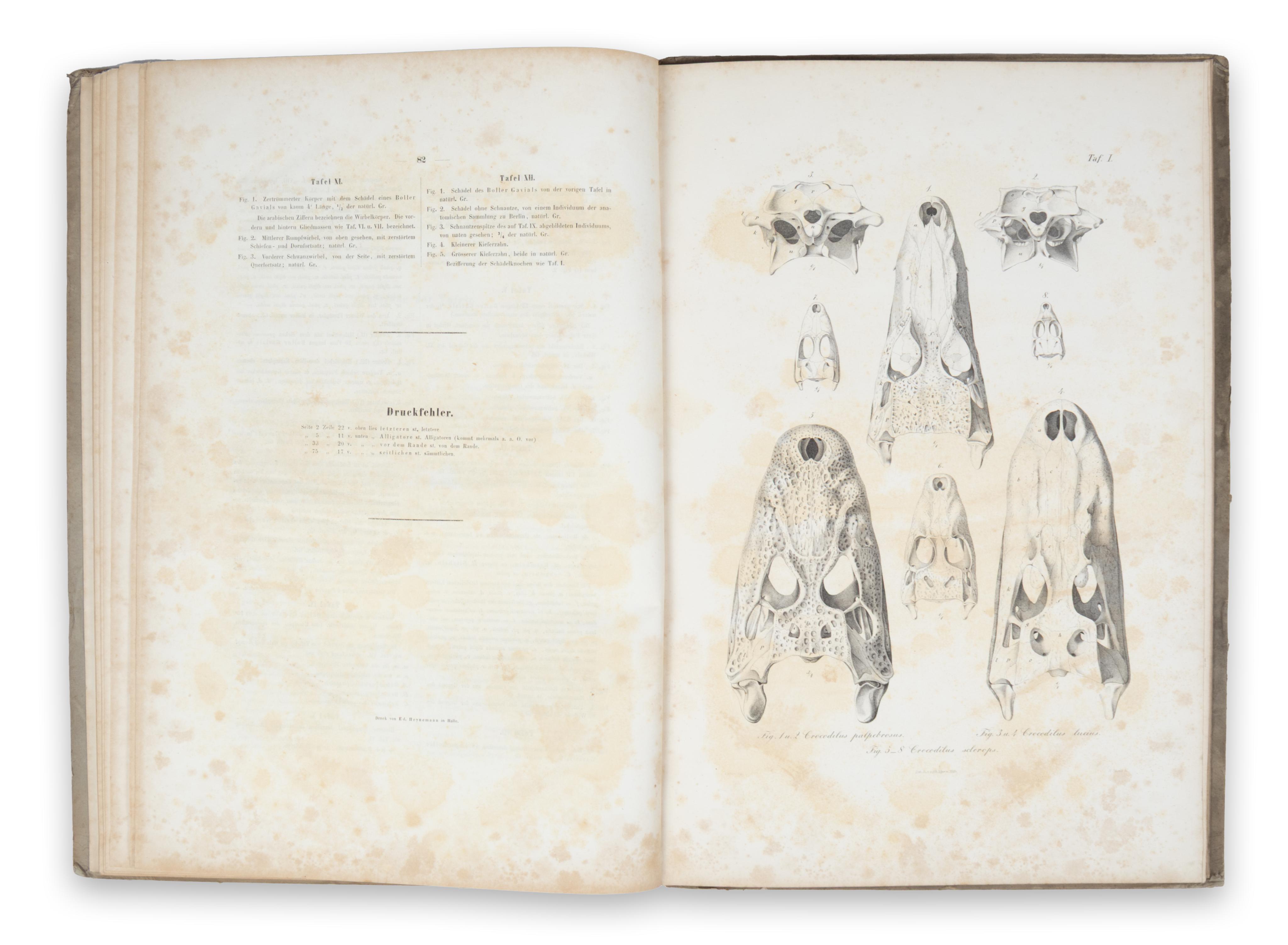
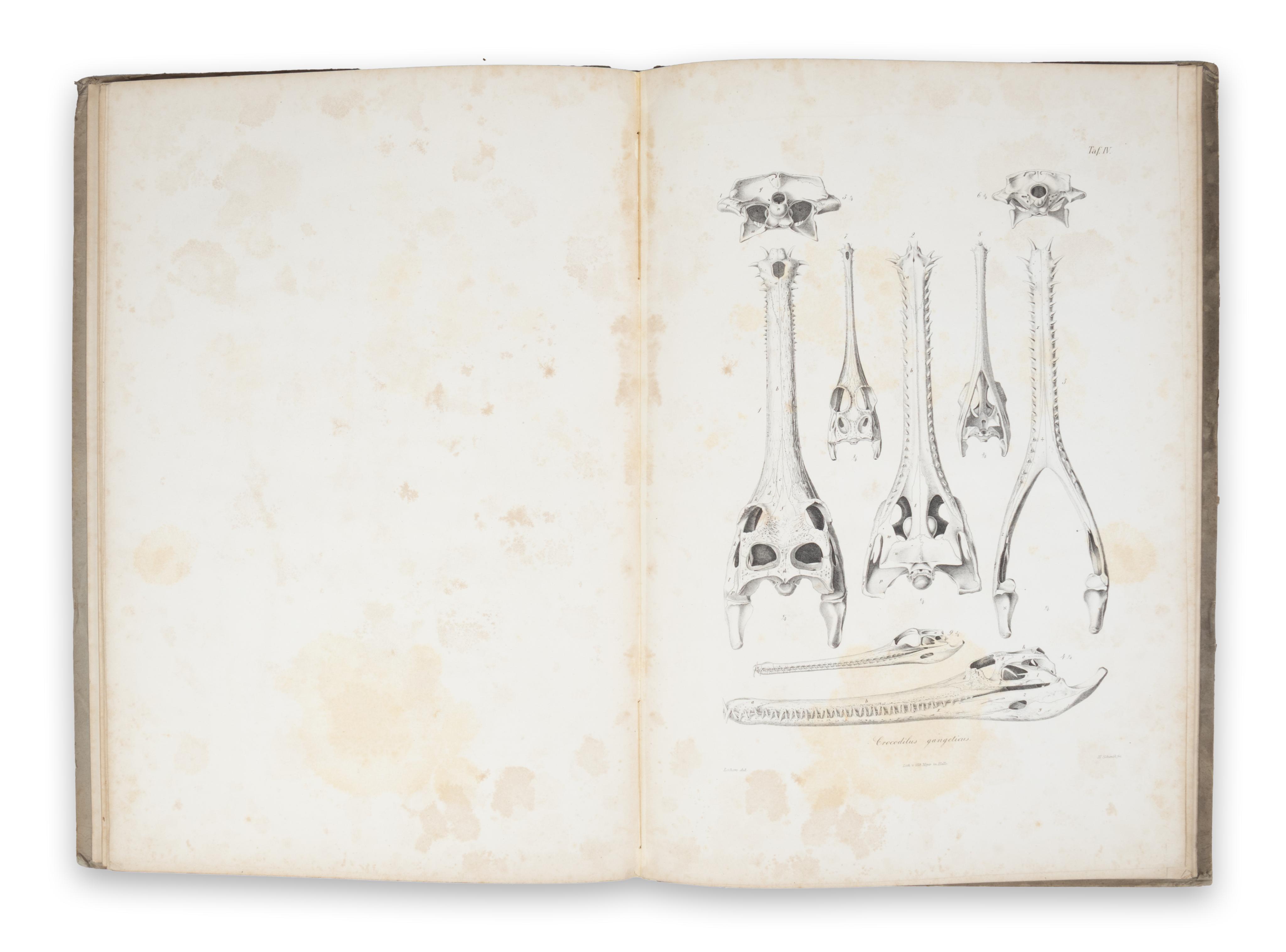
A szöveges részt 12 igényes kivitelezésű kőnyomat (litográfia) egészíti ki, amelyek a leletek koponyáját, csigolyáit és végtagcsontjait ábrázolják kivételes tudományos pontossággal.
Az előzéklapon Dr. Papp Károly (1873-1963), a Magyar Királyi Földtani Intézet geológusának tintás bejegyzése: "Vettem 10 koronáért [...] Budapest, 1908. nov, 14", illetve Kretzói Miklós ceruzás bejegyzése.
VI + 82 p. + 12 rézmetszetű t. Folio.
Kiadói papírkötésben. Gerinc kissé sérült, a lapok enyhén rozsdafoltosak.
The work is a collaboration between the renowned anatomist Eduard d’Alton (1803–1854) and the naturalist Hermann Burmeister (1807–1892). Published in the year of d'Alton's death, it represents one of the earliest detailed comparative analyses of the "Boll Gavial" (historically identified with Steneosaurus, now often classified as Macrospondylus bollensis). The authors meticulously compare the fossilized skeletal structures with those of extant crocodilians, specifically the Indian Gharial.
The text is accompanied by 12 fine lithographic plates illustrating the skull, vertebrae, and limb bones of the specimens with exceptional scientific accuracy.
On the flyleaf ink inscription by Dr. Károly Papp (1873–1963), geologist of the Royal Hungarian Geological Institute, pencil notation of Miklós Kretzói on the top right.
VI + 82 pp. + 12 copper-engraved plates. Folio.
In publisher's paper binding. Spine damaged, some foxing. Very rare publication on the market