

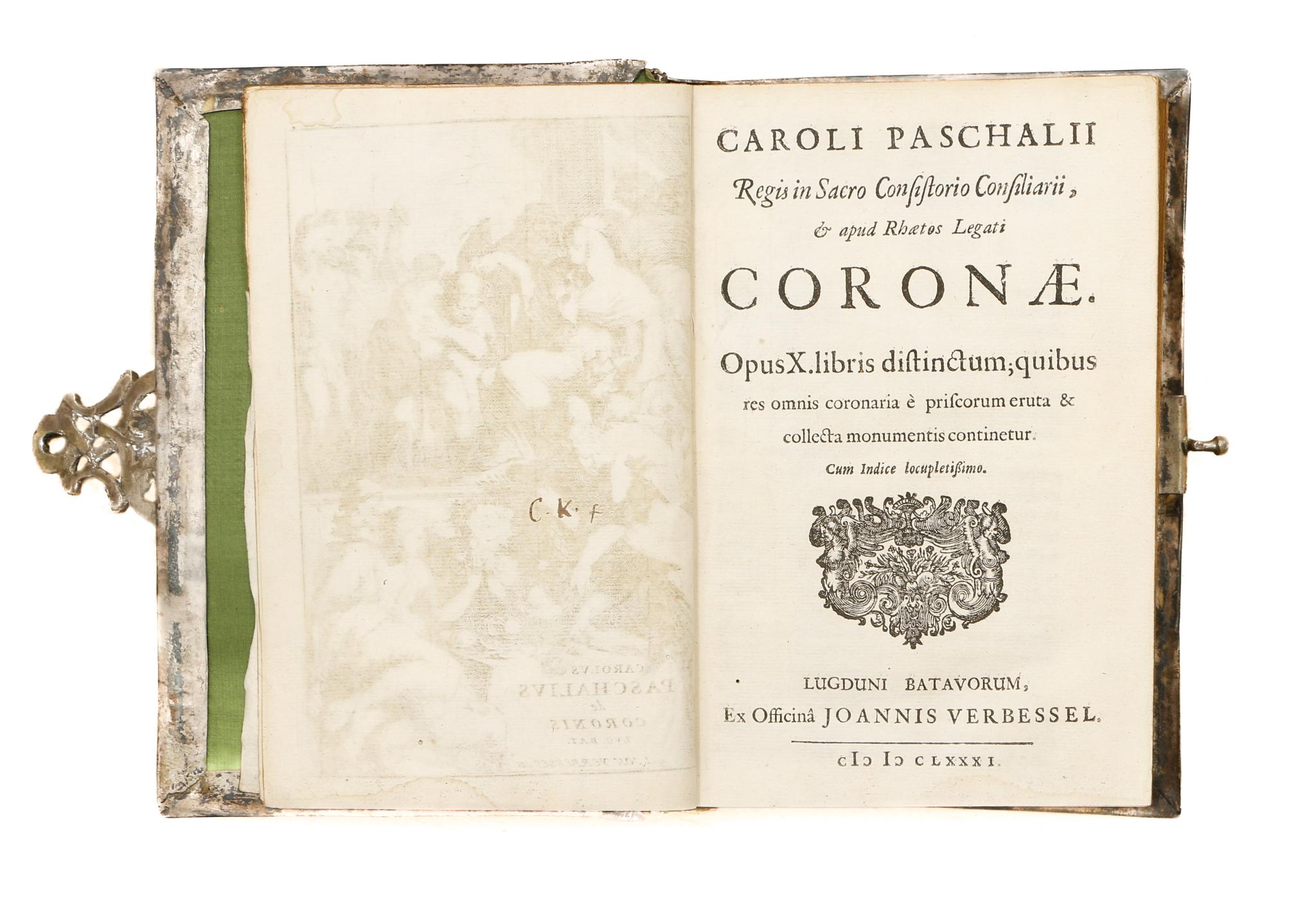
A hordozókötet: Caroli Paschalii Regis in sacro consistorio consiliarii et apud Rhaetos Legati Coronae. Opus X libris distinctum, quibus res omnis coronoria è priscorum eruta & collecta monumentis continetur. Lugduni Batavorum, [Leiden] 1681. Ex officina Joannis Verbessel. Koll.: 1 rézm.t. (díszcímlap) + (14) + 730 + (38) p.
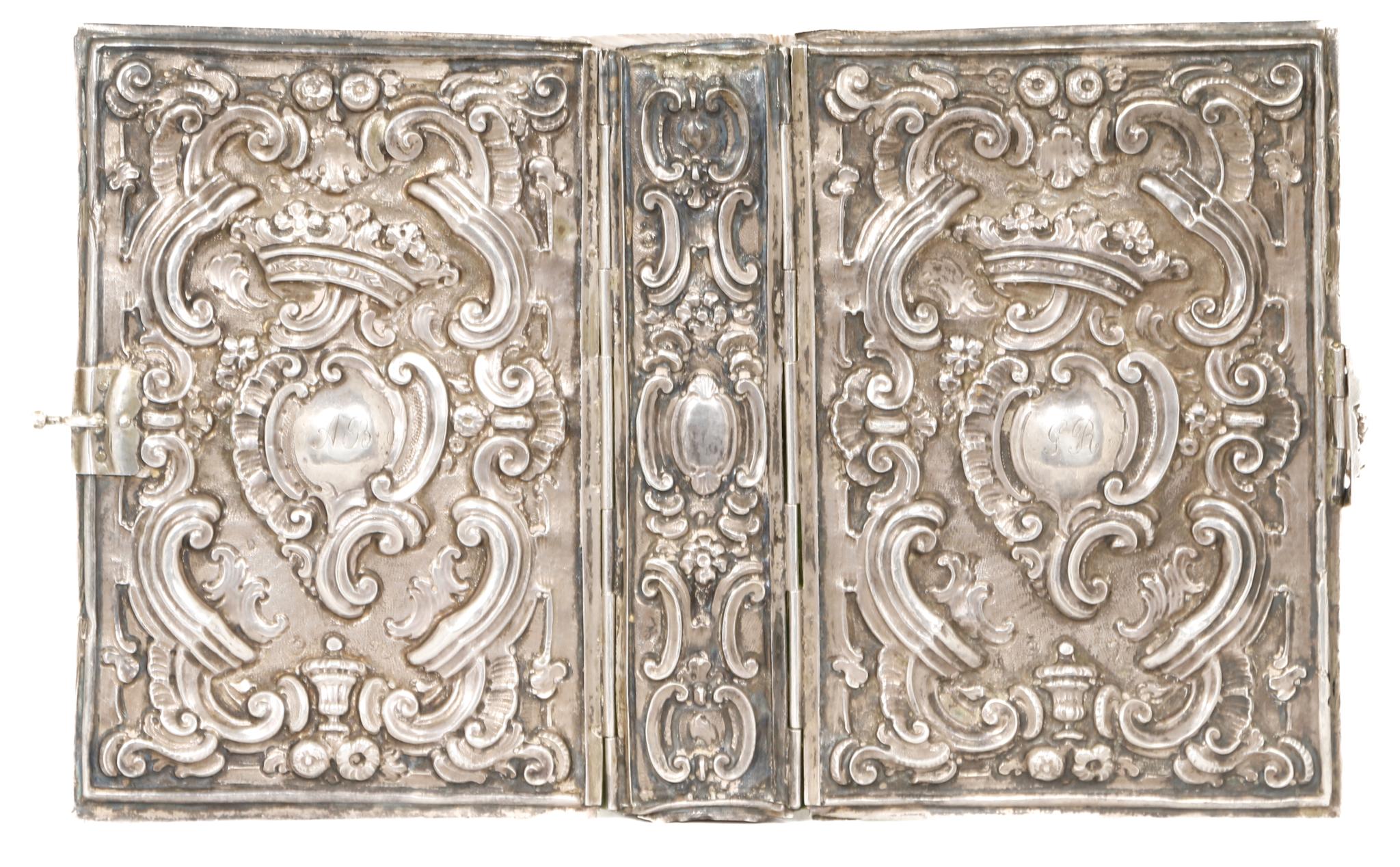
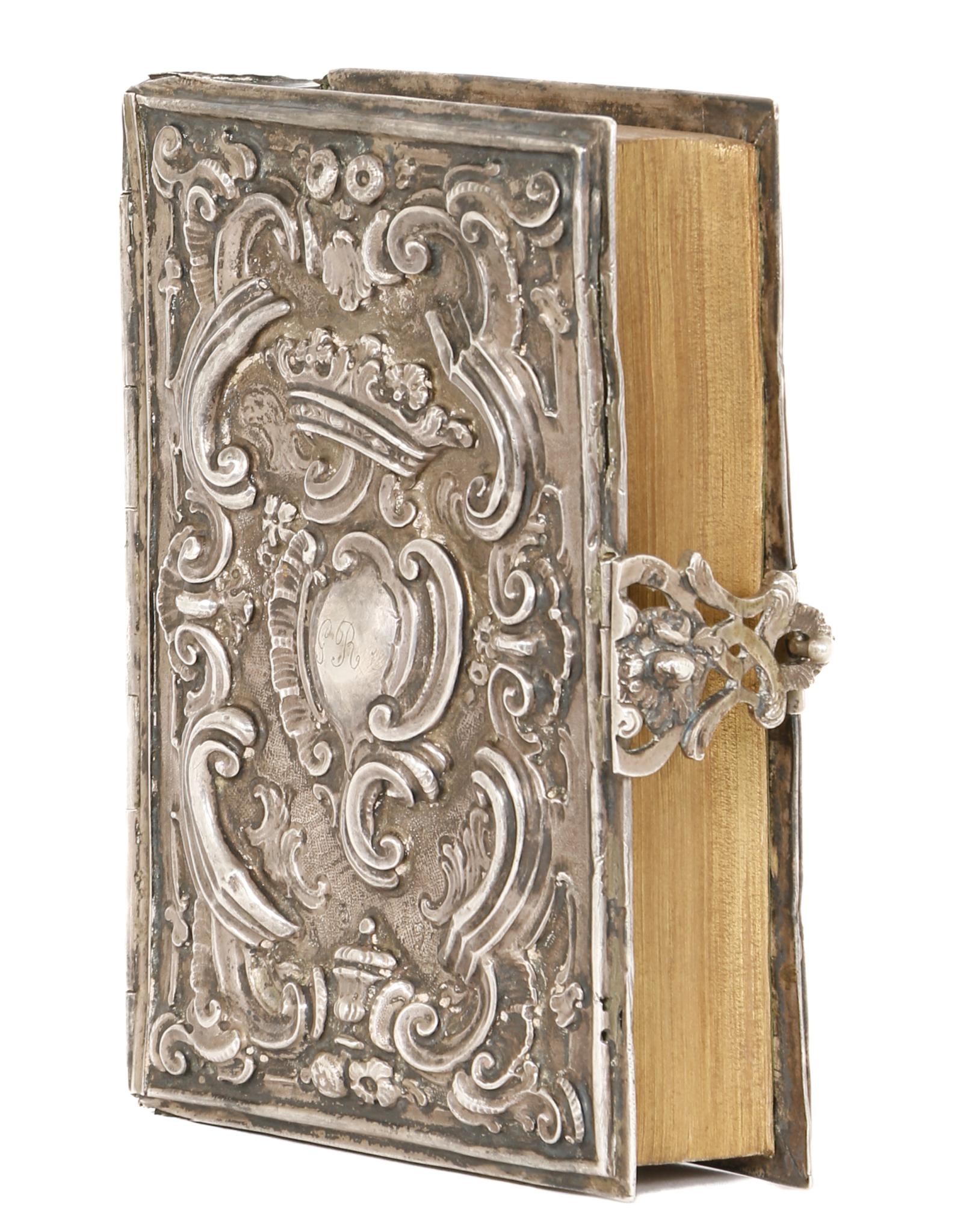
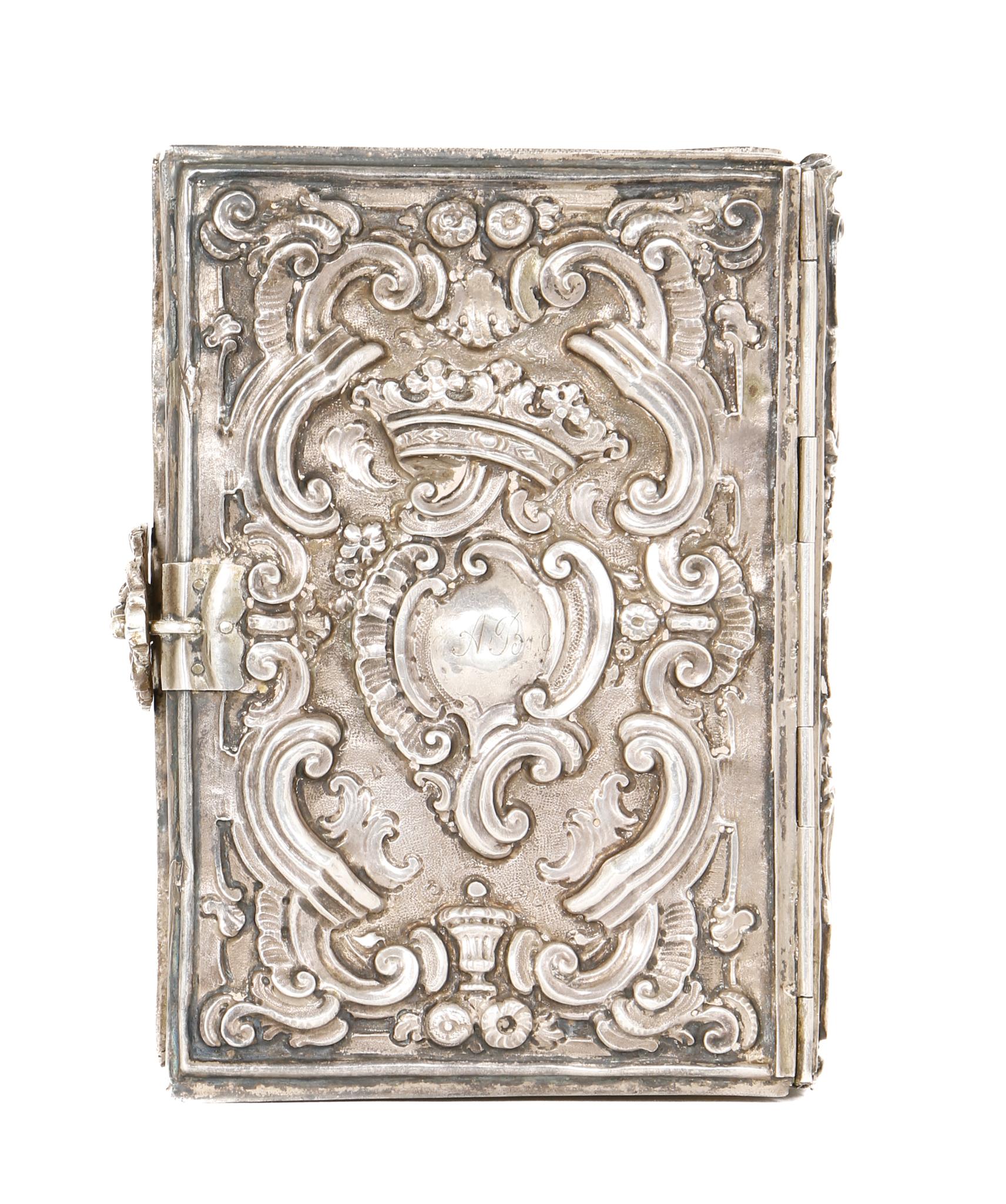
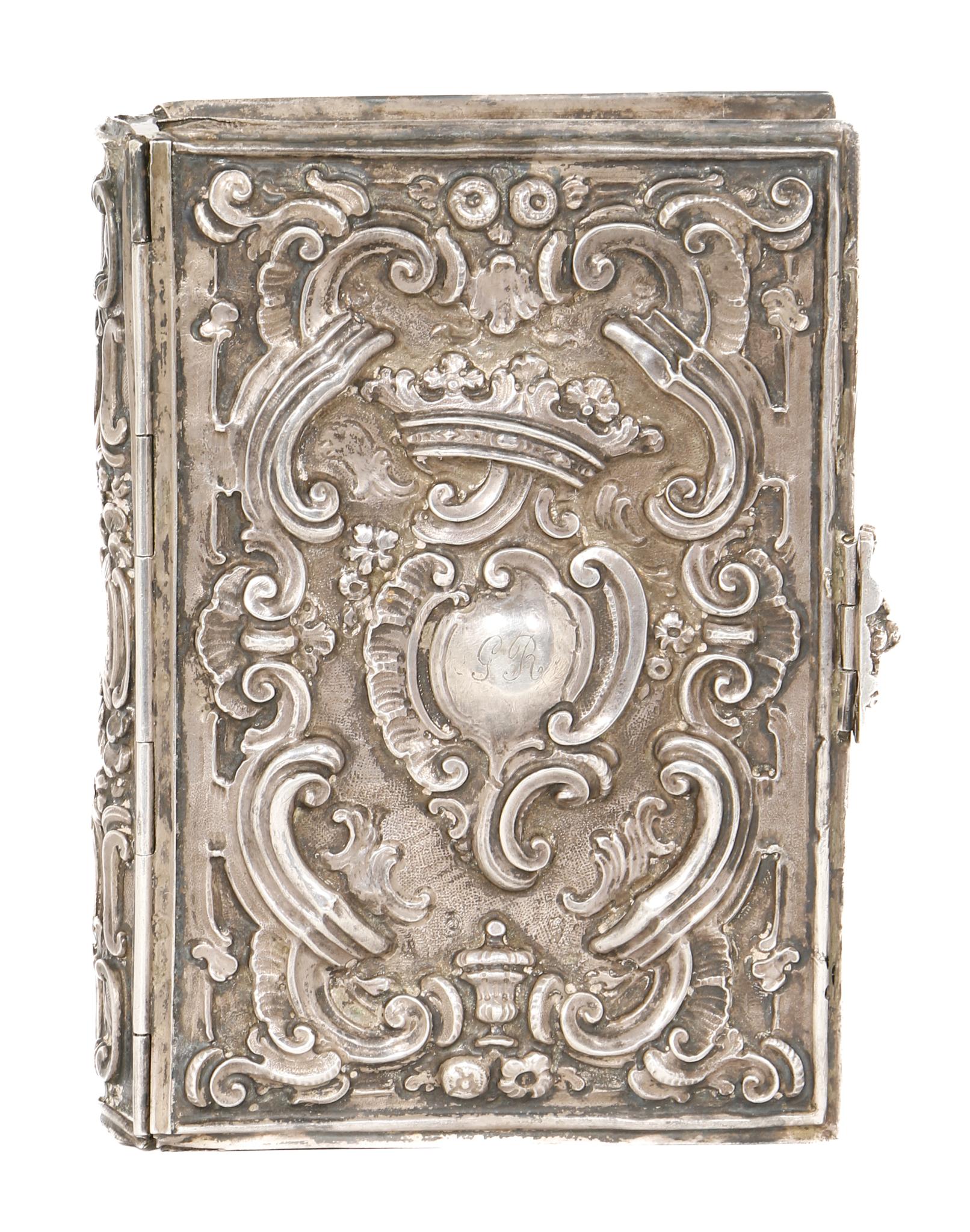
Kötése fatáblára hajtott, öntött, vastag, cizellált és trébelt ezüst lemez, gazdag növényi ornamentikával és kagylós motívummal. Gyönyörű, egyedi, ötvösmunka, vélhetően német mester készítette a 19. század közepén. Az első és a hátsó tábla közepén, a korona alatt monogramos vésetek G. R. és A. B., amelyek a főrangú tulajdonosra utalnak. Körül aranyozott lapélekkel. Stabil kötésű unikális példány, tiszta levelekkel, nagyon szép állapotban. M:12,5×17,5 cm.
Carlo Pasquali (Pascale) olasz származású tudós, diplomata (1547-1625). Az 1560-ban eretnekség vádjával élve elégetett Gian Luigi Pascuale unokája, akinek a pártfogoltja volt. Franciaországba költözött, ahol Plantin nyomdásznak dolgozott. Pascal néven francia állampolgárrá honosították, majd londoni követ és a roueni parlament főtanácsosa volt. III. Henrik nemesi rangra emelte (fleur de lis). E műve a királyi koronák használatáról szóló értekezés, a klasszikus idézetek széles repertoárjával, amely hatalmas műveltségéről tesz tanúbizonyságot. A kötés különlegessége, hogy hasonló díszes munkák általában egyházi témájú könyveket borítottak, ez pedig világi témával foglalkozó kötet. Első kiadása Párizsban jelent meg Plantin-nál, ez a harmadik megjelenés. Az utolsó levélen: Excudebat Abrahamus Verhoef typographus 1671. Graesse, V, 148. Brunet, IV, 404
Graesse, V, 148. Brunet, IV, 404
Bound in silver plate folded on a wooden board, embossed, with rich floral ornamentation and a shell motif. A beautiful, unique piece of engraving, probably made by a French or German-Alpine master in the early 18th century. The centre of the front and back boards, under the crown, are monogrammed G. R. and A. B., which may have been added later.
With gilt edges all around. A sturdily bound unique copy with clean leaves, in very nice condition.
M:12,5×17,5 cm.