

![Széchenyi István: Hitel. [Dedikált első kiadás] Pesten, 1830. Trattner és Károlyi.](http://kozpontiantikvarium.hu/sites/default/files/2026-01/hitel_cimlap_ded.jpg "Széchenyi István: Hitel. [Dedikált első kiadás] Pesten, 1830. Trattner és Károlyi.")
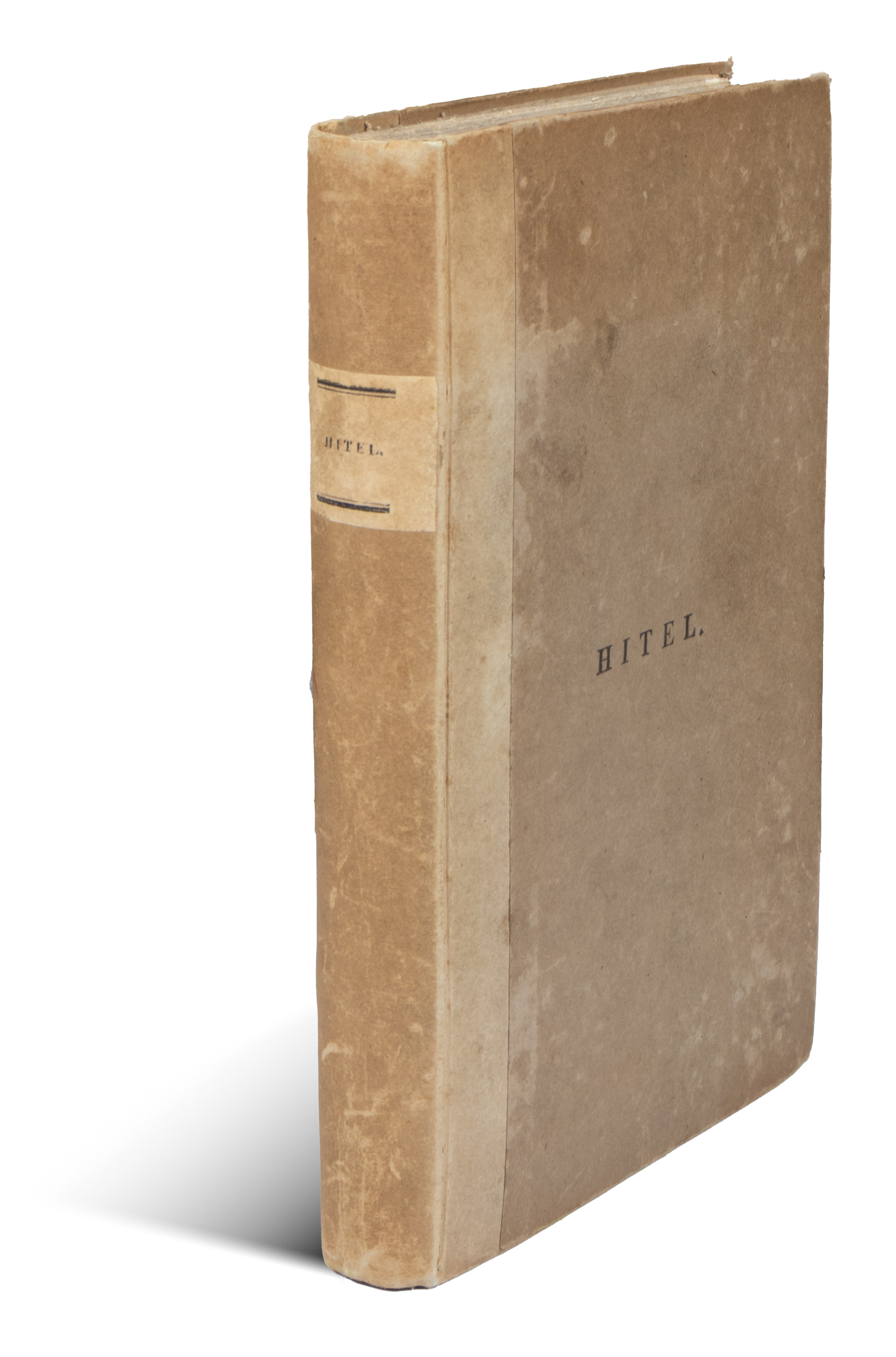
Hitel. [Dedikált első kiadás]
Pesten, 1830. Trattner és Károlyi.XX+(1)+22-270+(1)p. Első kiadás.
A magyar gazdaságtörténet és politikai gondolkodás egyik, ha nem a legfontosabb mérföldköve, az 1830-as évek reformmozgalmának szellemi kiindulópontja. Jelen tétel nem csupán tartalmában, de fizikai valójában is kimagasló ritkaság: a Szentkirályi-féle bibliográfia által is jegyzett, rendkívül csekély példányszámban készült, vastag papíros luxusváltozat egyik kivételes darabja.
A kötet tökéletes állapotban vészelte át az elmúlt közel két évszázadot. Ami azonban a tételt valódi történeti szenzációvá és unikálissá teszi, az a címlappal szemközti levélen olvasható autográf bejegyzés. A „legnagyobb magyar” saját kezű, tintával írt ajánlása olvasható:
„M. Gróf Festetich Borbálának Leg mélyebb tisztelettel Gr. Széchenyi István”
Az ajánlás intimitását és különleges értékét a címzett személye adja. A dedikáció nem egy távoli ismerősnek, hanem közeli családtagnak, az unokatestvérnek szól. Széchenyi édesanyja, gróf Festetich Julianna révén a gróf szoros kapcsolatot ápolt a Festetich-ággal. Julianna testvére volt a „magyar genetika atyjaként” tisztelt Festetich Imre, akinek elsőszülött leánya, Borbála (később gróf futaki Hadik Vilmos hitvese) kapta ezt a becses példányt. A kötet így nemcsak politikai programirat, hanem egyben személyes családi relikvia is.
A mű provenienciája épp ilyen izgalmas: a címlapon látható tulajdonosi bejegyzés tanúsága szerint a kötet később a neves zeneszerző és színházi intendáns, Gróf Festetich Leó könyvtárát gazdagította, a dedikáció alatt Magyarország egyik legjelentősebb műgyűjtőjének, Ernst Lajosnak, az Ernst Múzeum alapítójának gyűjteményi bélyegzője látható.
Kiadói papírkötésben. Körülvágatlan, kifogástalan példány.
Szentkirályi: 116. Ernst No. 3821.
XX+(1)+22-270+(1) p. First edition.
One of, if not the most significant milestones in Hungarian economic history and political thought, serving as the intellectual catalyst for the reform movement of the 1830s.
An outstanding rarity not only in its content but also in its physical form: it is an exceptional copy of the luxury edition printed on heavy paper, produced in extremely limited numbers as noted in the Szentkirályi bibliography.
The volume has survived the past nearly two centuries in perfect condition. However, what renders this lot a true historical sensation and a unique item is the autograph inscription found on the leaf facing the title page. It bears the handwritten ink dedication of "The Greatest Hungarian":
„To E[steemed] Count[ess] Borbála Festetich with deepest respect C[ount]. István Széchenyi”
The intimacy and special value of the inscription derive from the identity of the recipient. The dedication is addressed not to a distant acquaintance, but to a close family member: his cousin. Through his mother, Countess Julianna Festetich, the Count maintained close ties with the Festetich branch. Julianna's brother was Imre Festetich, revered as the "father of Hungarian genetics," whose firstborn daughter, Borbála (later the wife of Count Vilmos Hadik de Futak), received this cherished copy. Thus, the volume is not merely a political manifesto but also a personal family relic.
The work's provenance is equally exciting: according to the ownership inscription on the title page, the volume later enriched the library of the renowned composer and theater intendant, Count Leó Festetich; while beneath the dedication, the distinctive collection stamp of Lajos Ernst – one of Hungary's most significant art collectors and founder of the Ernst Museum – can be seen.
In publisher's paper wrappers. An uncut, flawless copy.
Reference: Szentkirályi: 116.