

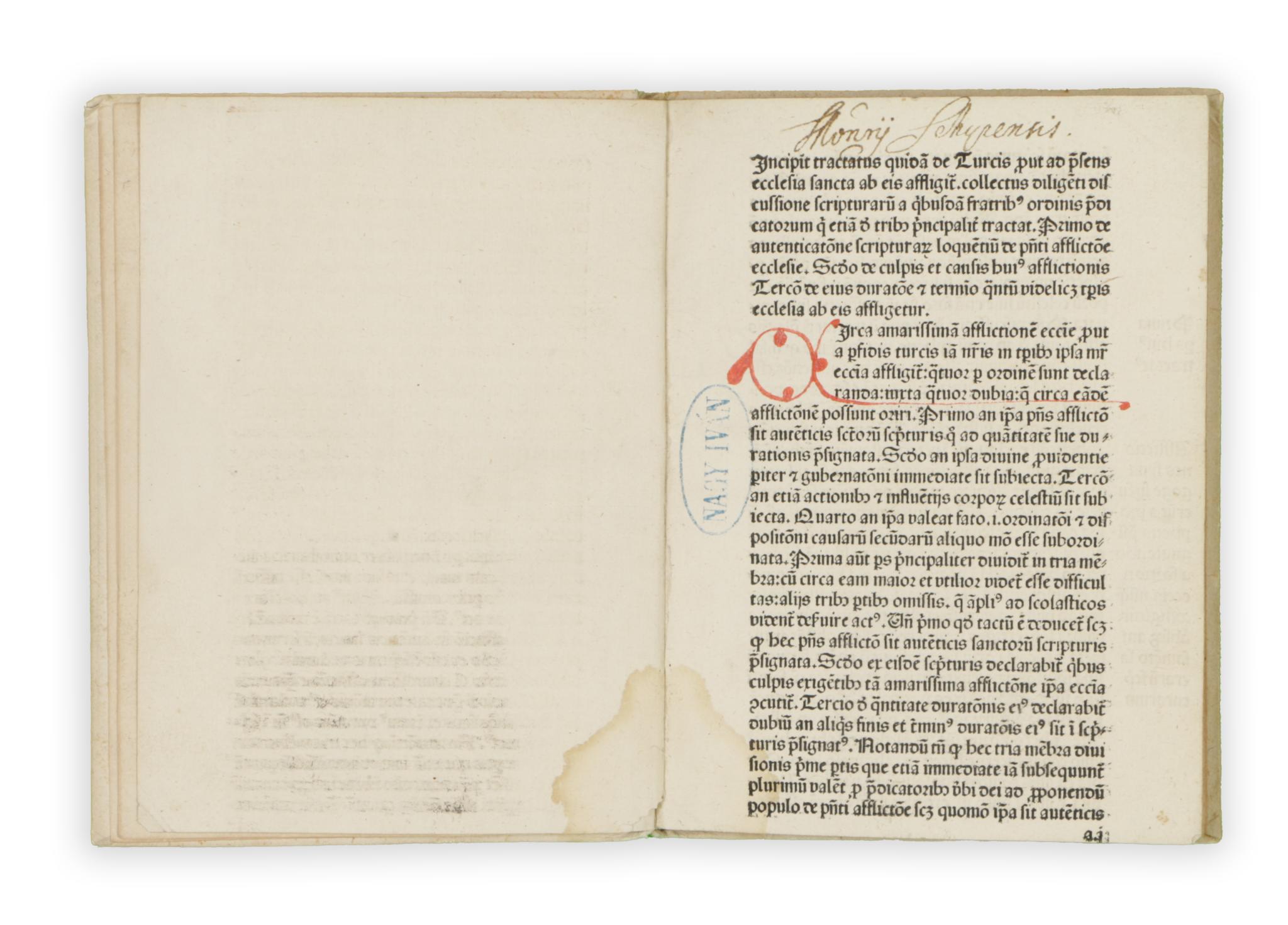
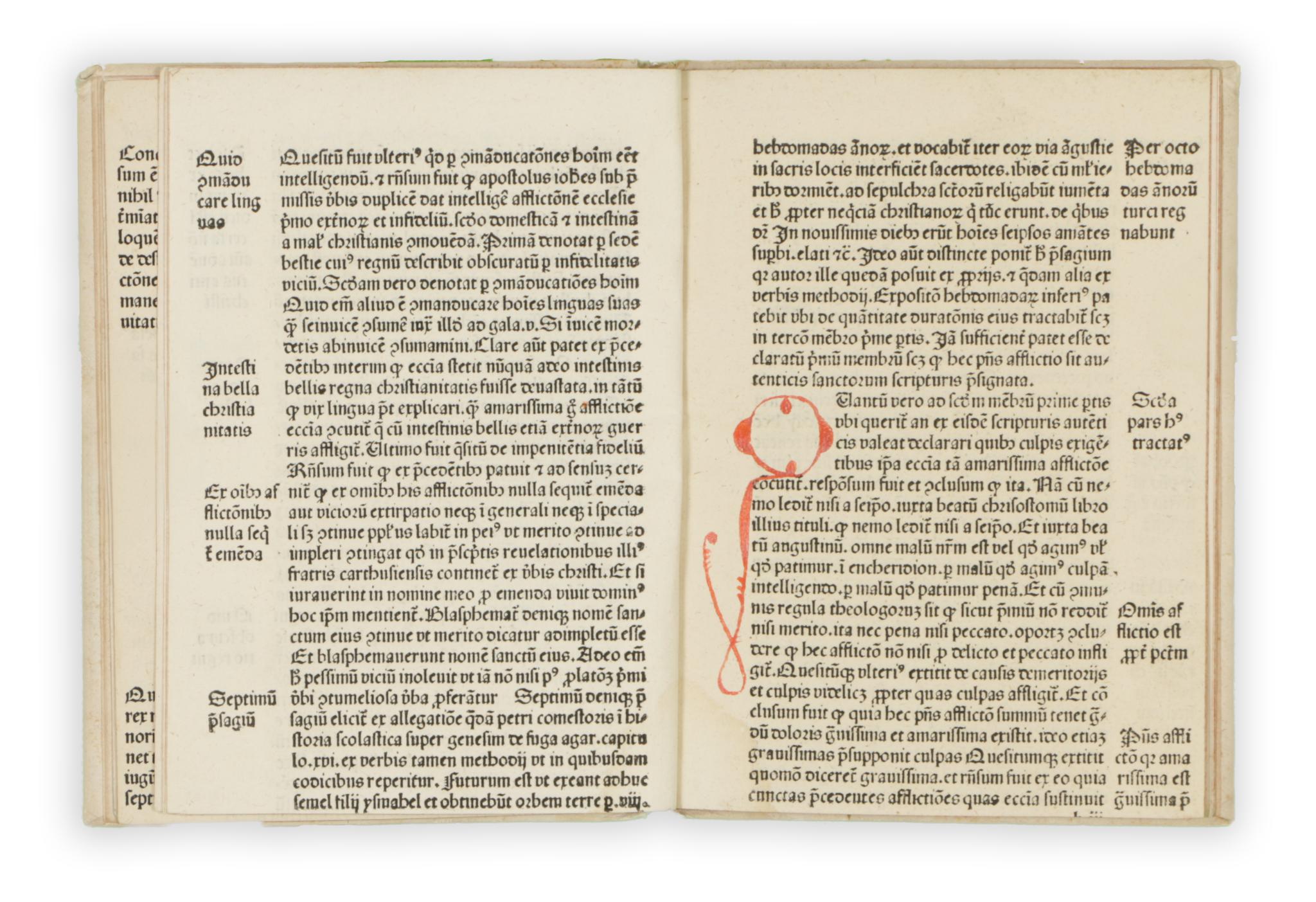
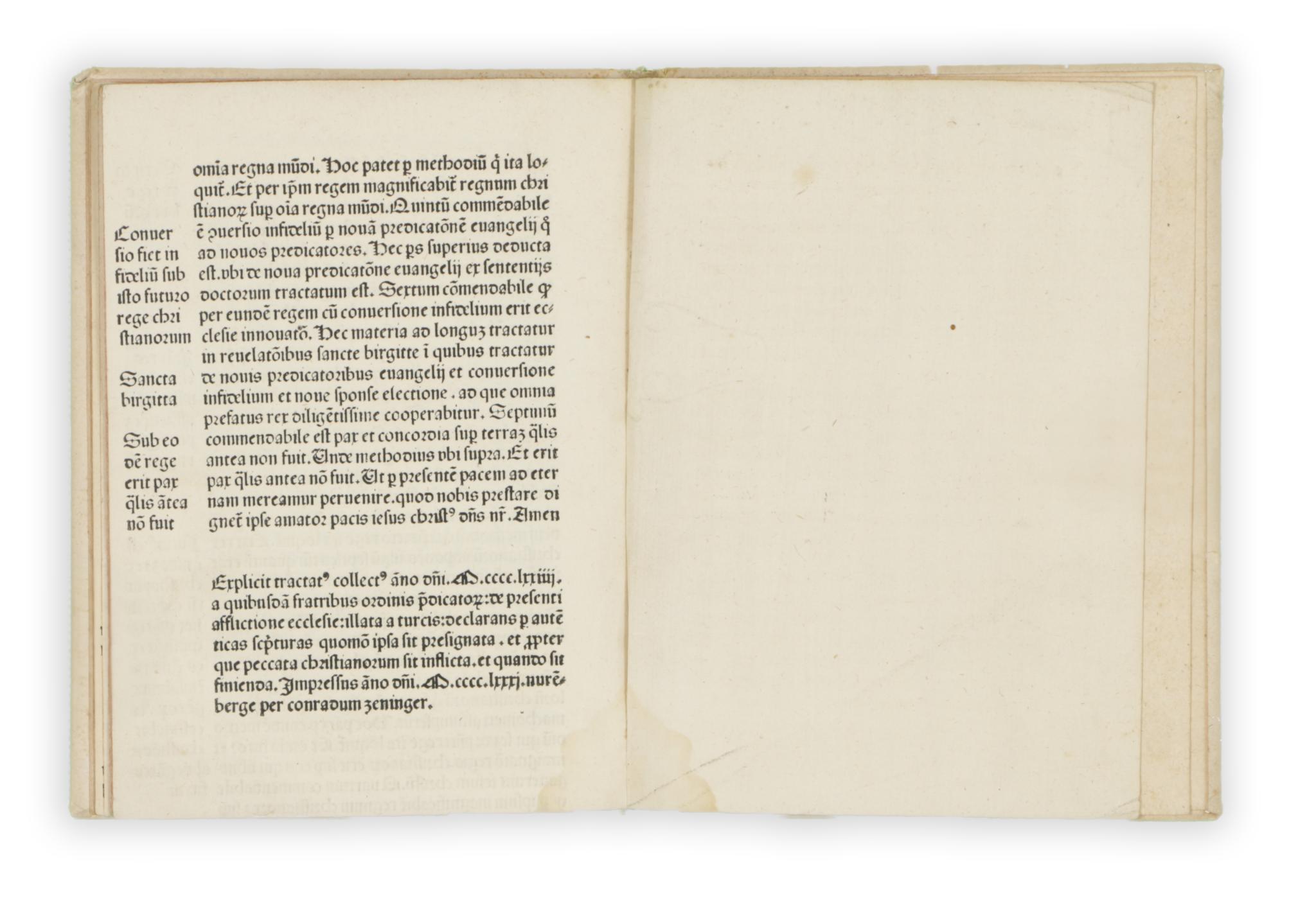
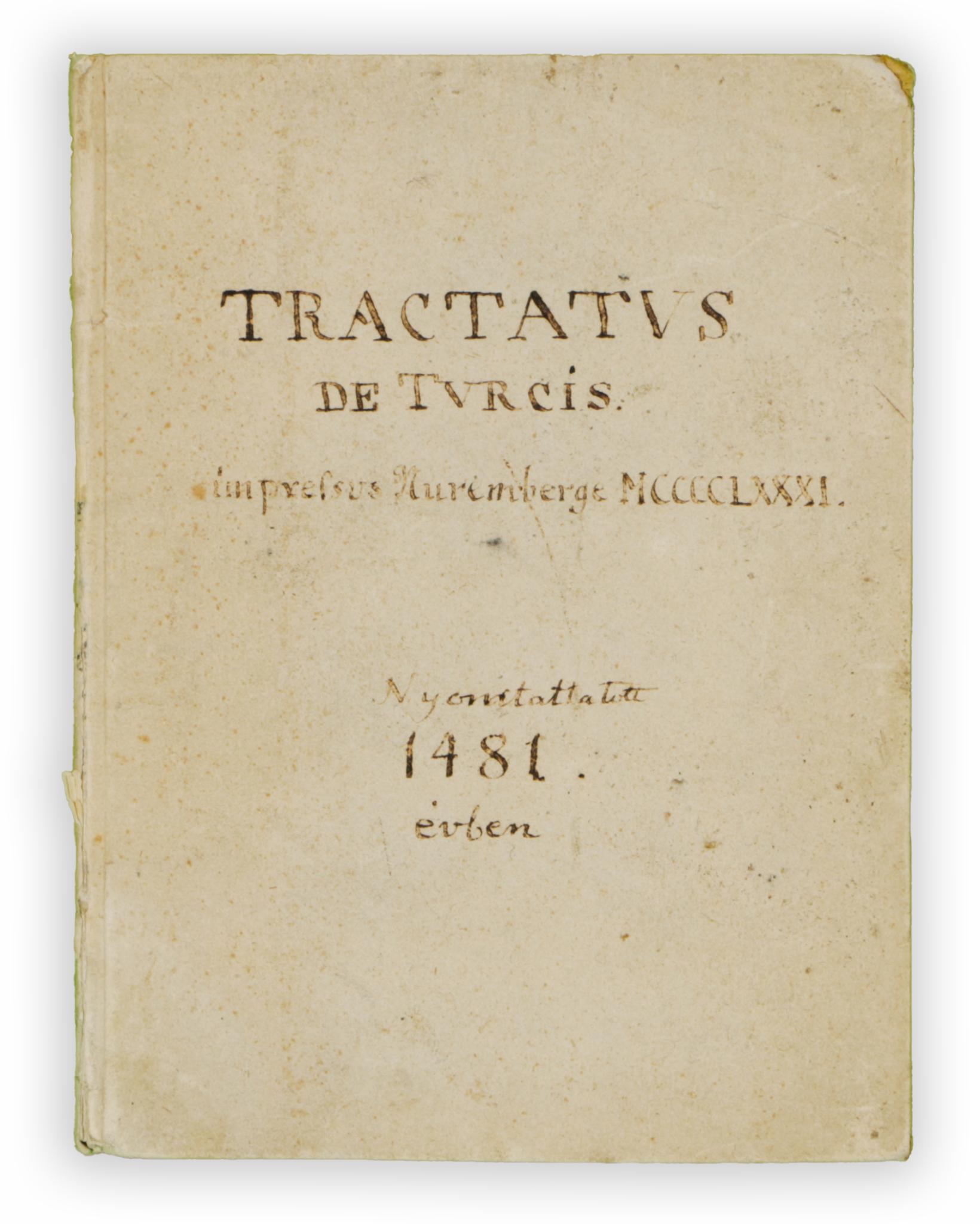
Tractatus quidam de Turcis
1481 Nürnberg24 fol. (a8, b8, c8), papír előzéklapokkal, az első és utolsó folio üres.
A címe szerint a törökökről szóló traktátus nem annyira az Oszmán Birodalom viszonyait taglalja – mint teszi azt Magyarországi György, aki ugyanebben az évben megjelent munkájában ismereteit húsz évnyi oszmán fogság alapján foglalta össze –, hanem alapvetően a keresztény világ hanyatlásának és az oszmánok felemelkedésének összefüggéseire keresi a választ, nagyrészt a Szentírásból vett példákból és jövendölésekből magyarázva a 15. század második felének politikai viszonyait.
Mindez sejtetni engedi a mű keletkezési környezetét, amelyre az egyik nyomtatott margójegyzet is felhívja a figyelmet, de az explicit és egyértelműen fogalmaz: az értekezést 1474-ben állították össze domonkos szerzetesek, azonban csak hét évvel később, 1481-ben jelent meg Konrad Zeninger nürnbergi sajtóján, aki rövid (1481–1482 között kimutatható) működése alatt jellemzően kisnyomtatványokat adott ki. A kiadás idejét ezen belül tovább szűkíthetjük: a margójegyzetek több helyütt utalnak arra, hogy traktátusban említett török szultán a mű megjelenésének évében meghalt. II. Mehmed valóban 1481. május 3-án hunyt el, így a domonkosok értekezése valamikor az év második felében láthatott napvilágot – talán éppen a „Hódító”-nak is nevezett szultán halála nyomán érezték időszerűnek a hét évvel korábban keletkezett moralizáló összeállítás megjelentetését.
Jelen, az oszmán felemelkedést vallási-morális szempontok alapján taglaló értekezés magyar szempontból talán legérdekesebb vonása az a ködös megfogalmazású jóslat, amely alapján a traktátus összeállítói (kissé nyakatekert érveléssel) az éppen regnáló magyar királyt, Hunyadi Mátyást teszik meg a török elleni sikeres harc letéteményesének. Sokatmondó, hogy Sebastain Brant német humanista a 4. századi mártír püspök, Methodios jóslatairól szóló, először 1498-ban megjelent művében szintén hivatkozik erre a Methodios-nak tulajdonított jóslatra, azonban már az új magyar uralkodóra, II. Ulászlóra vonatkoztatva a jövendölés szavait.
Jelen értekezés még egy érdekes magyar vonatkozással bír, amely korábban elkerülte a műről röviden hírt adó Fraknói Vilmos (Magyar Könyvszemle 1877/2. 77–78.) figyelmét is. Methodios számításai kapcsán olvasható egy rövid történet, mely szerint egy bizonyos (alighanem domonkos) szerzetes egy alkalommal az oszmán szultán (II. Mehmed) testvérével beszélgetett a török háborúk óta eltelt évek pontos számáról – a diskurzusra állítólag két évvel a munka összeállítása előtt (tehát 1472-ben) került sor Győr városában.
Amellett, hogy meglehetősen valószínűtlen, hogy a szultáni család egy prominens tagját éppen Győrött faggathatták volna keresztény szerzetesek a török háborúkról, a dolog hitelét tovább csorbítja, hogy tudomásunk szerint II. Mehmed egyik testvére sem érte meg a jelzett időszakot. Mindezzel együtt ez a két magyar vonatkozás rendkívül érdekes kultúrtörténeti adalékkal szolgál, felvillantva a korabeli szóbeszédek színes világát is.
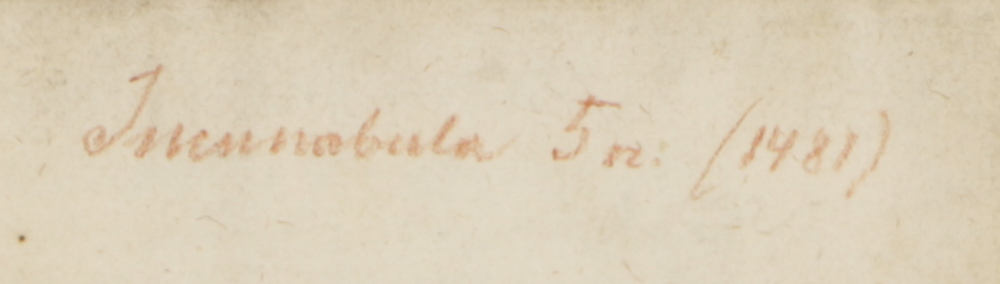
Gótikus betűkkel szedett 32 soros oldalak, az első (üres) levélen vélhetően 19. századi, piros tintával írt bejegyzés: „Incunabula 5. sz. (1481)”. Erősen körülvágott példány, az ívjelzés több oldalon is levágva, a széleken, a hivatkozásoknál is hiányzik néhány betű. Alul, a kötésnél folyamatosan halványuló ázásnyommal, összességében azonban szép, tiszta példány. Későbbi kartonkötésben, az elülső kötéstáblán címfelirat.
Poss.: Az első oldalon a szöveg fölött a scheyerni apátság (Bajorország) bejegyzése („Monasterii Schyrensis”), bal oldalt pedig Nagy Iván bélyegzője.
CIH: 3342., HC* 15681., BMC II 460., Goff T-503., Apponyi: 10
On the first page above the text is the ownership entry of the Scheyern Abbey in Bavaria ("Monasterii Schyrensis"), and on the left side is the stamp of the historian Iván Nagy.
According to its title, this treatise on the Turks does not so much detail the internal conditions of the Ottoman Empire – as seen in the work of Georgius de Hungaria, who summarized his twenty years of Ottoman captivity in a book published that same year – but fundamentally seeks answers to the correlation between the decline of the Christian world and the rise of the Ottomans. It explains the political conditions of the second half of the 15th century largely through examples and prophecies taken from Holy Scripture.
The context of the work’s creation is suggested by the printed marginal notes and explicitly stated in the explicit: the treatise was compiled by Dominican monks in 1474. However, it only appeared seven years later, in 1481, from the Nuremberg press of Konrad Zeninger, who typically published small prints during his short period of activity (documented between 1481 and 1482). The date of publication can be narrowed down further: the marginal notes refer in several places to the death of the Turkish Sultan mentioned in the treatise in the year of the work's publication. Mehmed II indeed passed away on May 3, 1481; thus, the Dominican treatise likely saw the light of day in the second half of that year – perhaps the death of the Sultan, known as "the Conqueror," made the publication of this moralizing compilation from seven years prior feel particularly timely.
From a Hungarian perspective, the most interesting feature of this treatise, which discusses the Ottoman rise based on religious and moral considerations, is a vaguely formulated prophecy. Based on this, the compilers (using a somewhat convoluted argument) identify the reigning Hungarian king, Matthias Hunyadi, as the guarantor of a successful struggle against the Turks. It is telling that the German humanist Sebastian Brant, in his work on the prophecies of the 4th-century martyr bishop Methodius (first published in 1498), also refers to this prophecy attributed to Methodius, though he applies the prophetic words to the new Hungarian ruler, Vladislaus II.
The treatise contains another fascinating Hungarian connection which previously escaped the attention of Vilmos Fraknói (Magyar Könyvszemle 1877/2. 77–78.). In connection with Methodius's calculations, a short story is told describing how a certain monk (likely a Dominican) once conversed with the brother of the Ottoman Sultan (Mehmed II) about the exact number of years that had passed since the Turkish wars – the discourse allegedly took place two years before the compilation of the work (i.e., in 1472) in the city of Győr.
While it is highly improbable that a prominent member of the Sultan's family would have been questioned by Christian monks about the Turkish wars in Győr, the credibility of the account is further weakened by the fact that, to our knowledge, none of Mehmed II's brothers lived to the indicated period. Nevertheless, these two Hungarian references provide extremely interesting cultural and historical data, offering a glimpse into the colorful world of contemporary rumors.
References: CIH: 3342., HC* 15681., BMC II 460., Goff T-503., Apponyi: 10.