

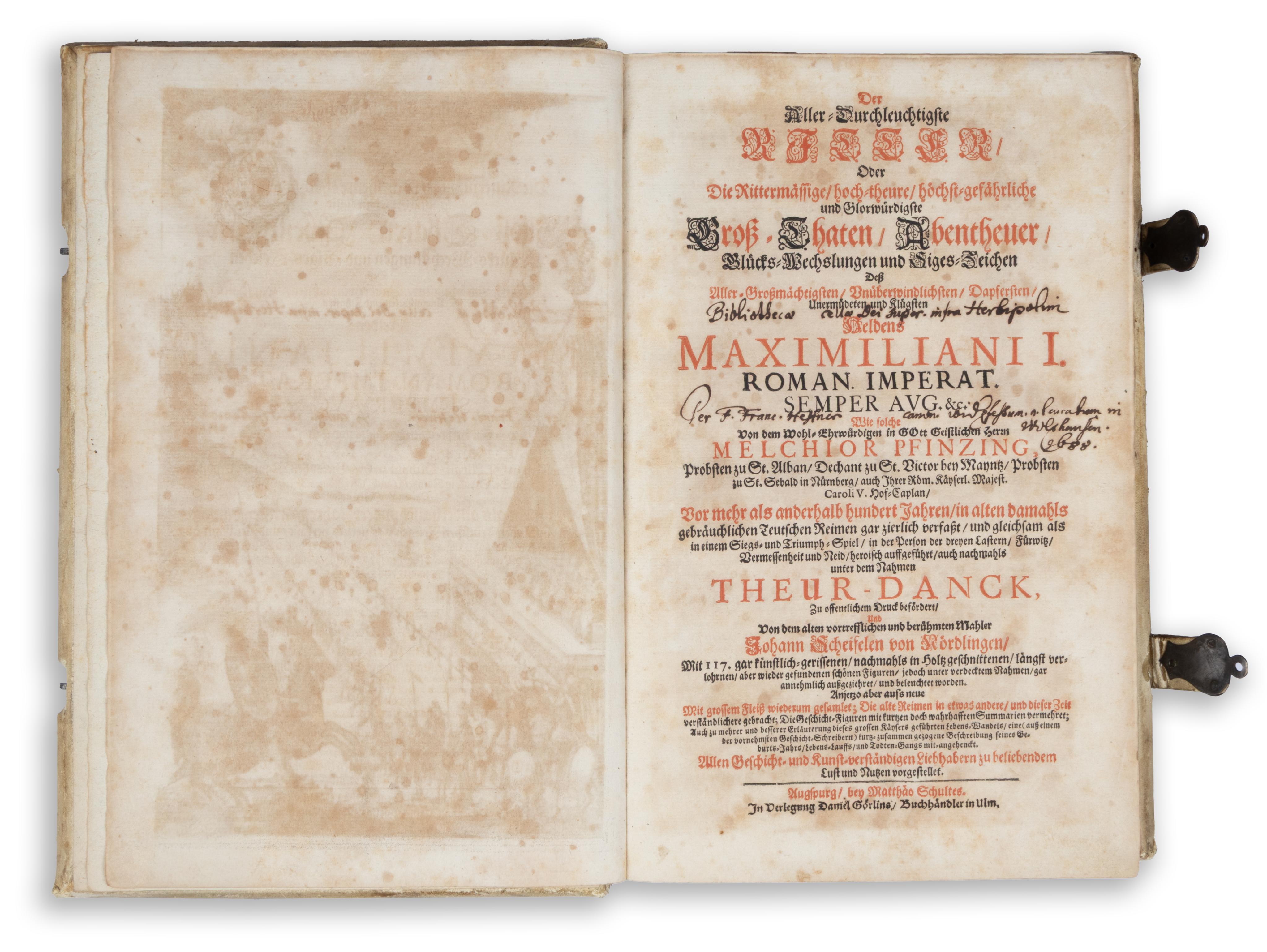
![Pfintzing [Pfinzing], Melchior: Der Aller-Durchleuchtigste Ritter, Oder Die Rittermässige, hoch-theure, höchst-gefährliche und Glorwürdigste Groß-Thaten, Abentheuer... Ulm, [1679]. Matthäus Wagner für Matthäus Schultes.](http://kozpontiantikvarium.hu/sites/default/files/2026-03/DerAller-DurchleuchtigsteRitter_diszcimlap.jpg "Pfintzing [Pfinzing], Melchior: Der Aller-Durchleuchtigste Ritter, Oder Die Rittermässige, hoch-theure, höchst-gefährliche und Glorwürdigste Groß-Thaten, Abentheuer... Ulm, [1679]. Matthäus Wagner für Matthäus Schultes.")
Der Aller-Durchleuchtigste Ritter, Oder Die Rittermässige, hoch-theure, höchst-gefährliche und Glorwürdigste Groß-Thaten, Abentheuer...
Ulm, [1679]. Matthäus Wagner für Matthäus Schultes.... Glücks-Wechslungen und Siges-Zeichen Deß Aller-Großmächtigsten, Unüberwindlichsten, Dapfersten, Unermüdeten und Klügsten Heldens Maximiliani I. [...] unter dem Namen Theur-Danck.
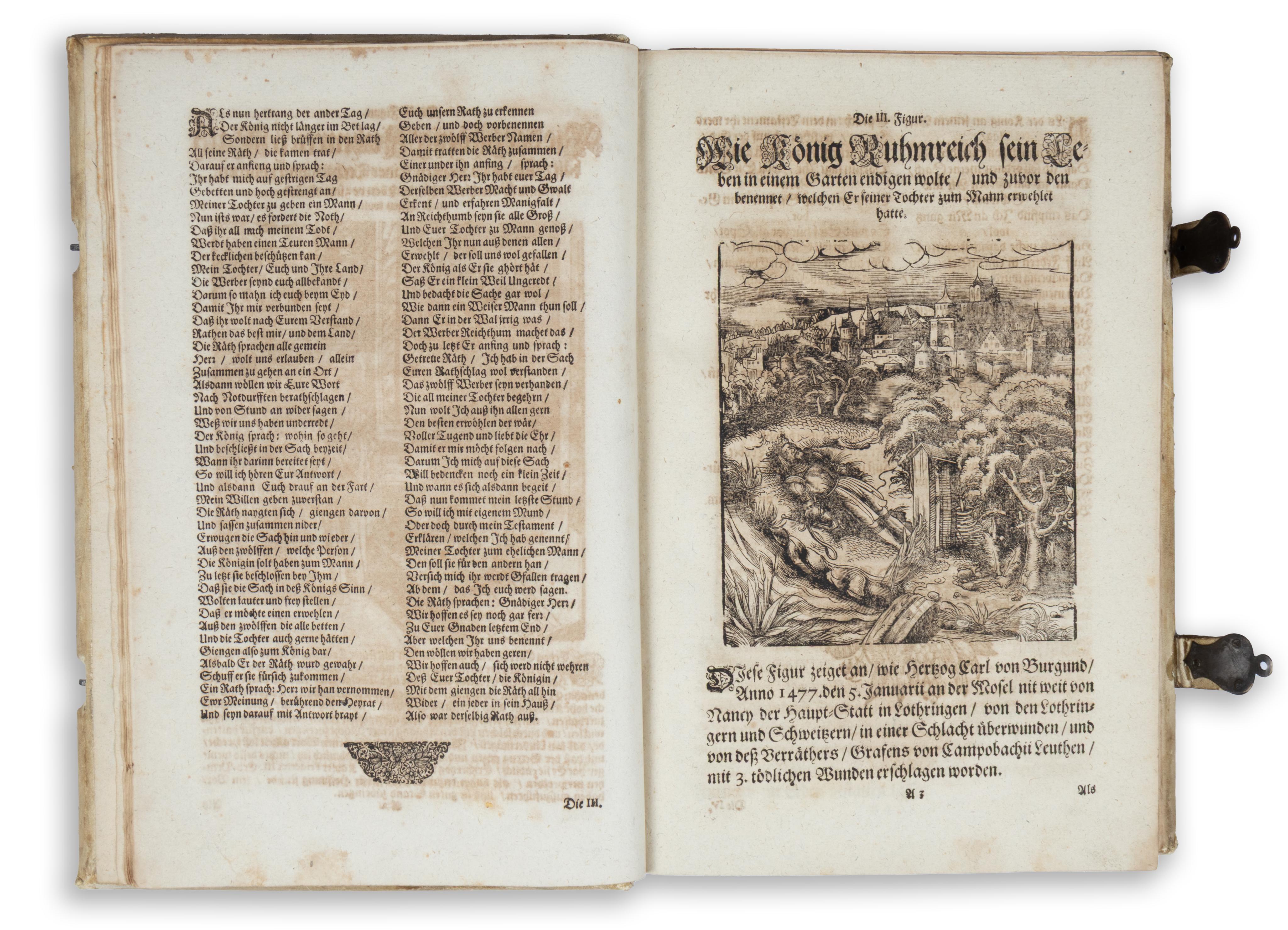
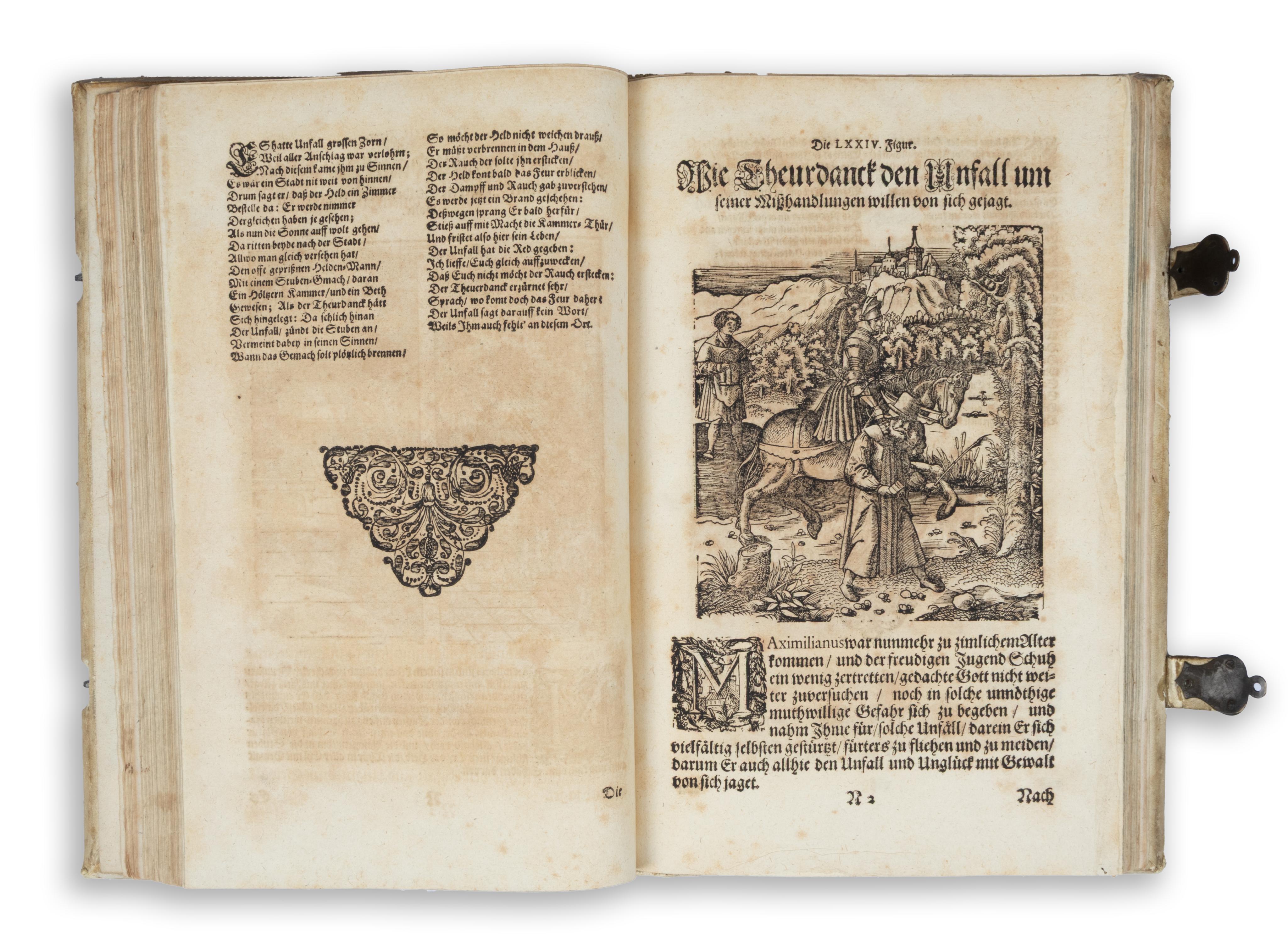
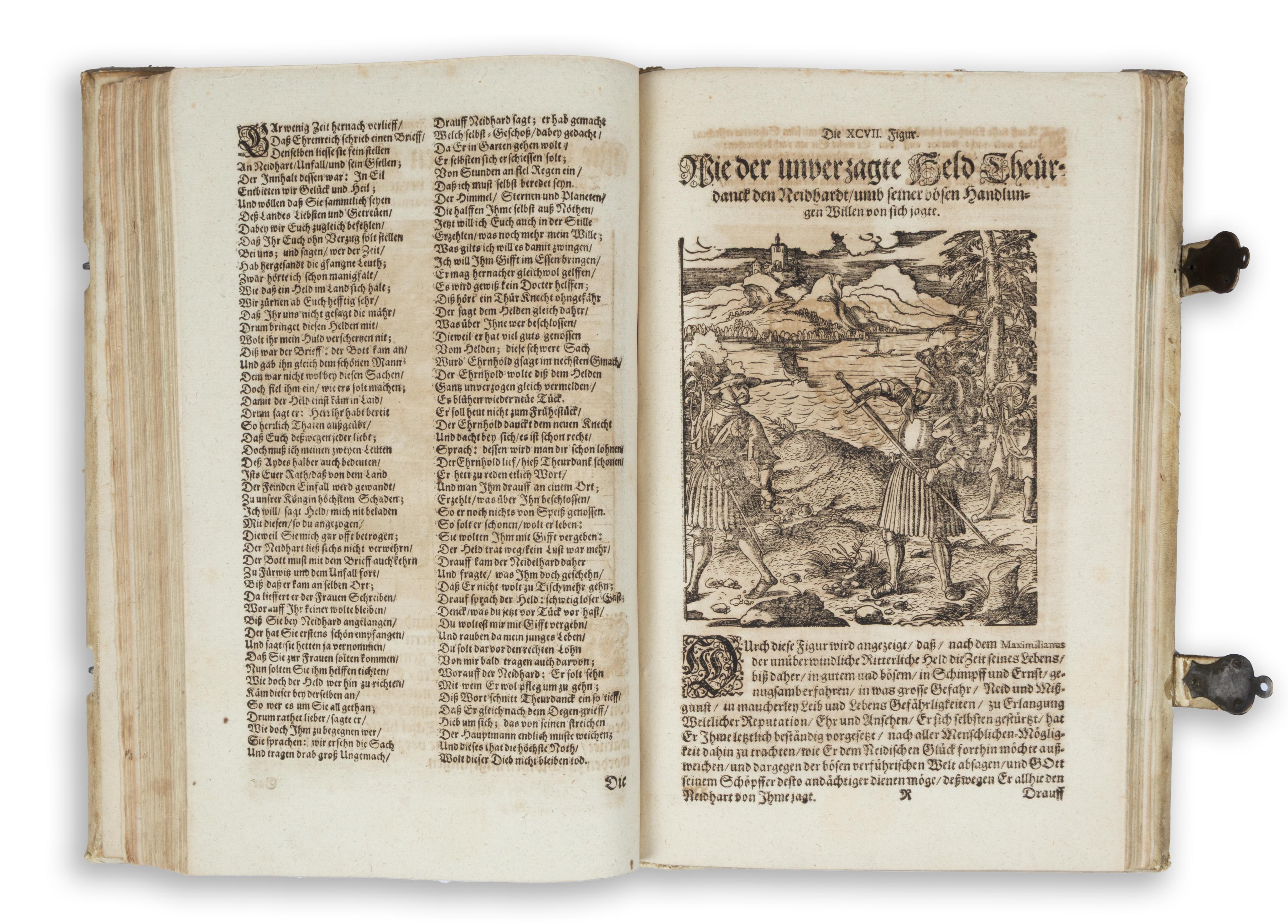
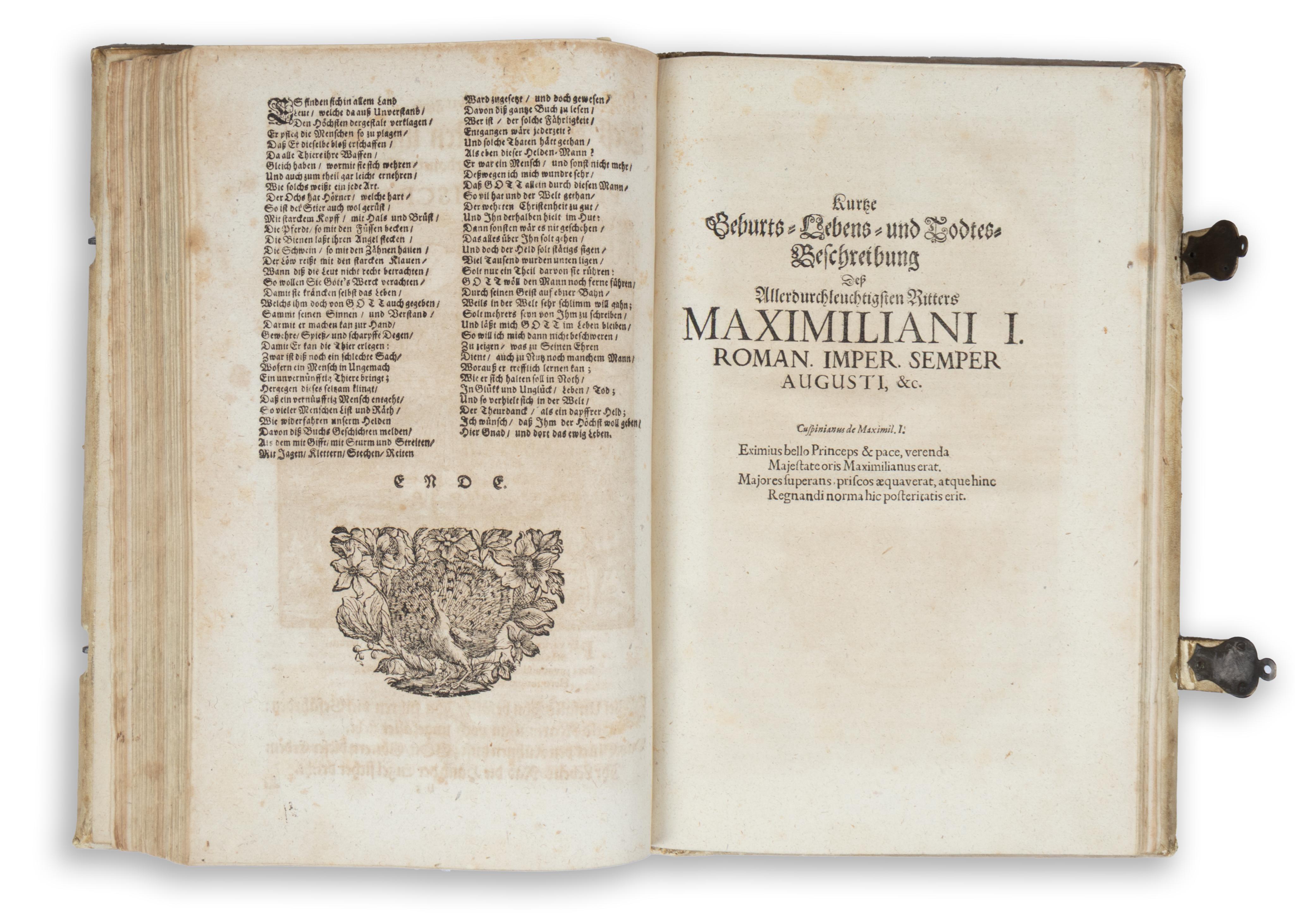
1t. (díszcímmetszet) + [128] lev. + 123 darab, körülbelül féloldalas szövegközi fametszettel + 58 lev.
A XVII. században nyomtatott első új kiadás a XVI. század elejéről származó eredeti fametszetes dúcokról (összesen a nyolcadik kiadás), és az első kiadás a Schultes által modernizált nyelvezettel. A jelen példány tartalmazza a rézmetszetes címlapot, valamint azt a hat további fametszetet, amelyeket csak a XVII. században találtak meg újra, és amelyek nem minden példányhoz kerültek hozzáadásra.
Az I. Miksa császár által kezdeményezett és az ő megbízásából kidolgozott lovagregény allegorikus formában meséli el Miksa („Teuerdank”) udvarlásának történetét Burgundi Máriához („Ehrenreich”), Merész Károly („Romreich”) lányához. A mű létrehozásában többek között részt vettek a humanisták: Marcus Treitzsauerwein, Sigmund von Dietrichstein és Konrad Peutinger; az elejét és a végét Pfintzing írta. A függelék Miksa életrajzát tartalmazza.
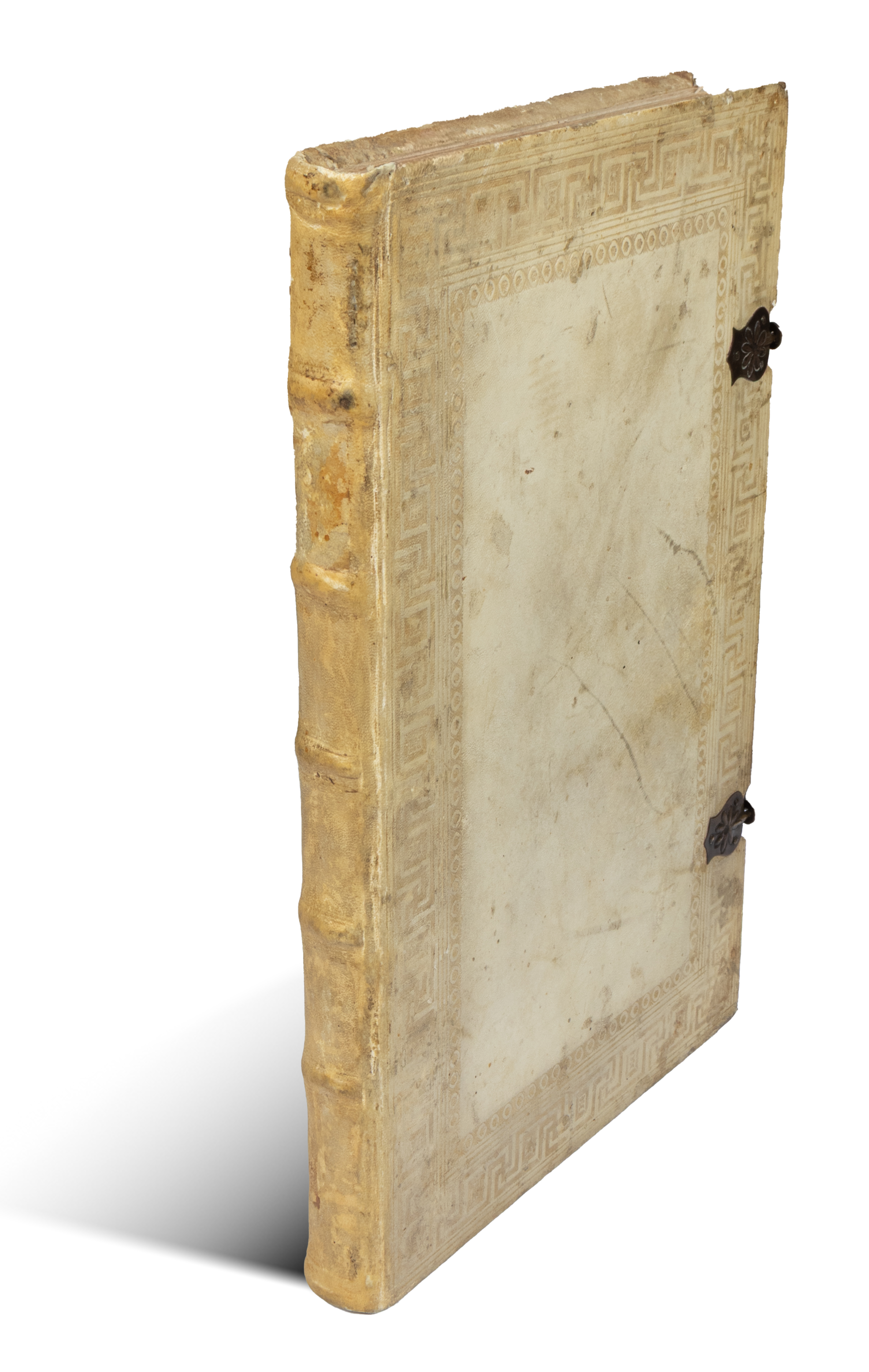
Korabeli egészbőrkötésben, bordázott gerinc, vaknyomott, geometrikus díszítésű táblák, eredeti csatokkal. Tintás ex libris bejegyzés a címlapon.
VD17, 23:2931529G; Oldenbourg, Schäufelein, L 127; Muther 852; Bircher B 888; Ebert 22876; Graesse VII, 107
The chivalric romance, initiated by Emperor Maximilian I, Holy Roman Emperor and prepared at his command, recounts in allegorical form the story of Maximilian’s (“Teuerdank”) courtship of Mary of Burgundy (“Ehrenreich”), the daughter of Charles the Bold (“Romreich”). Among those involved in the creation of the work were the humanists Marcus Treitzsauerwein, Sigmund von Dietrichstein, and Konrad Peutinger; the beginning and the conclusion were written by Melchior Pfintzing. The appendix contains a biography of Maximilian.
Contemporary full leather binding, ribbed spine, boards with blind-tooled geometric decoration, with the original clasps.