

![Georgievits, Bartholomaeus: Pro fide Christiana cum Turca disputationis habitae descriptio... [Sammelband] Viennae, 1548. Haeredes Syngrenii.](http://kozpontiantikvarium.hu/sites/default/files/2025-02/turcica-1.jpg "Georgievits, Bartholomaeus: Pro fide Christiana cum Turca disputationis habitae descriptio... [Sammelband] Viennae, 1548. Haeredes Syngrenii.")
Pro fide Christiana cum Turca disputationis habitae descriptio... [Sammelband]
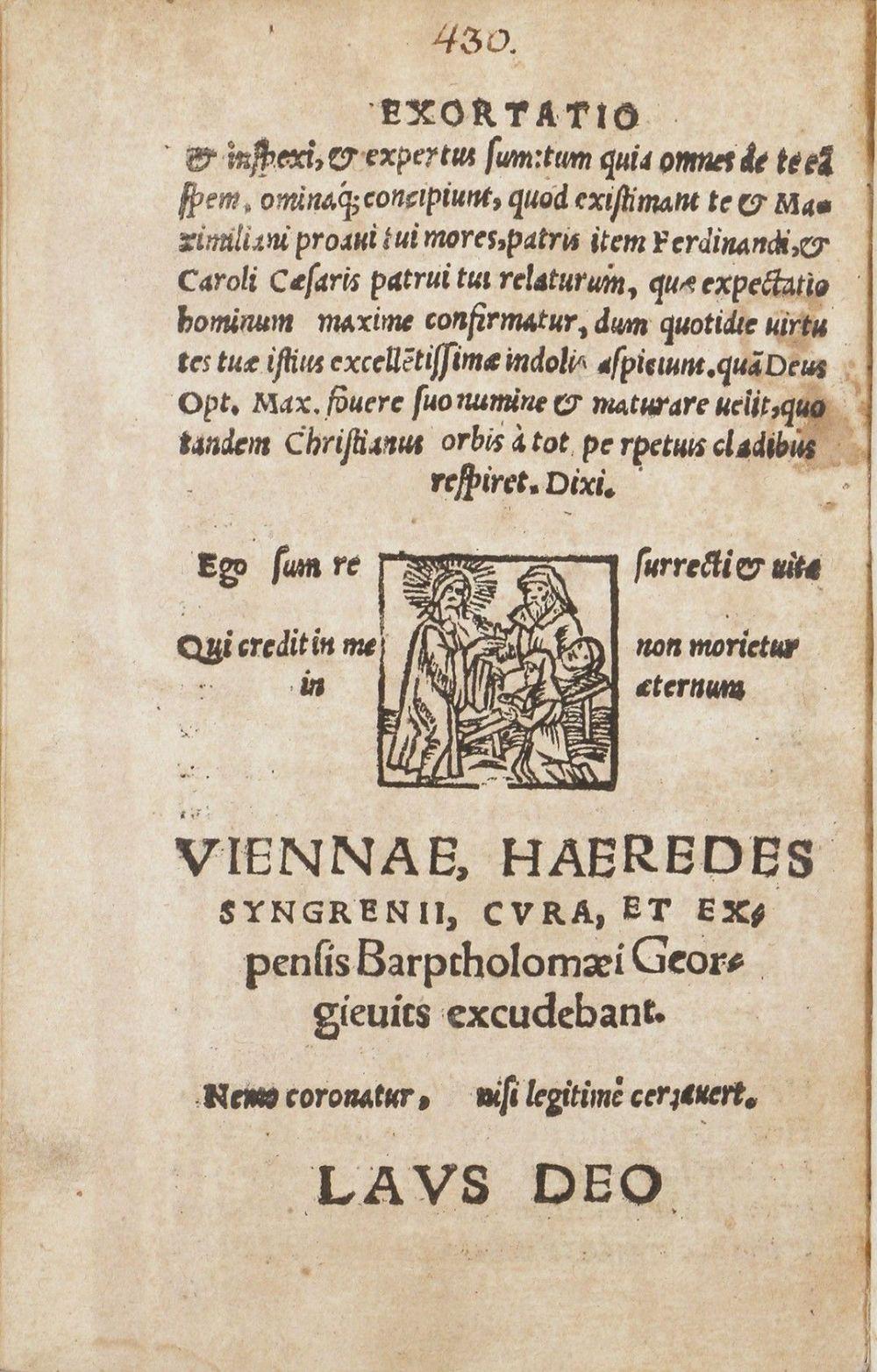
Viennae, 1548. Haeredes Syngrenii.XVI. Cale. April. 1548 [48]p.
According to his own accounts, Bartholomaeus Georgievits (Bartol Đurđević or Georgijević) was taken captive by the Turks during the Battle of Mohács. He traversed Turkey and Asia Minor, was sold into slavery seven times, and was kept in slave collar for months. Under adventurous circumstances, he eventually found refuge among the Franciscans in Jerusalem, and after further travels, returned to European soil via Spain. Shrewdly capitalizing on his misfortunes, he published several small books in 1544 regarding the trials of Turkish captivity, as well as the origins, lifestyle, and customs of the Turks. These works made him one of the most popular authors of the era; his writings were translated into multiple languages and reprinted frequently.
In the spring of 1547, he appeared in Transylvania at Oradea (Nagyvárad), close to the actual wielder of power, Georg Martinuzzi (born Juraj Utješenović), whom he included among his celebrated heroes of the Turkish wars. In the Franciscan monastery of Oradea, before a large audience on Pentecost Sunday, he engaged in a theological debate with a Turkish dervish (Cselebi). The debate, held in Turkish, ended in Georgievits's triumph when he derived the doctrine of the Holy Trinity from a few lines of the Quran. He concluded by teaching the dervish the Lord's Prayer in Turkish. The present lot is a copy of this debate published in Vienna in 1548 (another edition appeared in Kraków the same year, RMK III. 375). The Vienna edition was dedicated to Archduke Maximilian and contains a new dedicatory poem by Nikolaus Polites (Bourgois), a professor at the University of Vienna. The title page is adorned with a woodcut of the Basmala (the formula from the first line of the first surah of the Quran: bismillāhi r-raḥmāni r-raḥīm, "In the name of God, the Most Gracious, the Most Merciful"), and the text is multilingual.
This is a very early and rare occurrence of Arabic in printed books. (Krek, M.: A Gazetteer of Arabic printing, Weston (USA), 1977, pp.72, 98 & 102. "Further examples of wood-cut Arabic words and letters occur in books published at Vienna and Zurich in 1548. The Vienna example is strictly speaking a wood intaglio rather than a woodcut". Idem, Typographia Arabica, p.8.)
The book is exceptionally rare; we can trace only seven institutional holdings: copies found at the Hungarian National Museum and the Austrian National Library. No copy in the USA.
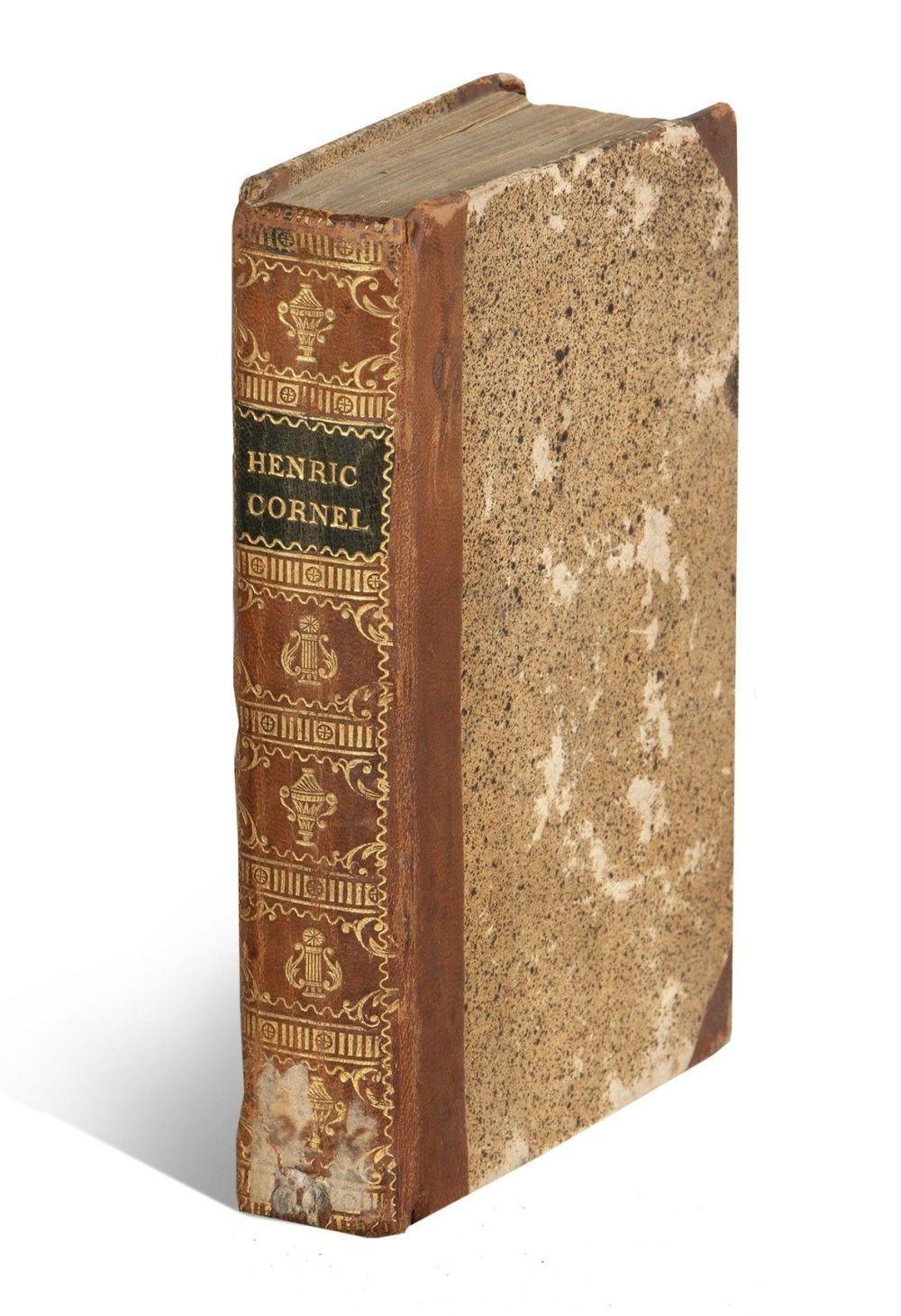
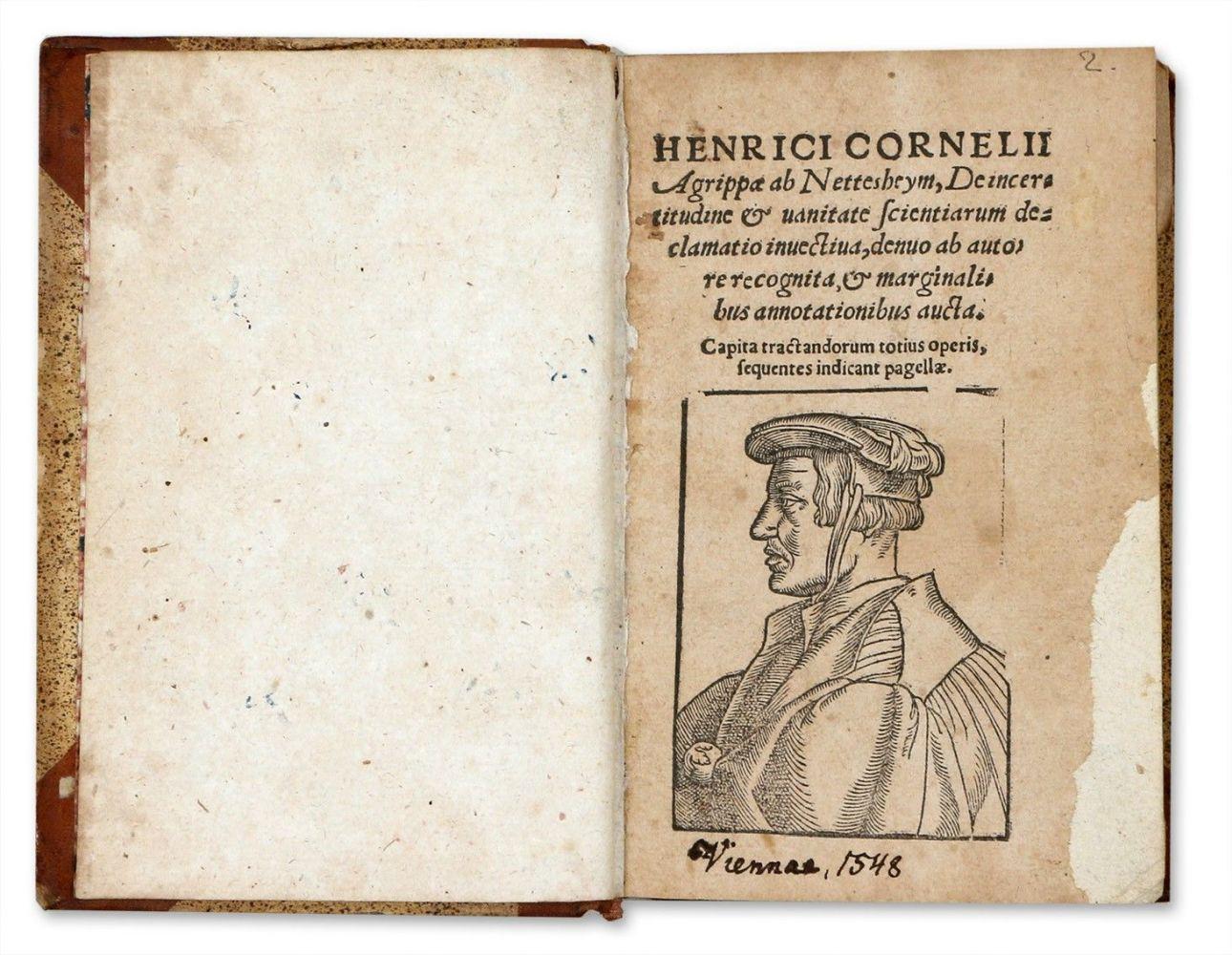
Bound before this work is Heinrich Cornelius Agrippa von Nettesheim: De incertitudine et vanitate scientiarum declamatio invectiva... [Cologne, 1540. Eucharius Cervicornus]. [400]p. This is a later edition of an early work by the famous German Renaissance polymath, intended as a skeptical satire on the dismal state of contemporary science. The book represents a significant milestone in the revival of Pyrrhonian skepticism in the form of fideism and exerted a profound influence on thinkers and writers such as Montaigne, Descartes, and Goethe.
In a richly gilt 18th-century half-leather binding.
Reference: USTC 661471. Catalogus Szech., Suppl. I, pag. 207. - Goellner, I, pag. 411, nr. 879. - Szabo, III/1, pag. 114-115, nr. 375./ RMK III. 373.
_______________________________________________________________________
XVI. Cale. April. 1548 [48]p.
Bartholomaeus Georgievits (Bartol Đurdević vagy Georgijević) saját elbeszélése szerint a mohácsi csatában esett török fogságba. Megjárta Törökországot és Kis-Ázsiát, hétszer adták el, és hónapokig nyakbilincsben tartották. Kalandos körülmények között végül a jeruzsálemi ferencesek között talált menedéket, újabb kalandokat követően pedig Spanyolországban tért vissza az európai földre. Ügyesen kamatoztatva szerencsétlen életét 1544-ben több kis könyvet is kiadott a török fogság megpróbáltatásairól, illetve a törökök eredetéről, életmódjáról és szokásairól. Ezek a munkái a korszak egyik legnépszerűbb írójává tették. A kis irományokat több nyelvre is lefordították, újra és újra kiadták. 1547 tavaszán Erdélyben tűnt fel, Nagyváradon, a tényleges hatalmat gyakorló Fráter György közelében, akit egyébként ugyancsak szerepeltetett a törökverő hősök között. A váradi ferences kolostorban, nagy hallgatóközönség előtt, Pünkösd vasárnapján hitvitába bocsátkozott egy cselebi török dervissel. A vita törökül zajlott és Georgievits diadalmával végződött azáltal, hogy a Korán pár sorából levezette a Szentháromságot. Végül megtanította a dervist törökül a Miatyánkra. Jelen tételünk ennek a vitának 1548-ben, Bécsben kiadott példánya (ugyanebben az évben még Krakkóban is megjelent, RMK III. 375). A bécsi kiadást Miksa főhercegnek ajánlotta. A kötetben új ajánlóvers van, szerzője Nikolaus Polites (Bourgois), a bécsi egyetem tanára. Címlapján a Korán első szúrájának első sorából önállósult formulát, basmalát (bismillāhi r-raḥmāni r-raḥīm, „a könyörületes és irgalmas Isten nevében”) ábrázoló fametszettel, szövege több nyelvű. Ritka, közgyűjteményben a Magyar Nemzeti Múzeumban és az Osztrák Nemzeti könyvtárban található egy-egy példány.
USTC 661471. RMK III. 373. Apponyi 305.
Kolligátum: Elékötve Heinrich Cornelius Agrippa von Nettesheim: De incertitudine et vanitate scientiarum declamatio invectiva... [Köln, 1540. Eucharius Cervicornus]. [400]p. A német reneszánsz híres polihisztorának egyik korai munkájának későbbi kiadása, amelyet egy szkeptikus szatírának szánt a korabeli tudomány szomorú helyzetéről. A könyv, amely a pürrhóni szkepticizmus fideizmus módjára történő újjáélesztésének egy fontos állomása, jelentős hatást gyakorolt olyan gondolkodókra és írókra, mint Montaigne, Descartes és Goethe. Díszesen aranyozott 18. századi félbőr-kötésben.