

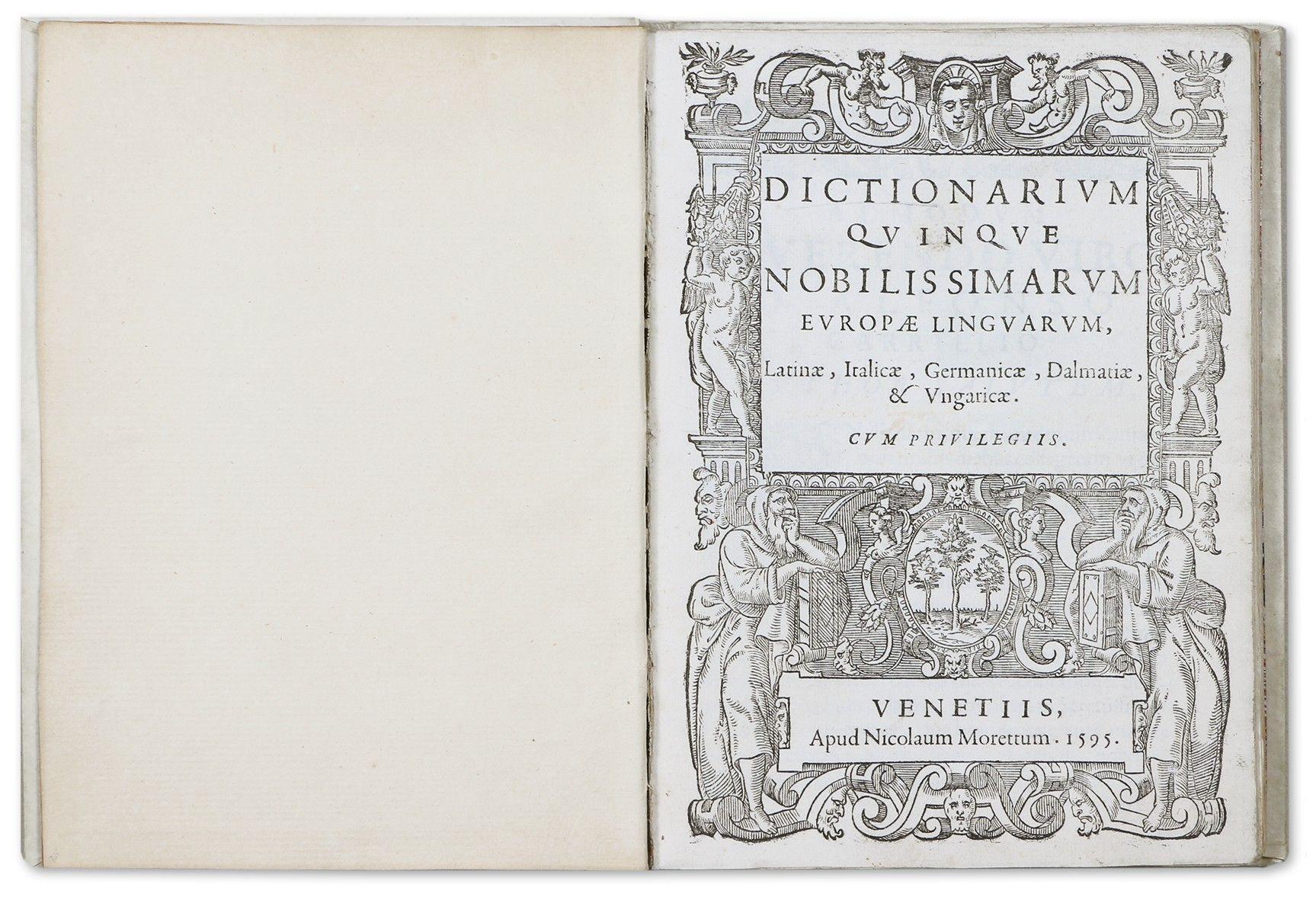
Dictionarium Quinque Nobilissimarum Linguarum..
Venetis, 1595. Apud Nicolaum Morettum.A rarity without parallel.
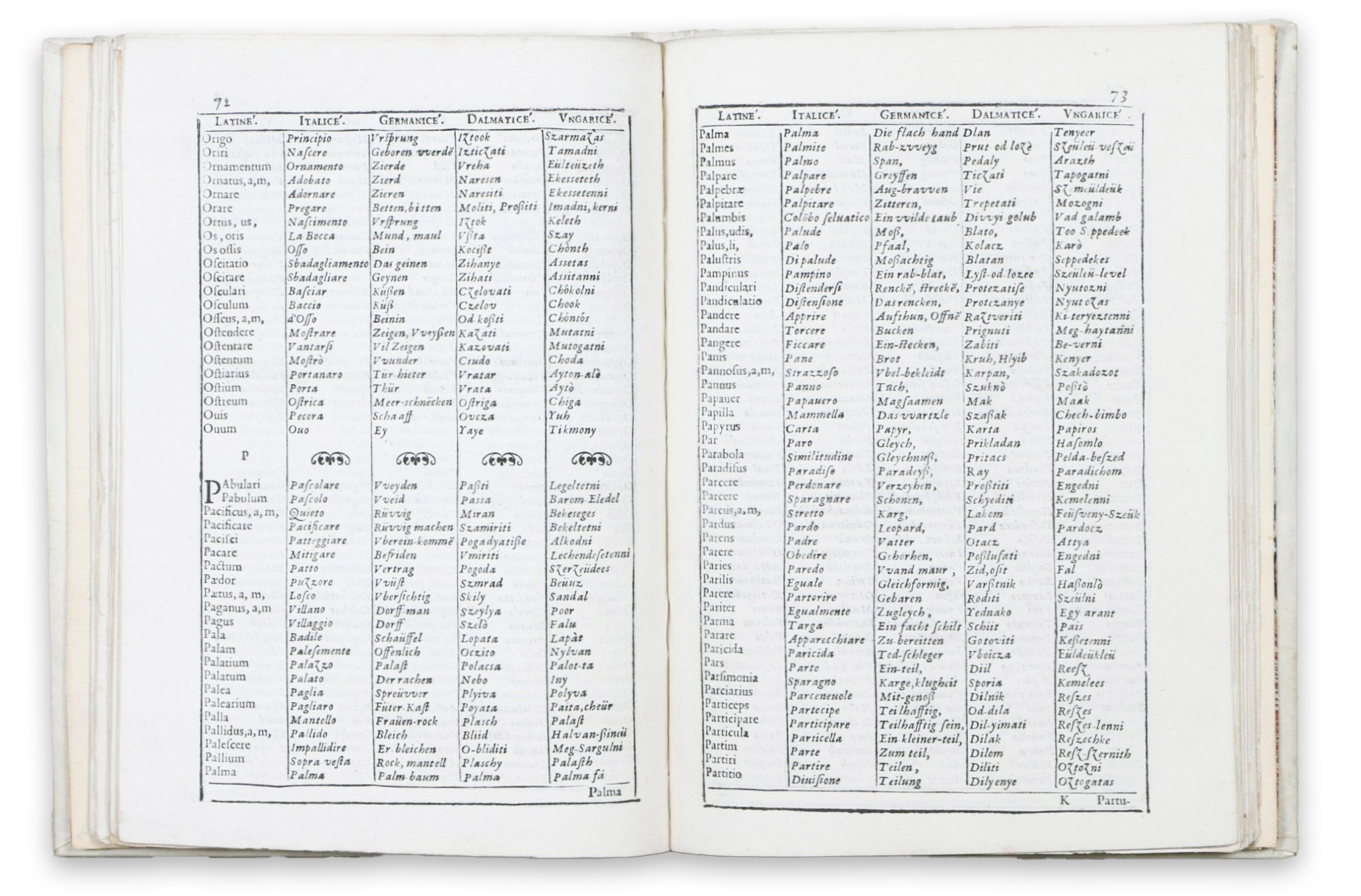
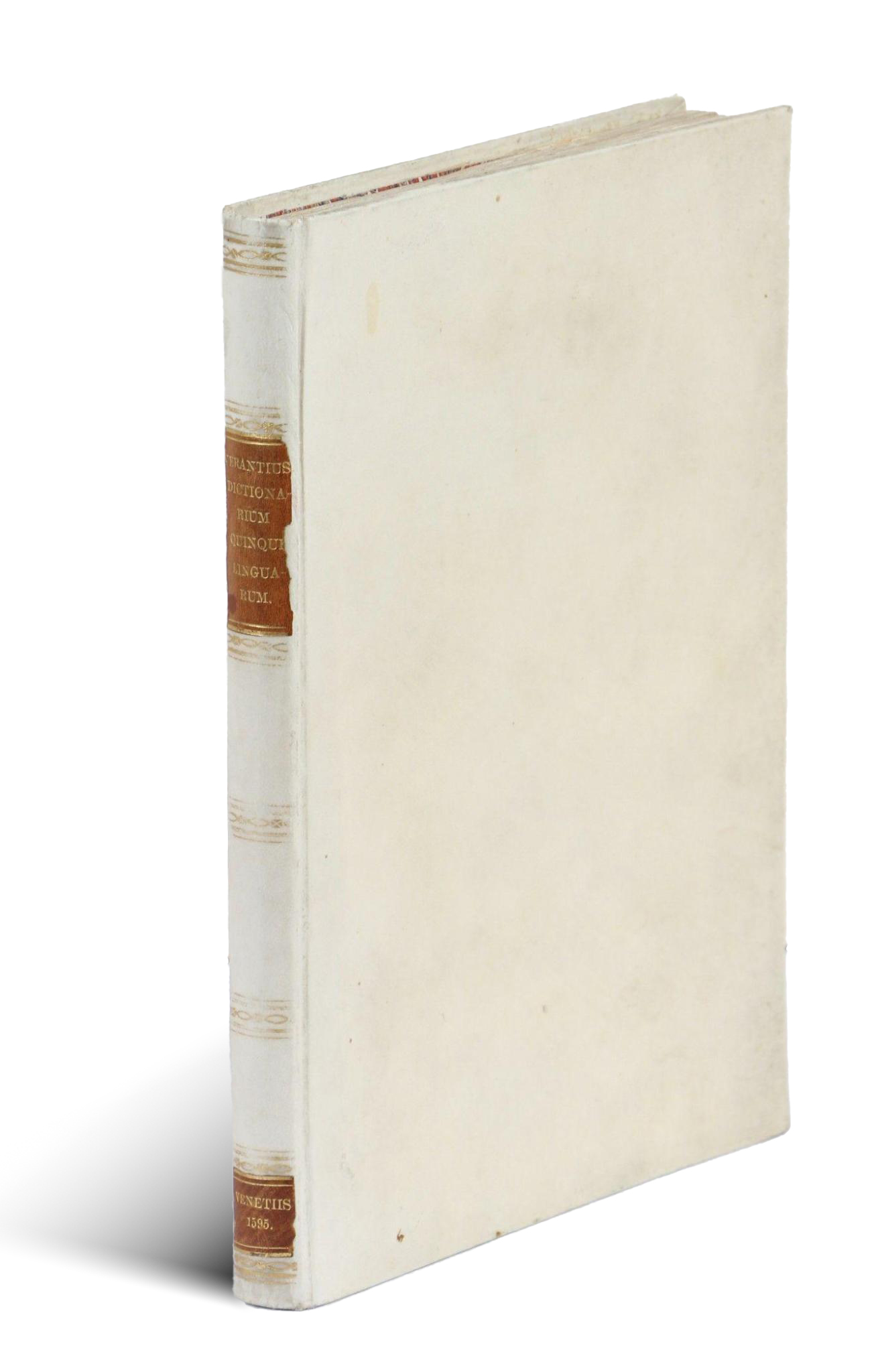
Five-language dictionary with Croatian and Hungarian interpretations. The author (Antun Vrančić, Antonius Wrancius Sibenicensis Dalmata) dedicated the work to Alfonso Carillo, Jesuit advisor to Prince Sigismund Báthori. The main part of the work contains 5400 Latin words and their equivalents in five columns. This is followed by a Dalmatian-Hungarian "Vocabula", then the Ten Commandments, the Creed, the Lord's Prayer and the Hail Mary in five languages. In the dedication, Verancsic writes that he collected the material many years before, but in a short time. His main source was Calepinus' dictionary in ten languages. The author (1551-1617) studied in Padua with the support of his uncle, Archbishop Antal of Esztergom. He had also been captain of the castle of Veszprém and court councilor. He was ordained a priest in 1594, and from 1598 he was bishop of Csanád. After his retirement, he moved to Venice, where he published his work on architecture, technology, and military engineering, Machinae Novae (1616), which has since become world famous. The Dictionarium is one of the earliest, extremely rare, and precious pieces of Hungarian and Croatian dictionary literature. With decorative woodcut title page. A later vellum-bound bibliophile copy, gilt on spine, with two gilt title vignettes and marbled endpapers.
_________________________________________________________________________________
... Latinae, Italicae, Germanicae, Dalmatiae, & Ungaricae Venetiis.
[16] + 128p.
Dekoratív fametszetű keretdíszes címlappal. Magyar értelmezéssel ellátott ötnyelvű szótár. A szerző a munkát Báthori Zsigmond fejedelem jezsuita tanácsadójának, Alfonso Carillonak ajánlotta. A mű fő része 5400 latin szót és megfelelőit tartalmazza öt oszlopban. Ezt dalmát-magyar „Vocabula” követi, majd a Tízparancsolat, a Hiszekegy, a Miatyánk, valamint az Üdvözlégy szövege olvasható öt nyelven. Verancsics az ajánlásban azt írja, hogy az anyagot sok évvel azelőtt, de rövid idő alatt gyűjtötte össze. Fő forrása Calepinus tíznyelvű szótára volt. A szerző (1551-1617) nagybátyja, Antal esztergomi érsek támogatásával Padovában tanult. Volt veszprémi várkapitány és udvari tanácsos is. 1594-ben pappá szentelték, majd 1598-tól csanádi püspök. Visszavonulása után Velencébe költözött, itt jelentette meg építészeti, technikai és haditechnikai kérdésekkel foglalkozó, „Machinae Novae” című munkáját (1616), amely azóta világhírűvé vált. A Dictionarium a magyar szótárirodalom egyik legkorábbi, rendkívül ritka, becses darabja. Gerincén aranyozott, későbbi pergamenkötésű bibliofil példány, két aranyozott címginettával, márványozott előlapokkal. Páratlan ritkság. RMNy: 767., RMK I/ 279., Apponyi: 567.