

![Willis, [Thomas] Thomae : De anima brutorum quæ hominis vitalis ac sensitiva est, exercitationes duæ. … Amstelodami [Amsterdam], apud Johannem à Someren, 1674](http://kozpontiantikvarium.hu/sites/default/files/2025-08/deanimabrutorum_belso.jpg "Willis, [Thomas] Thomae : De anima brutorum quæ hominis vitalis ac sensitiva est, exercitationes duæ. … Amstelodami [Amsterdam], apud Johannem à Someren, 1674")
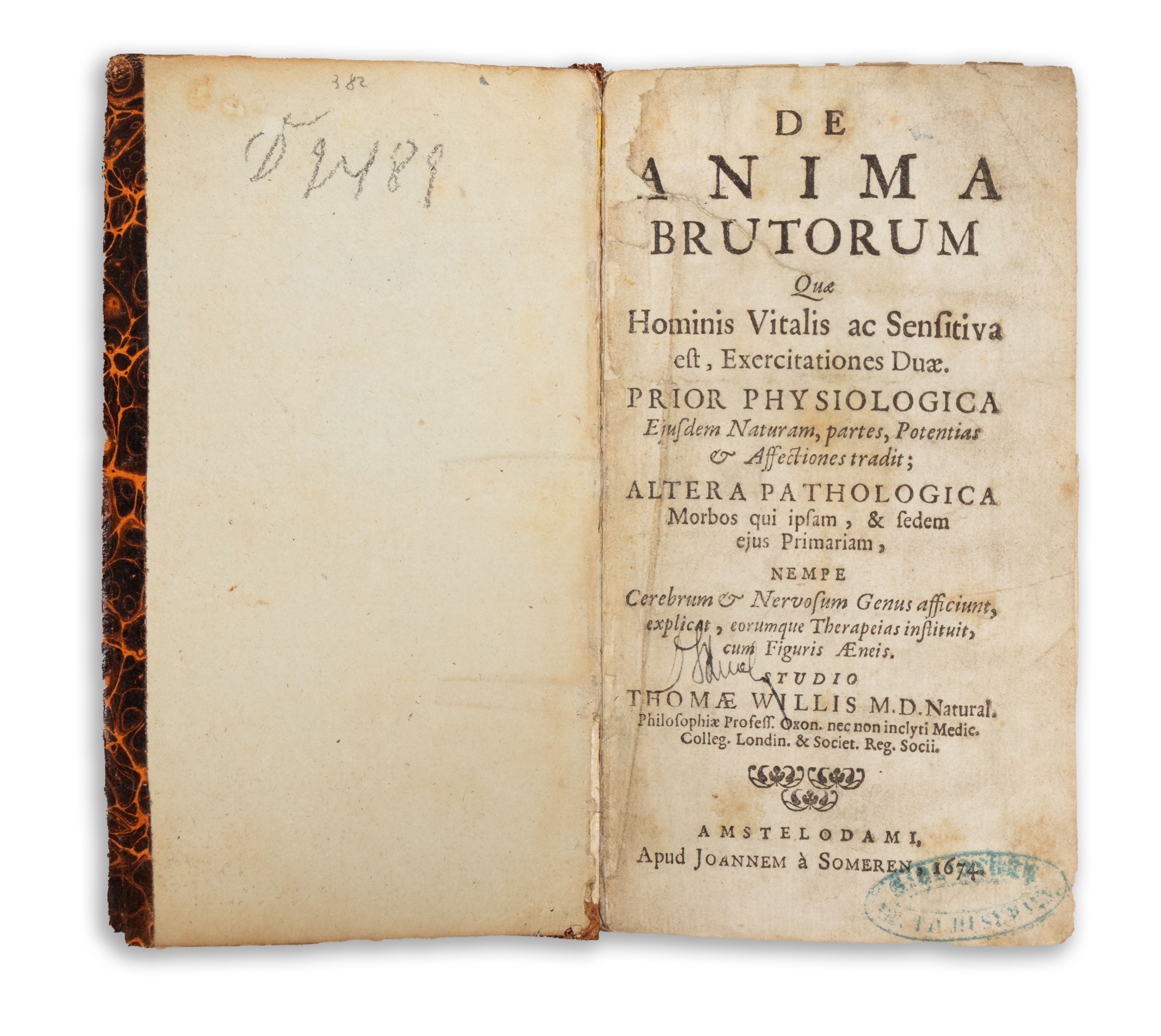
De anima brutorum quæ hominis vitalis ac sensitiva est, exercitationes duæ. …
Amstelodami [Amsterdam], apud Johannem à Someren, 1674Prior physiologica ejusdem naturam, partes, potentias & affectiones tradit ; altera pathologica morbos qui ipsam, & sedem ejus primariam, nempe cerebrum & nervosum genus afficiunt, explicat, eorùmque therapeias instituit, cum figuris aemeis. Studio Thomae Willis M. D. Natural. Philosophiae Profess. Oxon. nec nin inclyti Medic. Colleg. Londin. & Societ. Reg. Socii
[48] + 552 + [20]p. + 8t. (rézmetszet az agy anatómiájáról, kihajtható)
Thomas Willis (1621–1675) az anatómia, a neurológia és a pszichiátria történetében fontos szerepet játszó angol orvos, a Royal Society alapító tagja. A De anima brutorum a legkorábbi angol pszichológiai tartalmú mű, melyben Willis leírja a ma paracusis Willisii néven ismert jelenséget. Egy süket nő megfigyelése nyomán, aki csak akkor hallott, ha dobot vertek, felismerte a súlyos agyi betegségek és a mentális betegségek tünetei közötti különbséget. Mivel patológiai leletei hiányában az agy és az idegek zavarát rendellenes „állati szellemekkel” magyarázta, gyakran őt tartják az elsőnek, aki a mentális betegségeket az agyi betegségekkel egyenrangúaknak tekintette. Számos betegséget tulajdonított neurológiai zavaroknak, köztük a fejfájást, a letargiát, a melankóliát, a stroke-ot, a tébolyt és a bénulást. (Norman)
Ez a mű 4. (2. amszterdami) kiadása
A címlapon possessori pecsét.
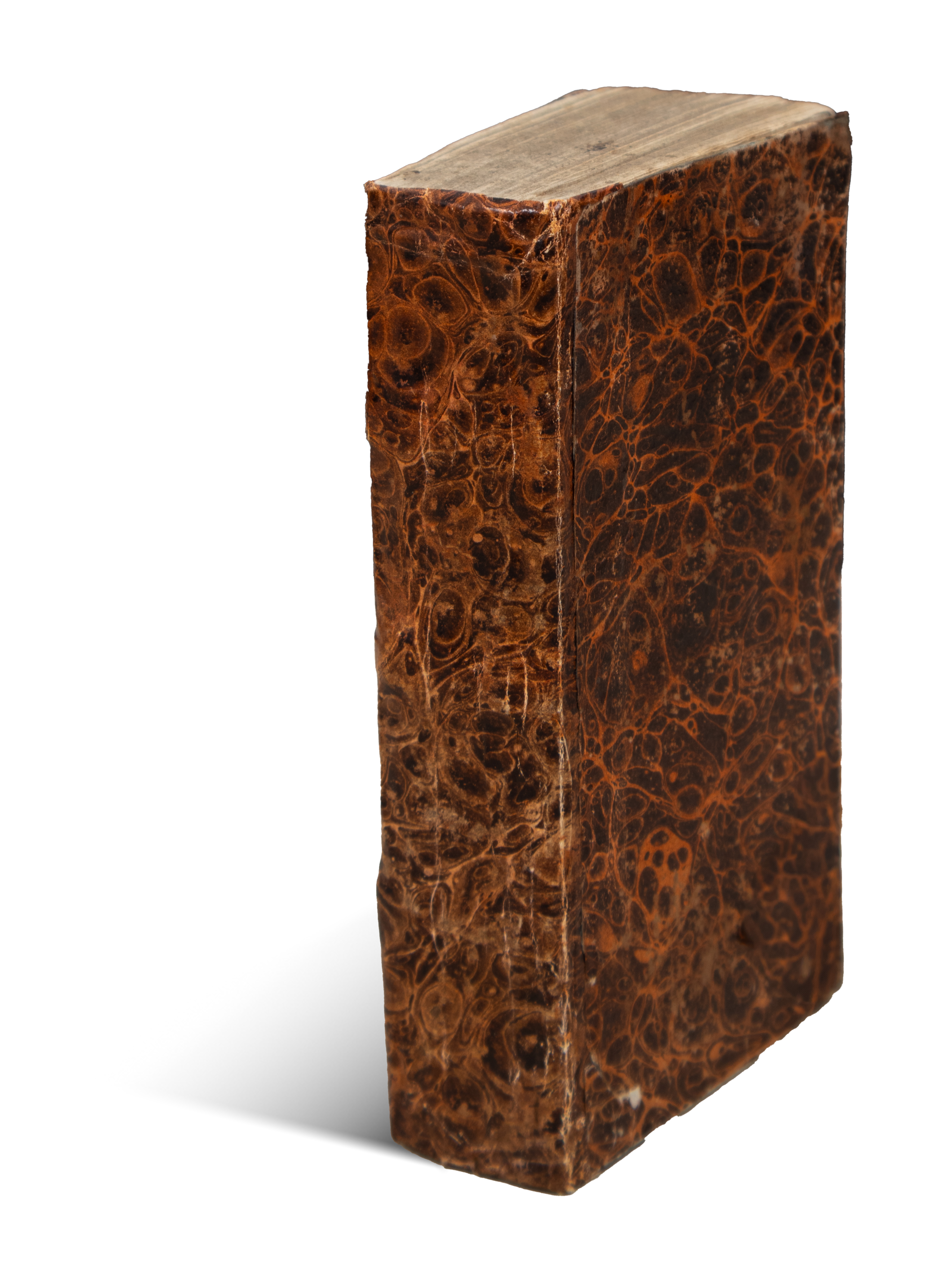
Kevéssel későbbi kartonkötésben.
USTC No. 1811342 , Norman 2244. Garrison-Morton-Norman 1544
De anima brutorum is the earliest English work on psychology, in which Willis describes the phenomenon now known as paracusis Willisii. Based on his observations of a deaf woman who could only hear when a drum was beaten, he recognized the difference between the symptoms of serious brain diseases and mental illnesses. Because he postulated a disturbance of the brain and nerves in terms of disordered "animal spirits" in the absence of pathological findings, he is often considered the first to have equated mind disease with brain disease. He attributed a wide range of diseases to neurological disturbances, among them headache, lethargy, melancholy, apoplexy, frenzy, and paralysis. (Norman)
With 8 engraved plates of brain anatomy, folded.
This is the 4th (2nd Amsterdam) edition of this work.
Later hardcover.
USTC No. 1811342 , Norman 2244. Garrison-Morton-Norman 1544