

Szerző
Collaert, Adriaen – Jan van der Straet
Imperatorvm XII A Svetonio Descriptorvm Effigies Resqve Gestae ...
ca. 1587-1589Ár
450 000 Ft
Azonosító
102849
B4 fiók
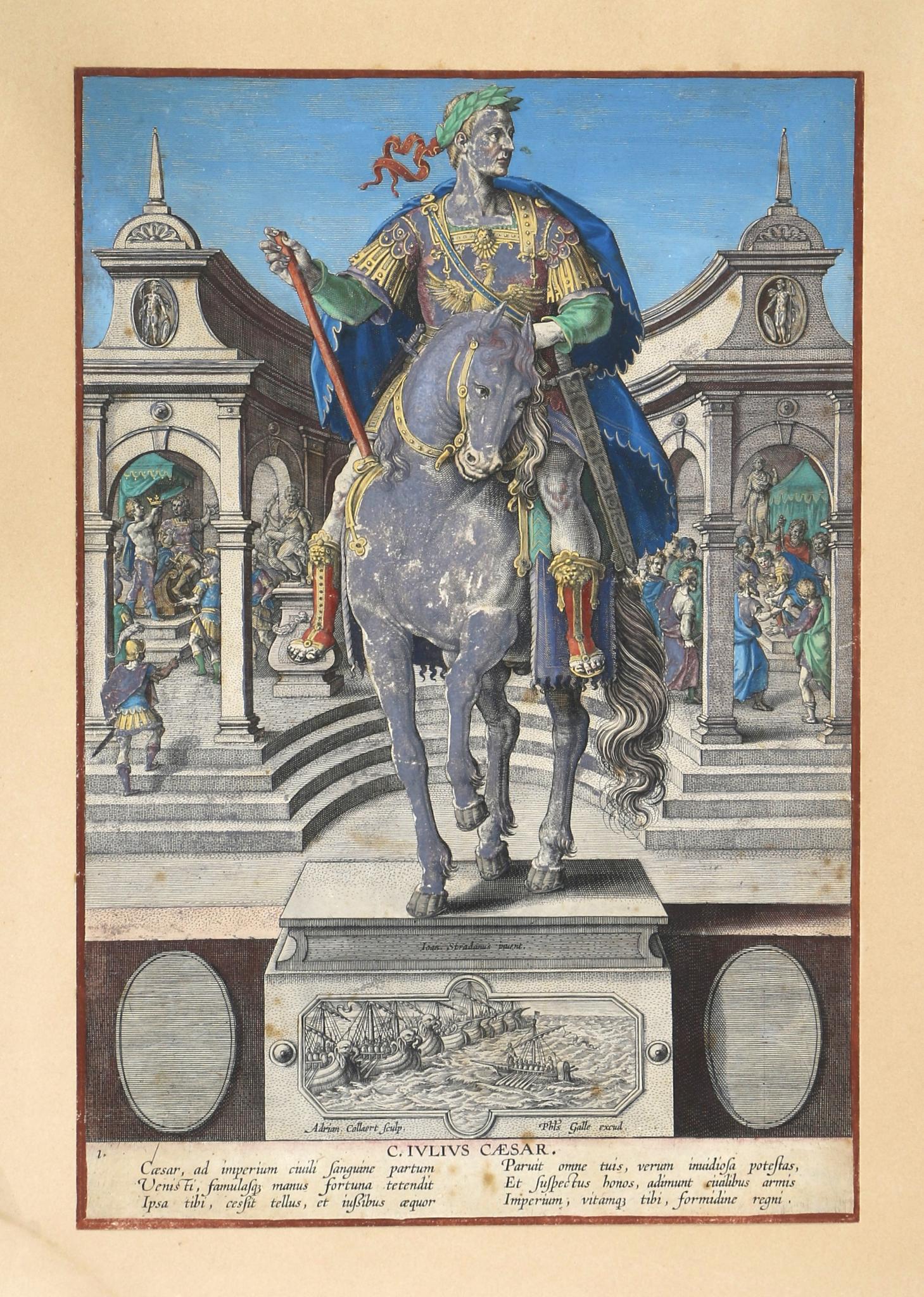
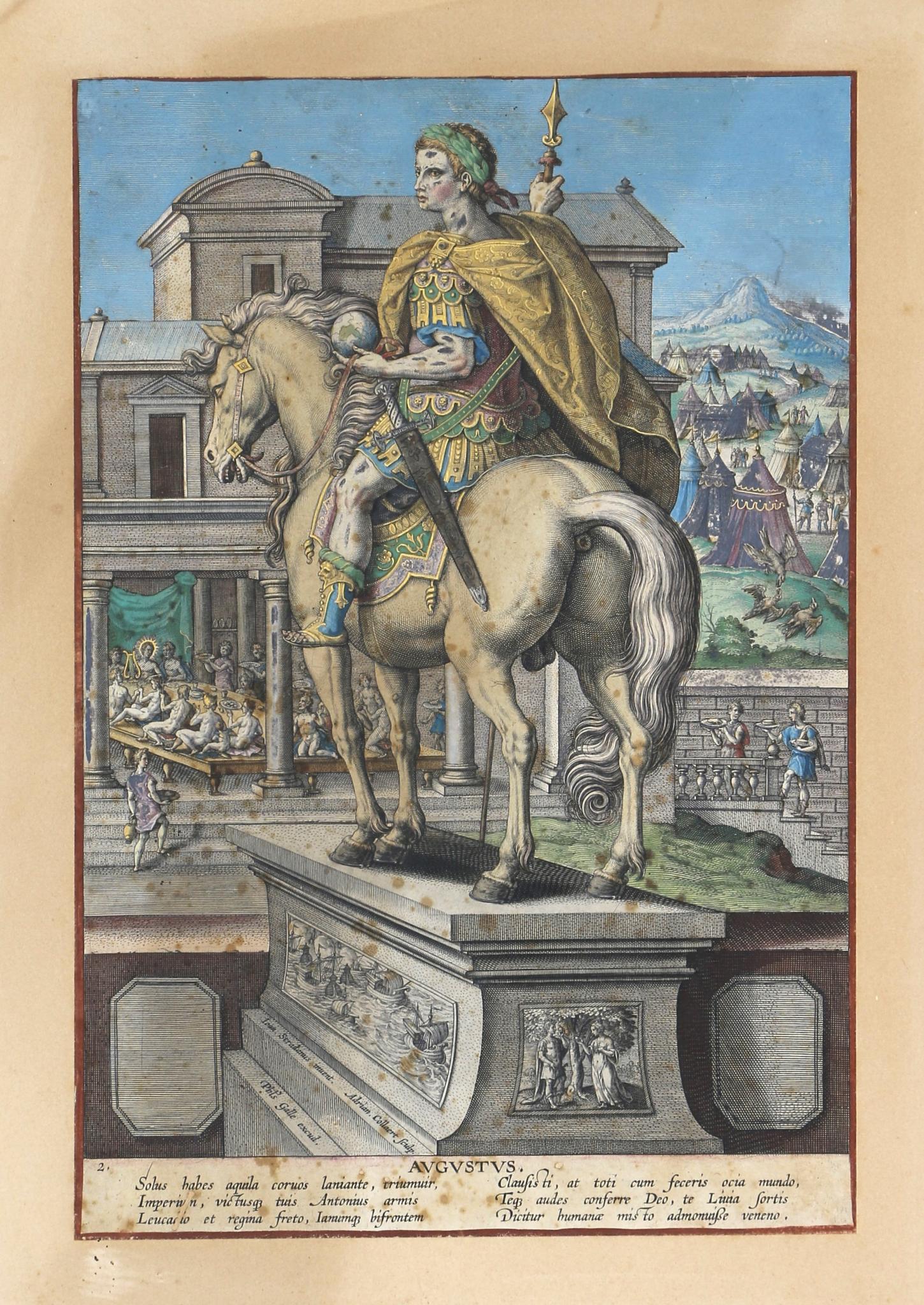
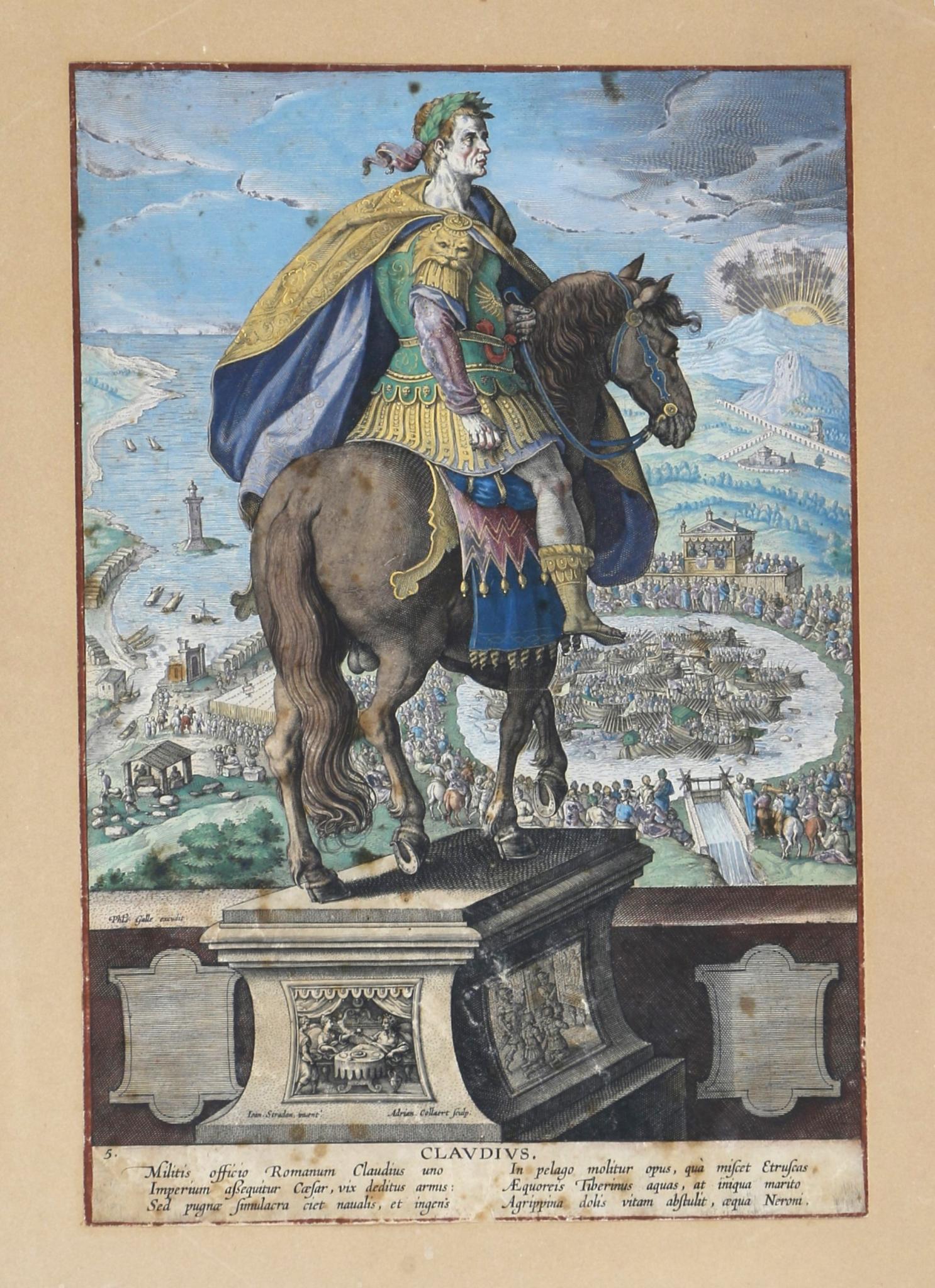
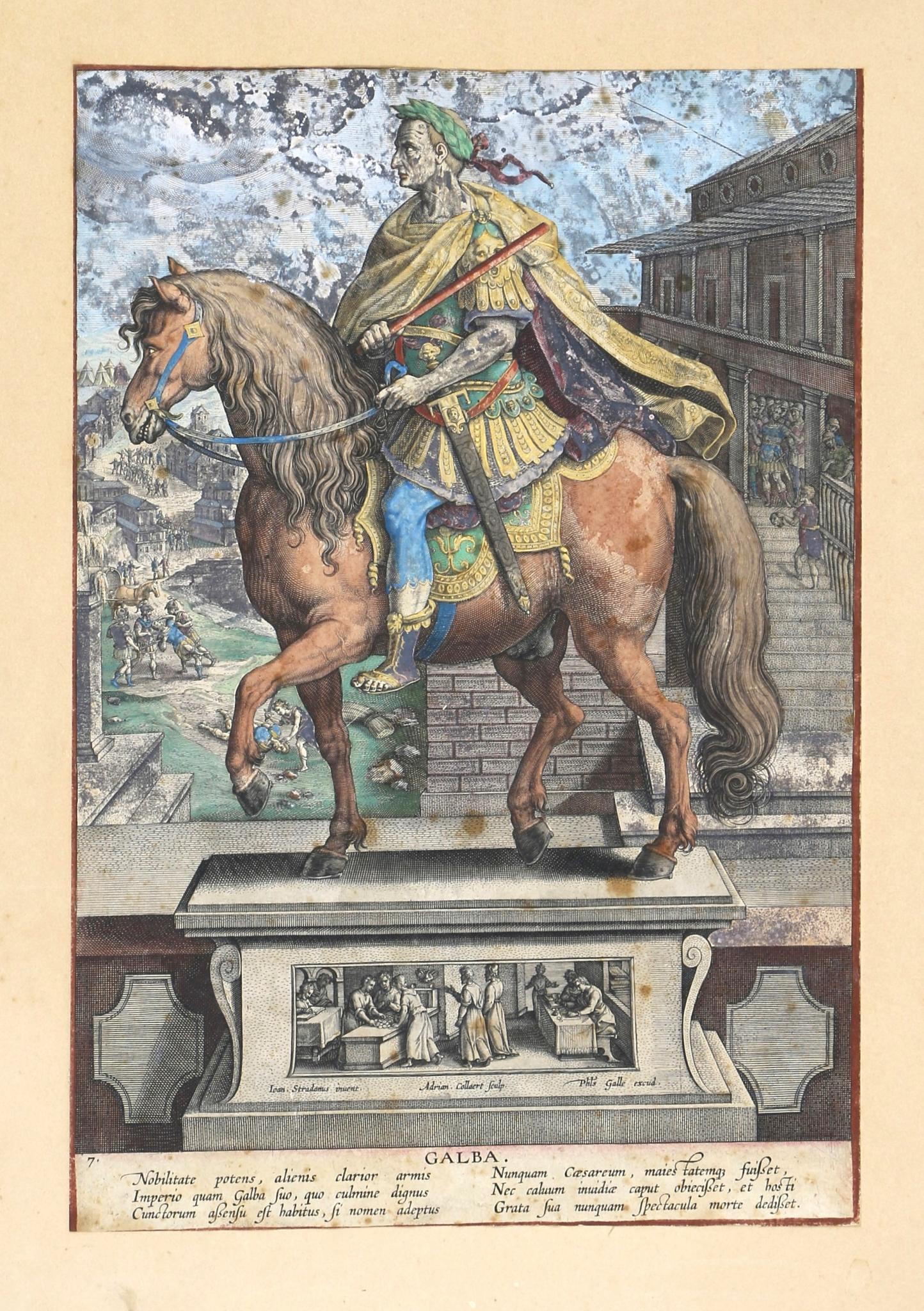
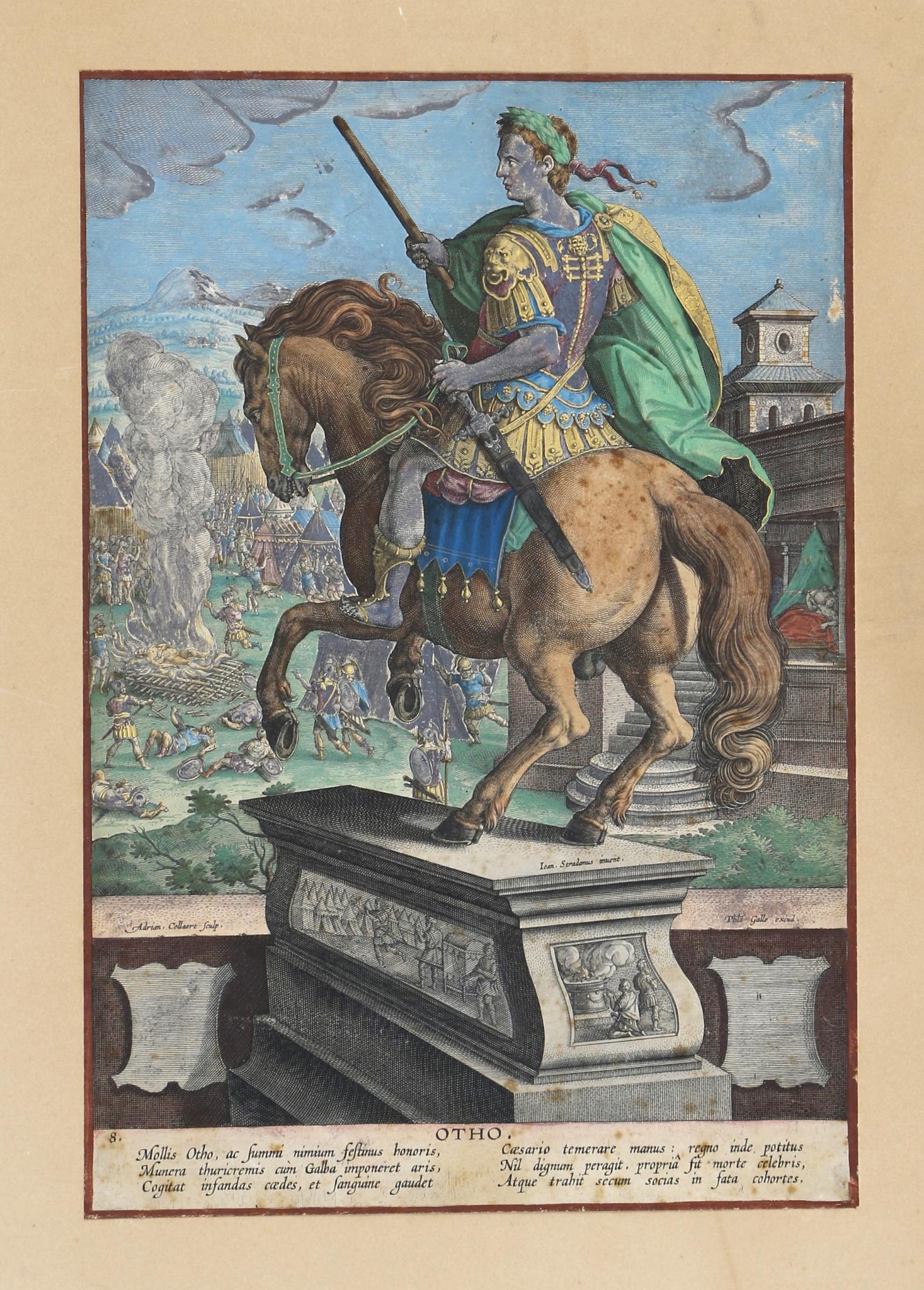
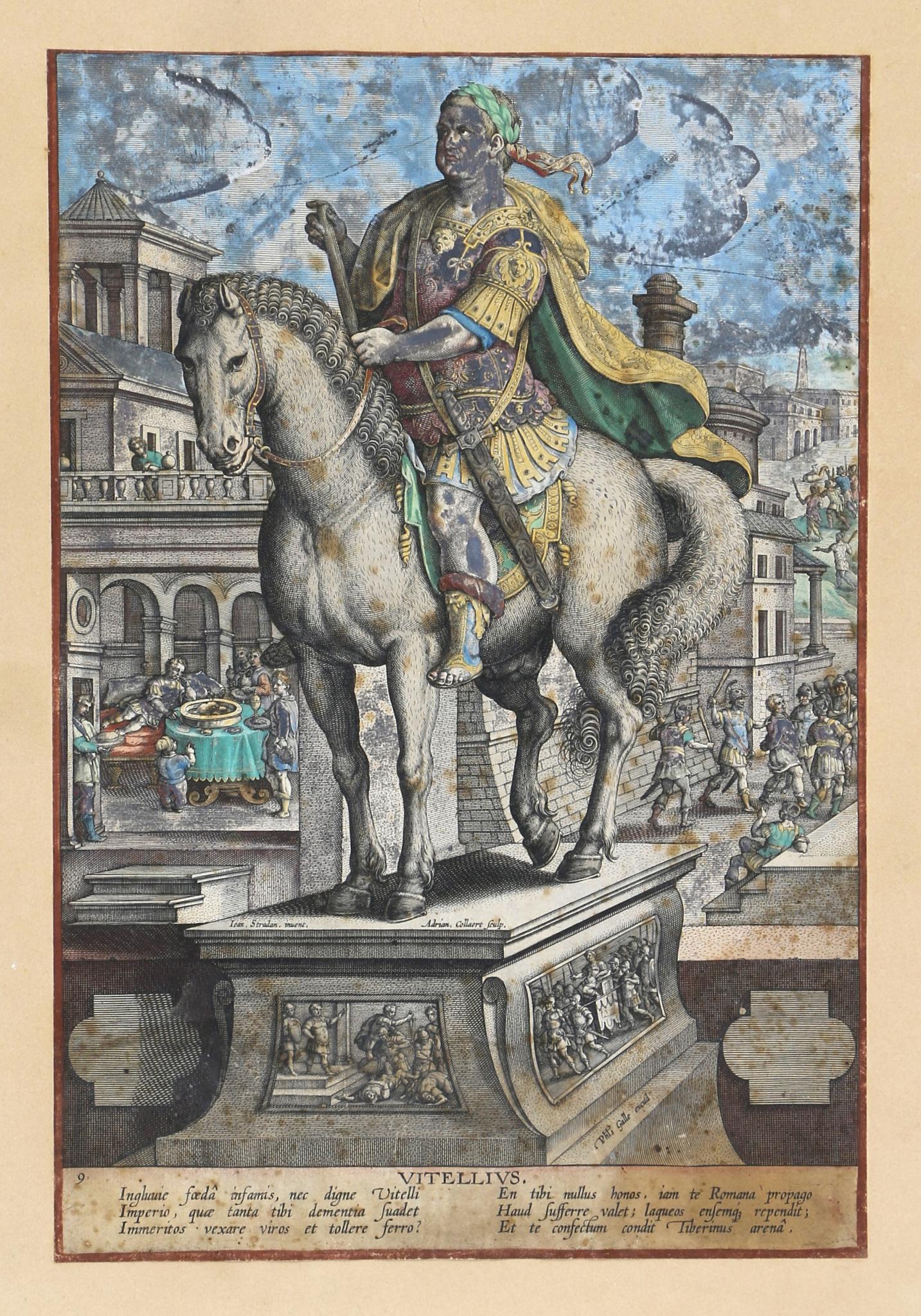
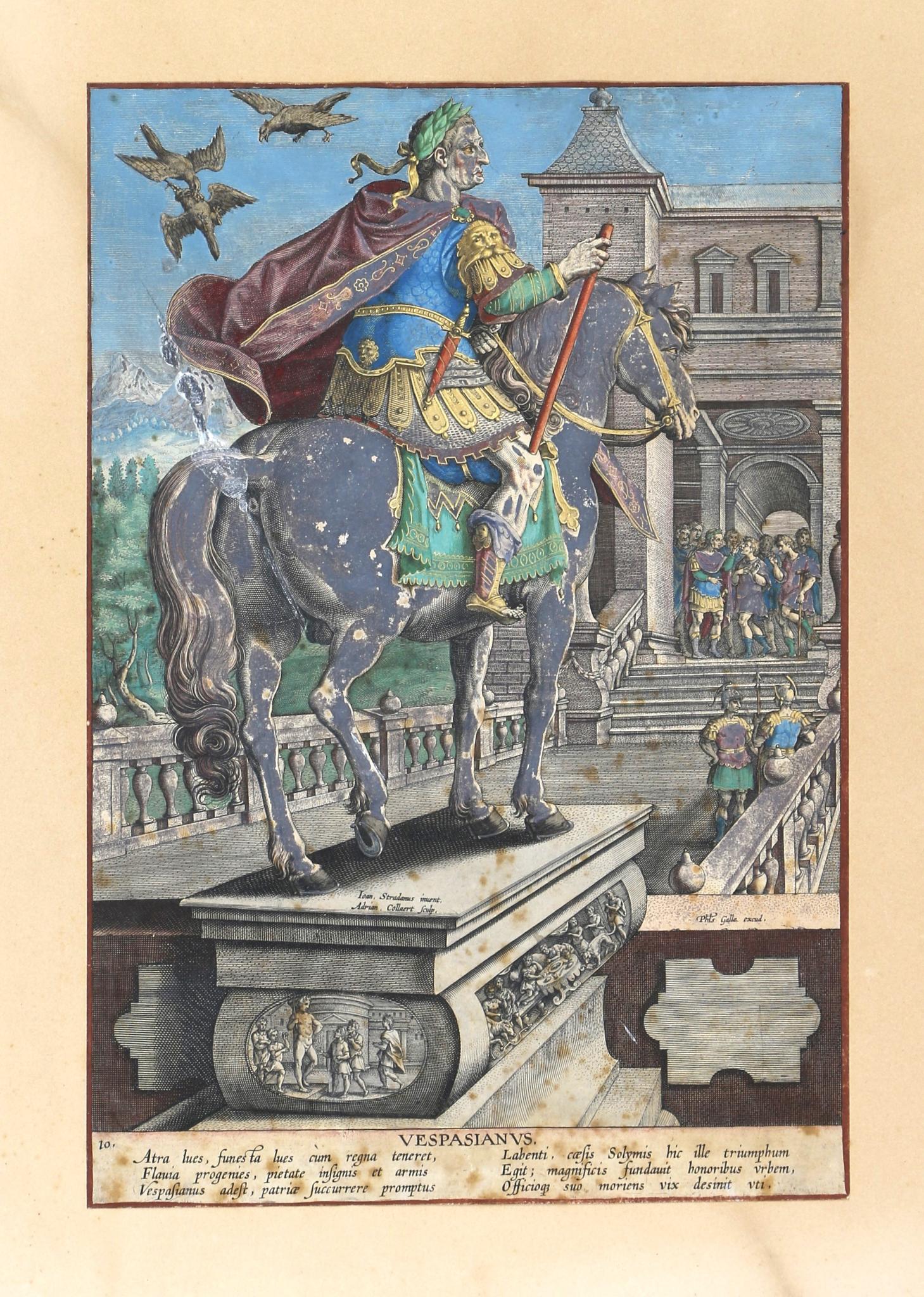
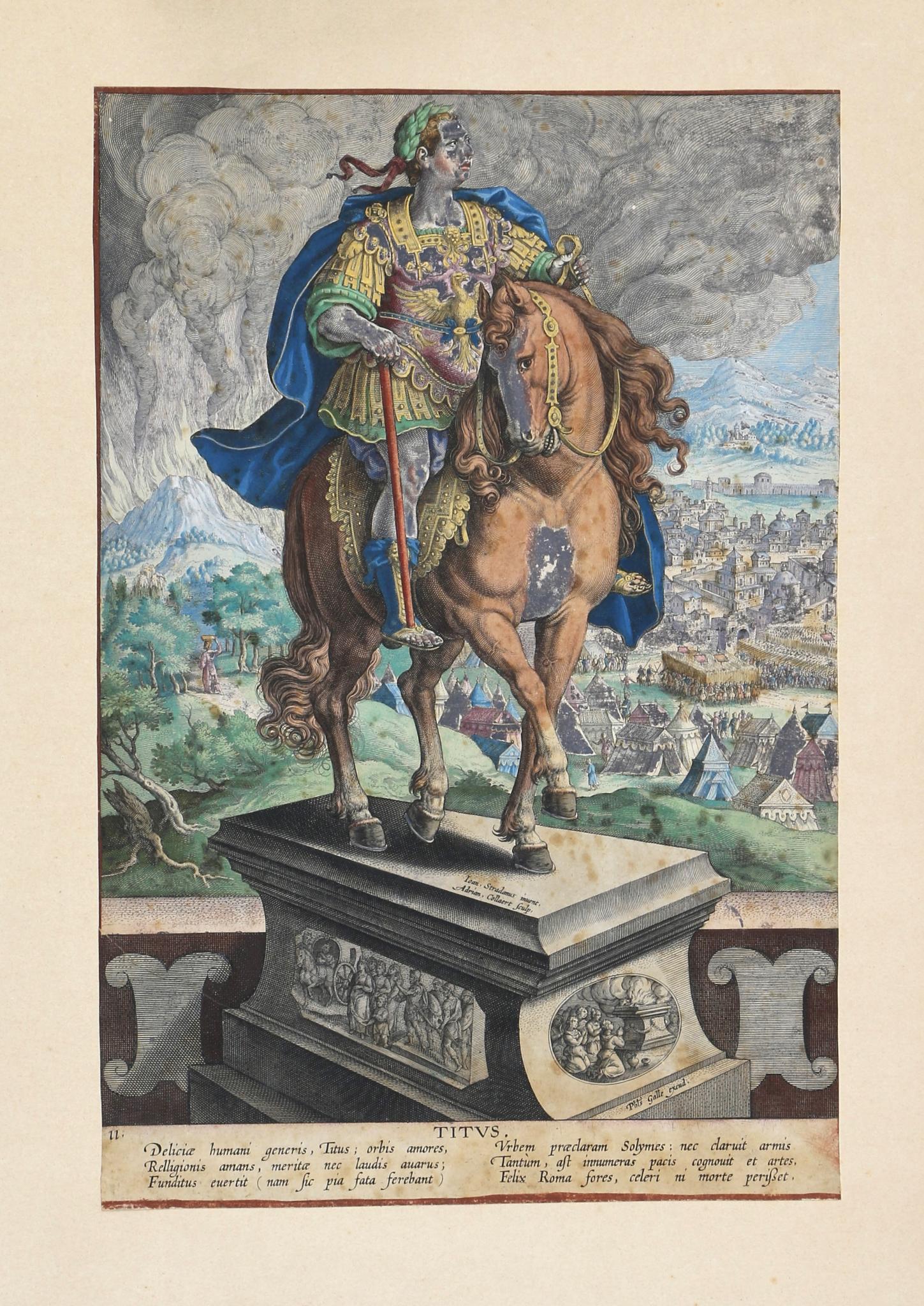
Tizenkét római császár lovasszobrát ábrázoló metszetsorozat. Adriaen Collaert (1560-1618 körül) metszete Jan van der Straet, más néven Stradanus (1523-1605) munkája után. Kiadta Philip Galle Antwerpenben. A sorozat tizennégy metszetből áll, melyből jelen kollekció a következő tizet tartalmazza: 1. Julius Caesar, 2. Augustus, 5. Claudius, 7. Galba, 8. Otho, 9. Vitellius, 10. Vespasianus, 11. Titus, 12. Domitianus, 13. Iulius Caesar diadalmenete.
Korabeli kéz által gyönyörűen színezve. Elvétve foltokkal, a fehér festék oxidálódott. 19. századi kartonra kasírozva. Méret: 33,7×22,2 cm; karton: 43,3×31,5 cm.
Engraved by the dutch Adriaen Collaert (ca. 1560–1618) after the work of Jan van der Straet, called Stradanus (1523–1605). Kiadta Philip Galle Antwerpenben.
Our collection contains ten from the original set of fourteen:
Plate 1: equestrian statue of Iulius Caesar, seen from the front, with a scene of a naval battle on pedestal below.
Plate 2: equestrian statue of Augustus, holding a globe and seen from behind, with a feast occurring at left in the background.
Plate 5: equestrian statue of Claudius, seen from behind, a naval competition at right in the background.
Plate 7: equestrian statue of Galba, in profile to the left, with a beheading scene in the background.
Plate 8: equestrian statue of Otho, seen from behind, his death scene in the background with him stabbing himself at right and the burning of his body at left.
Plate 9: equestrian statue of Vitellius, seen three-quarters to the left, with his death scene in the background at right, his body being thrown into the Tiber at upper right.
Plate 10: equestrian statue of Vespasian, seen from behind, three birds at upper right with one attacking another.
Plate 11: equestrian statue of Titus, seen three-quarters to the right, Mount Vesuvius erupting at left in the background.
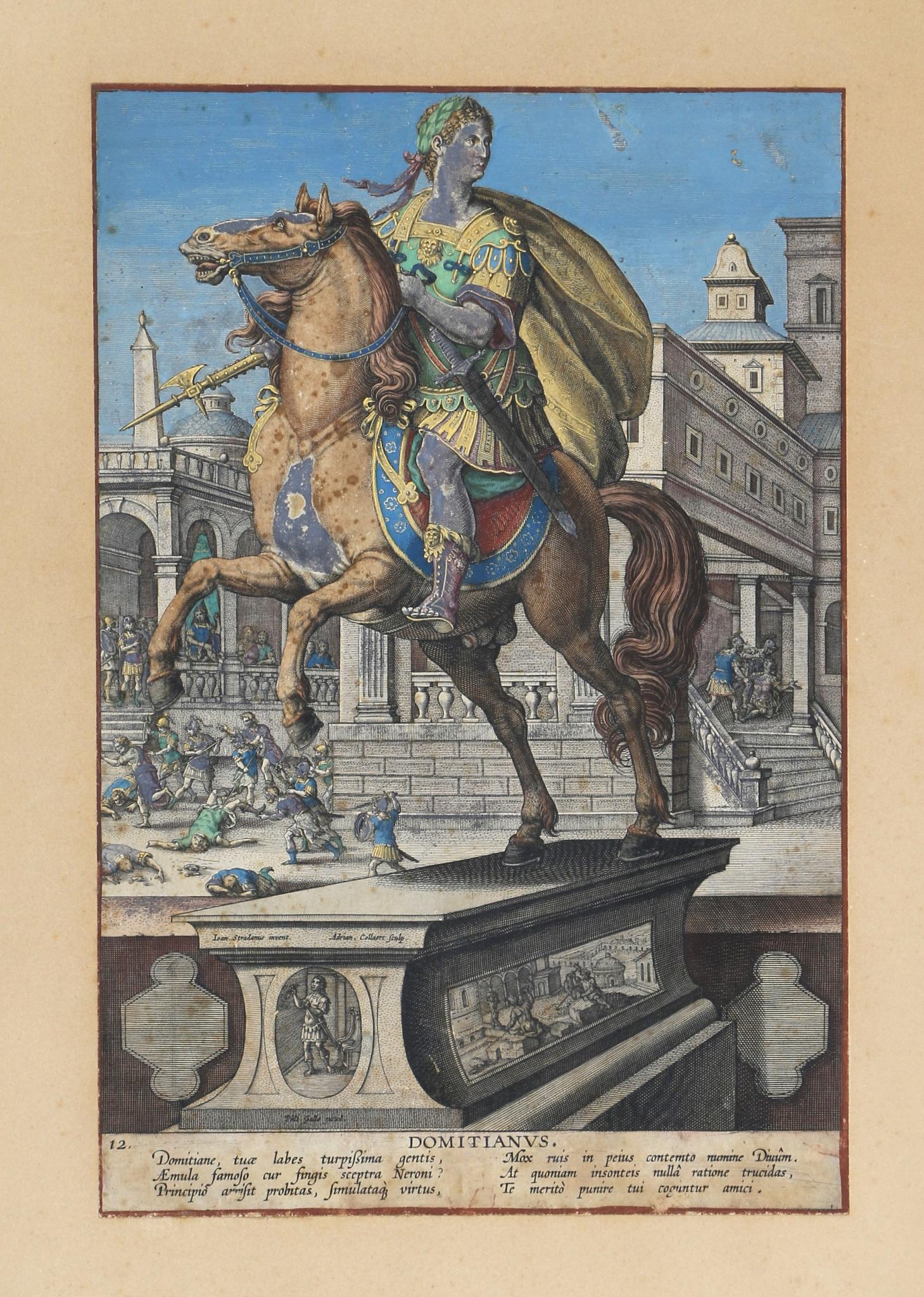
Plate 12: equestrian statue of Domitian, seen three-quarters to the left, with his stabbing death at right in the background.
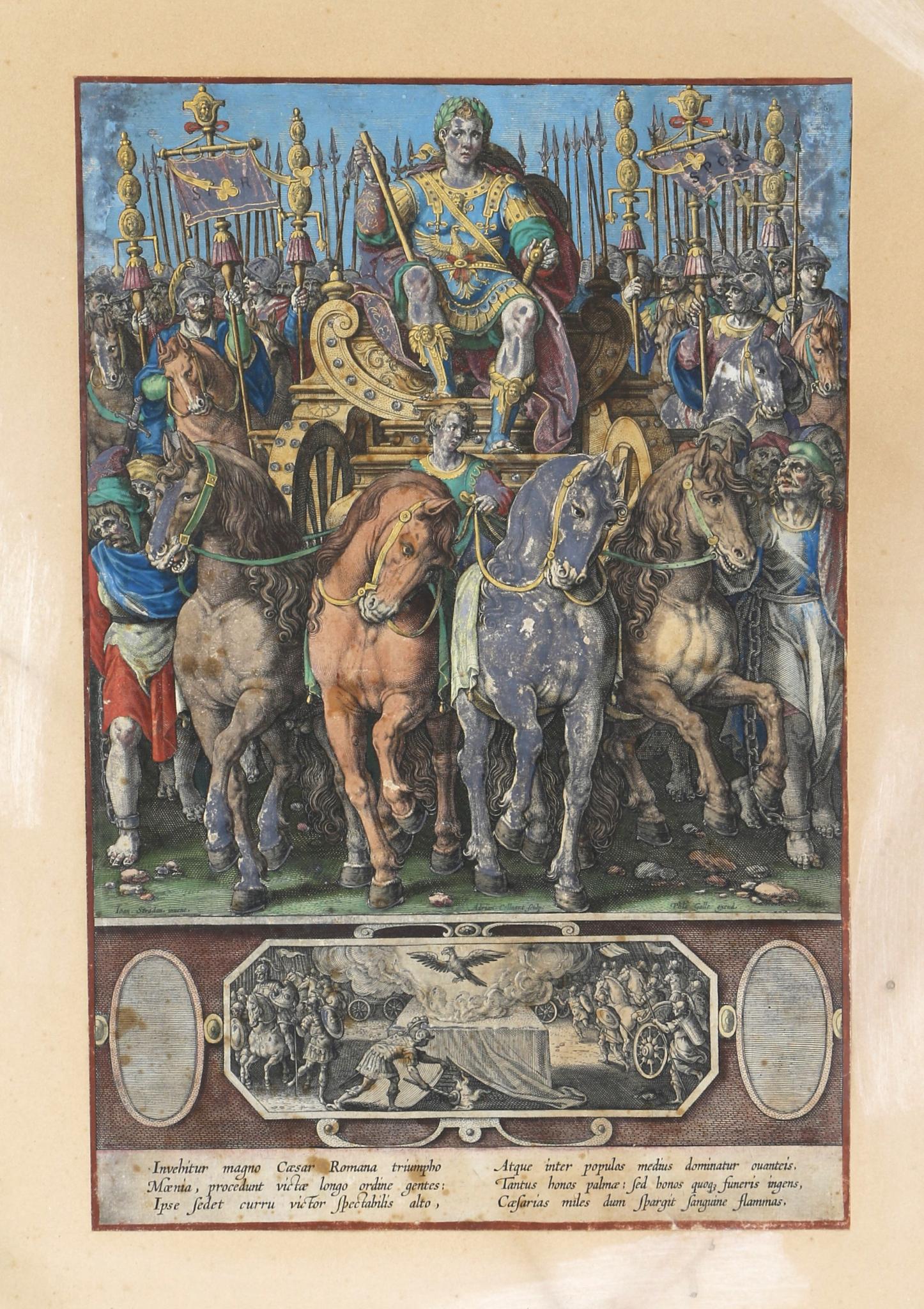
Plate 13: the triumph of Iulius Caesar, in the bottom with a scene of Caesar's burial and apotheosis.
Engraving on paper, beautifully colored by a contemporary hand. Occasional stains, the white paint have oxidized. Cased on 19th-century cardboard. Size: 33,7×22,2 cm; including the cardboard: 43,3×31,5 cm
Our collection contains ten from the original set of fourteen:
Plate 1: equestrian statue of Iulius Caesar, seen from the front, with a scene of a naval battle on pedestal below.
Plate 2: equestrian statue of Augustus, holding a globe and seen from behind, with a feast occurring at left in the background.
Plate 5: equestrian statue of Claudius, seen from behind, a naval competition at right in the background.
Plate 7: equestrian statue of Galba, in profile to the left, with a beheading scene in the background.
Plate 8: equestrian statue of Otho, seen from behind, his death scene in the background with him stabbing himself at right and the burning of his body at left.
Plate 9: equestrian statue of Vitellius, seen three-quarters to the left, with his death scene in the background at right, his body being thrown into the Tiber at upper right.
Plate 10: equestrian statue of Vespasian, seen from behind, three birds at upper right with one attacking another.
Plate 11: equestrian statue of Titus, seen three-quarters to the right, Mount Vesuvius erupting at left in the background.
Plate 12: equestrian statue of Domitian, seen three-quarters to the left, with his stabbing death at right in the background.
Plate 13: the triumph of Iulius Caesar, in the bottom with a scene of Caesar's burial and apotheosis.
Engraving on paper, beautifully colored by a contemporary hand. Occasional stains, the white paint have oxidized. Cased on 19th-century cardboard. Size: 33,7×22,2 cm; including the cardboard: 43,3×31,5 cm