

Speculum peregrinarum quaestionum
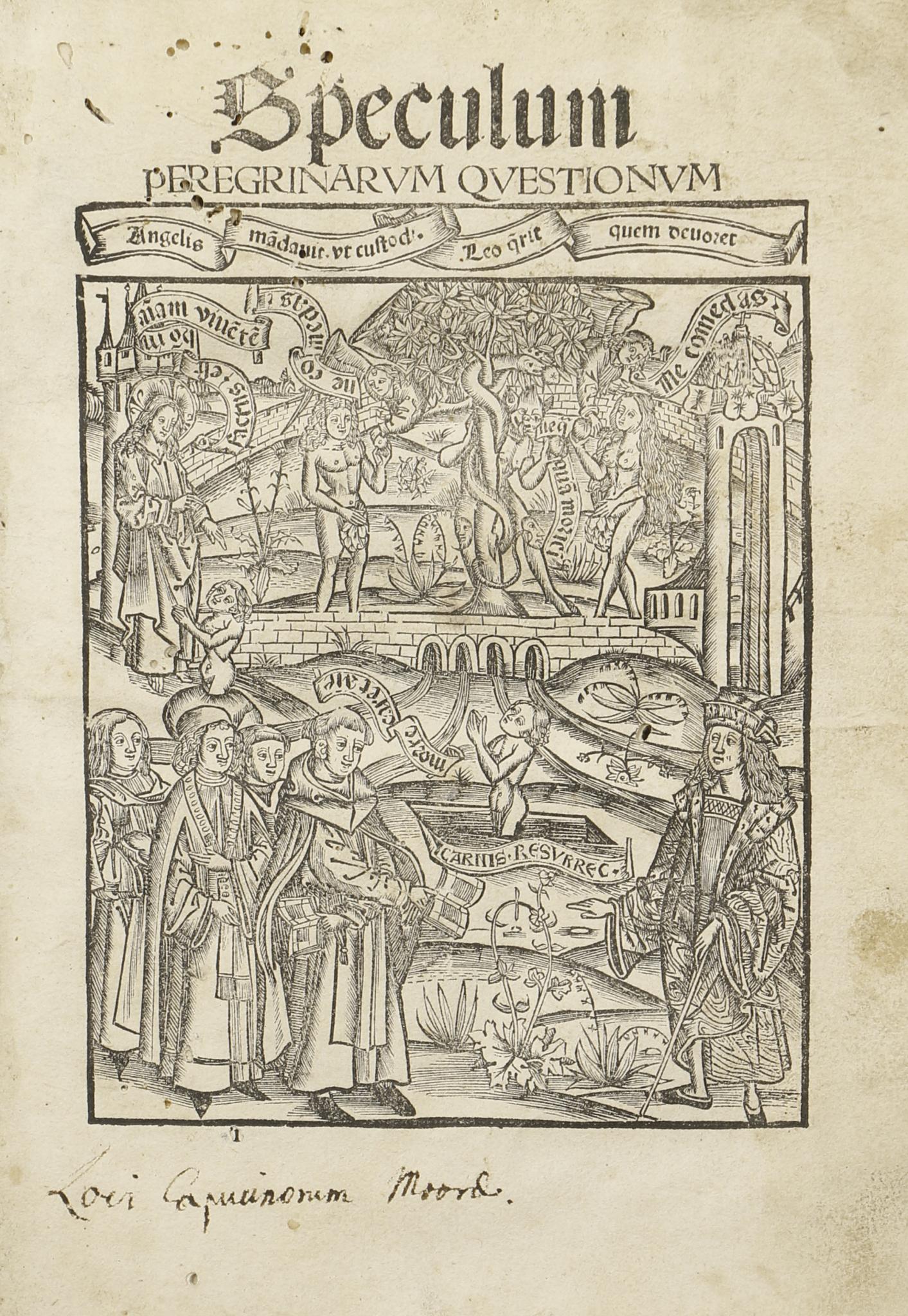
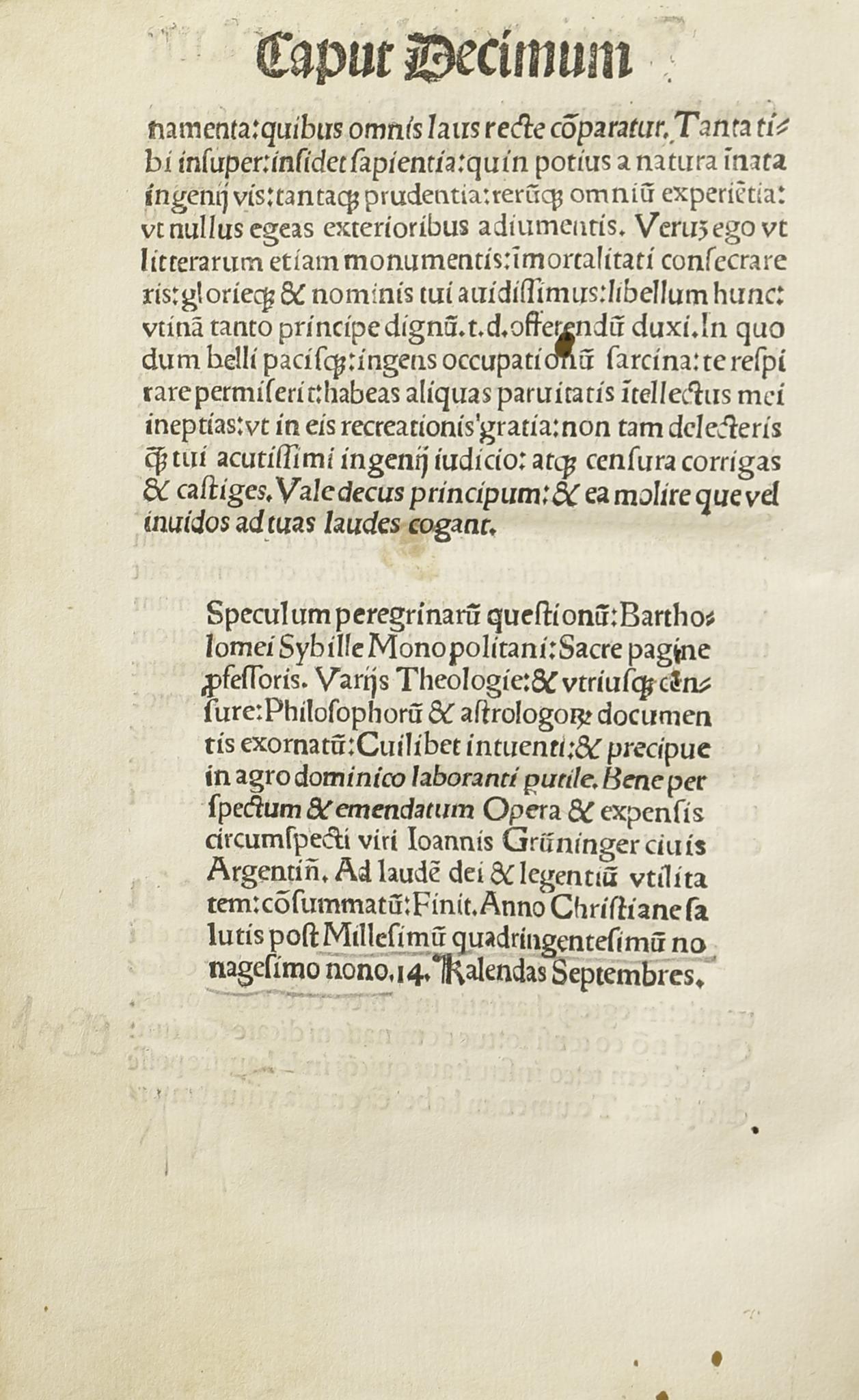
Strassburg, 19 August 1499. Johann (Reinhard) Grüninger.[X] + CCLIIII fol. Title page is adorned with a large, finely crafted woodcut. This copy contains contemporary manuscript marginalia and underlinings in ink. The text is set in a single column of 32 lines, featuring 3–6 line initials with guide letters left blank for illumination. A total of 264 leaves; the final blank leaf is missing. The work first appeared in Rome in 1493.
This incunable is rare in domestic public collections, with only two copies recorded. This is the second edition of the mystical work by the Italian Dominican philosopher, theologian, and physician Bartholomaeus Sibylla. Divided into three 'decades', the treatise explores demons, astrology, divination, spirits, ghosts, and dreams. A significant portion of the text is dedicated to the struggle between the human race and demonic forces, as well as the influence of angels, devils, the sun, the moon, and the stars on human life and health. Sibylla raises complex theological and metaphysical questions, such as the nature of angels and evil, the conflict between fate and human free will, the efficacy of invoking the devil, and the specific nature of the fires of hell.
The author also discusses the medicinal properties of herbs, the power of amulets, and the symbolic significance of words. His diverse range of sources includes Hermes Trismegistus, Apuleius, Ptolemy, Seneca, and Gellius. In his preface addressed to Alfonso of Aragon, Sibylla makes special mention of the magnificent library belonging to Alfonso’s father, Ferdinand.
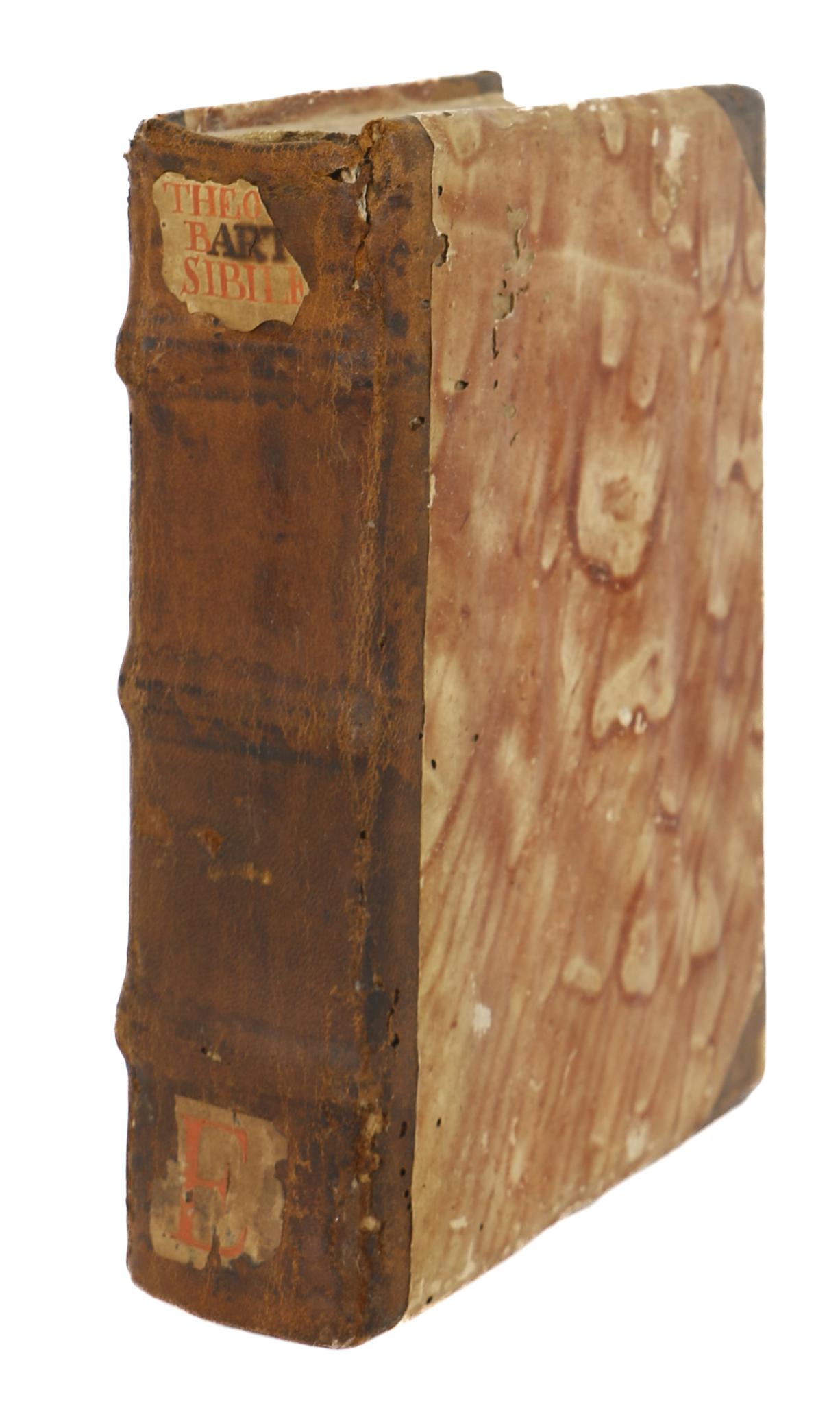
In a contemporary half-leather binding sewn on three raised bands, with uncut leaves and remnants of later paper labels. A few leaves are slightly water-stained, with minor traces of worming.
Includes the possesor entry: "Loci Capucinorum Moorae" (The Capuchin Monastery of Mór, Hungary).
Reference: GW 3460.; ISTC is00492000.; CIH 317.
__________________________________________________________
[X] + CCLIIII fol. A címlapon nagyméretű, szépen kidolgozott fametszettel. Korabeli, kéziratos, tintás széljegyzetekkel és aláhúzásokkal. 32 soros, egyhasábos szedés, 3-6 soros kezdőbetűkkel, üresen hagyott vezérbetűkkel. Összesen 264 levél, az utolsó, üres lap hiányzik. Első alkalommal 1493-ban jelent meg Rómában.
"Ismeretlen kérdések tükre". Az itáliai domonkos filozófus, teológus, orvos misztikus munkájának második kiadása. A három dekádra osztott, démonokkal, asztrológiával, jóslással, szellemekkel, kísértetekkel, álmokkal foglalkozó mű nagy teret szentel az emberi faj és a démonok közötti küzdelemnek, valamint arról is szól, miképpen hatnak az angyalok, ördögök, a nap, a hold és a csillagok az emberi életre és egészségre. Többek között olyan kérdéseket vet fel, mint az angyalok és a gonosz, a sors és az emberi akarat ellentéte, illetve hogy mennyire hatásos az ördög segítségül hívása, milyen természetű a pokol tüze. Tárgyalja a gyógynövények és amulettek hatásait, a szavak szimbolikus jelentőségét. Forrásai között szerepel Hermész Triszmegisztosz, Apuleius, Ptolemaiosz, Seneca és Gellius. Sibylla, az Aragóniai Alfonznak szóló előszavában külön említést tesz Alfonz apjának, Ferdinándnak pompás könyvtáráról. A nyomtatványból hazai közgyűjteményben két példányt őriznek.
Korabeli, három bordára fűzött félbőr-kötésben, körülvágatlan levelekkel, későbbi, papír címke maradványokkal. Néhány lap enyhén vízfoltos, szúrágások apró nyomaival. Poss.: „Loci Capucinorum Moorae”.
GW 3460.; ISTC is00492000.; CIH 317