

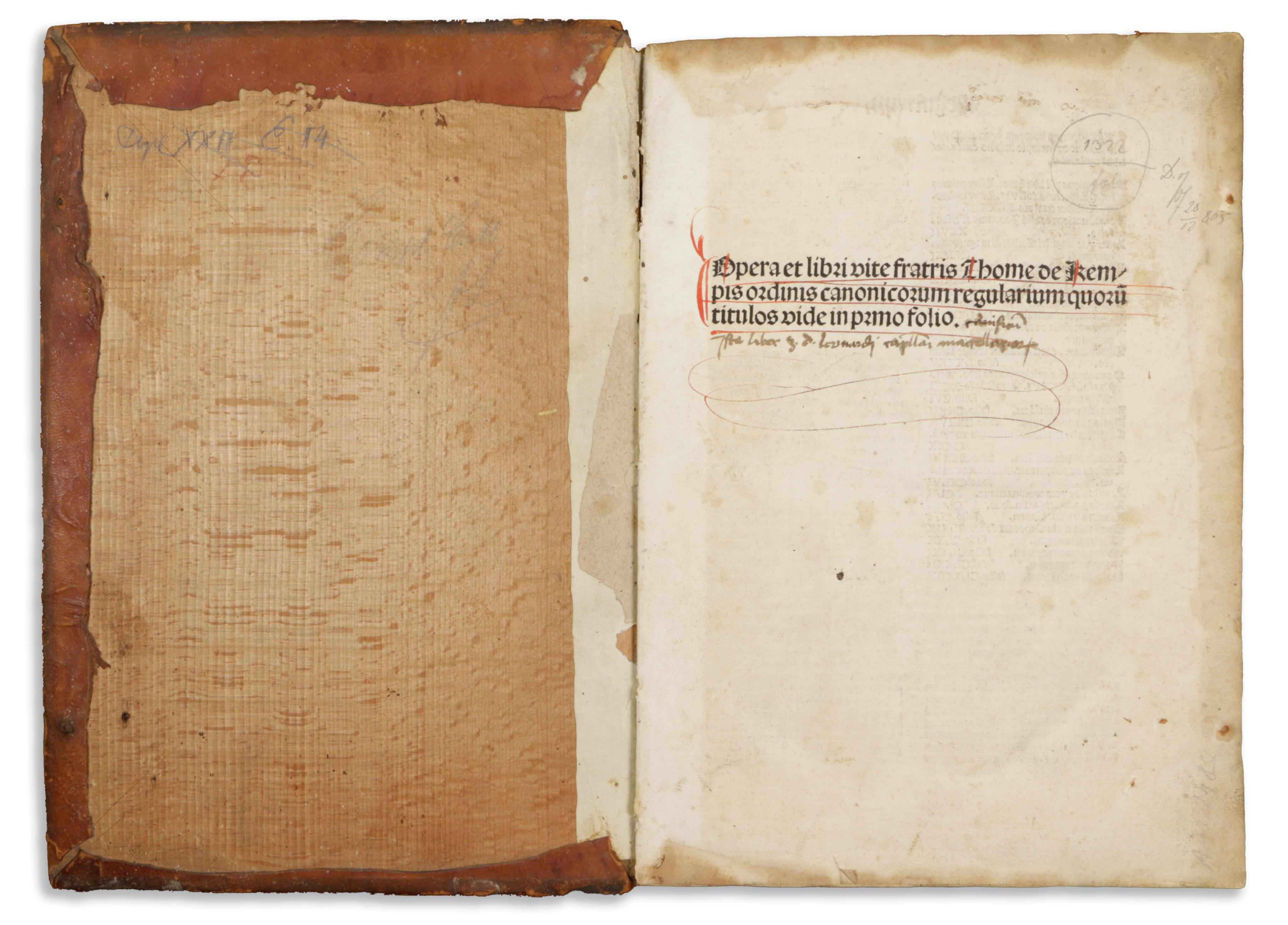
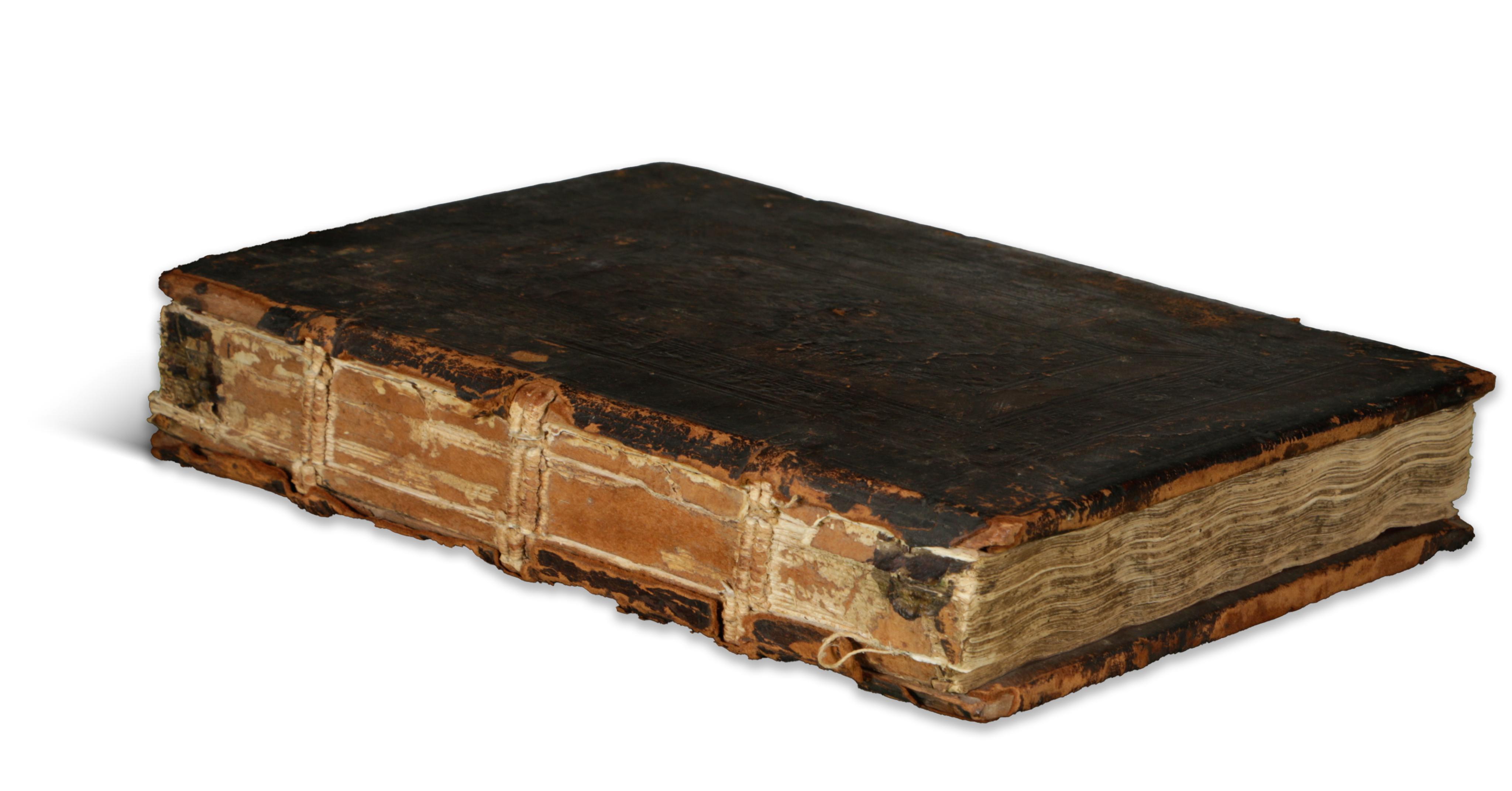
Opera et libri vite fratris Thome de Kempis...
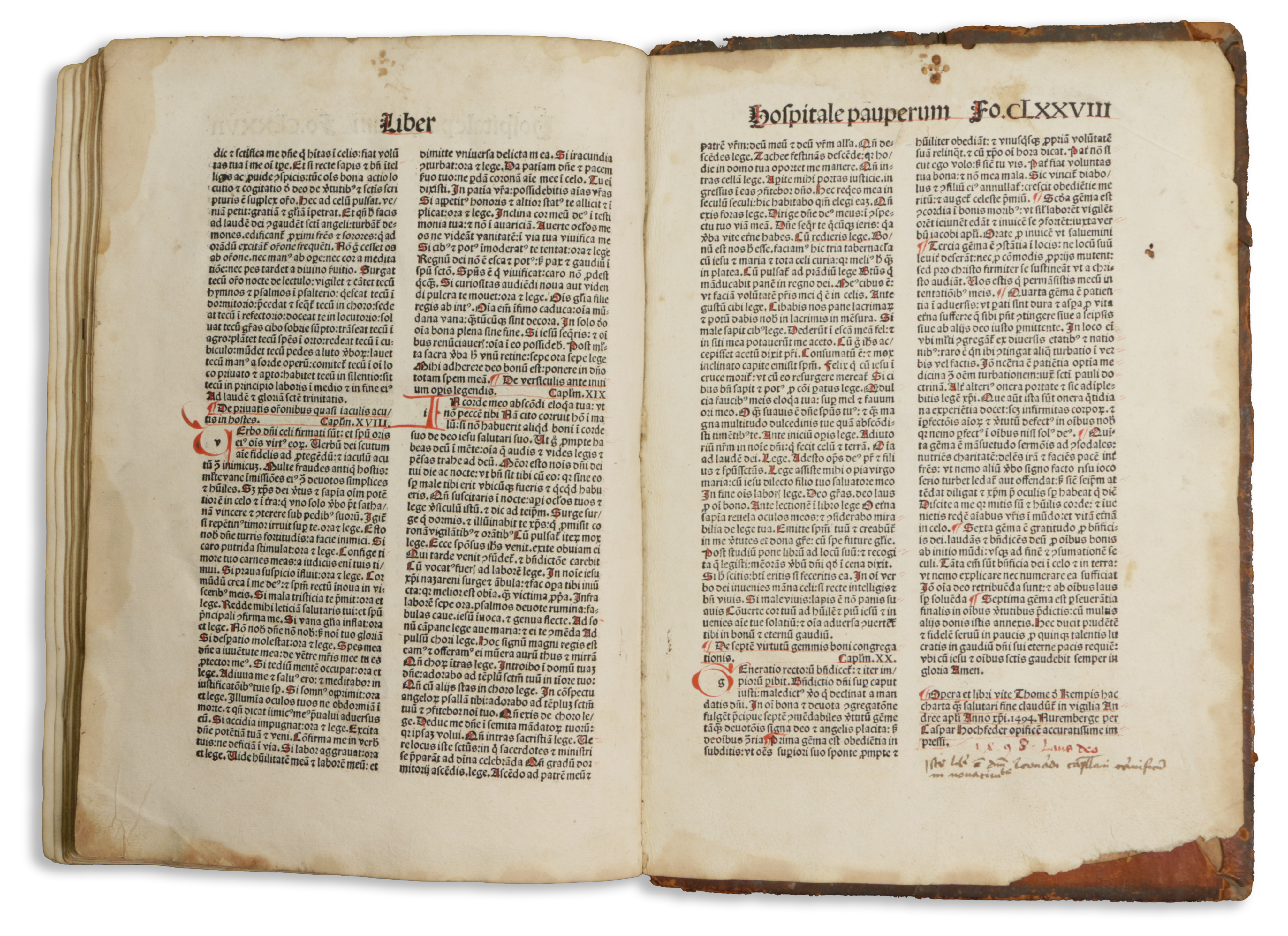
1494 NurembergCaspar Hochfeder. [4] + 178 fol. M.: 300 x 210mm
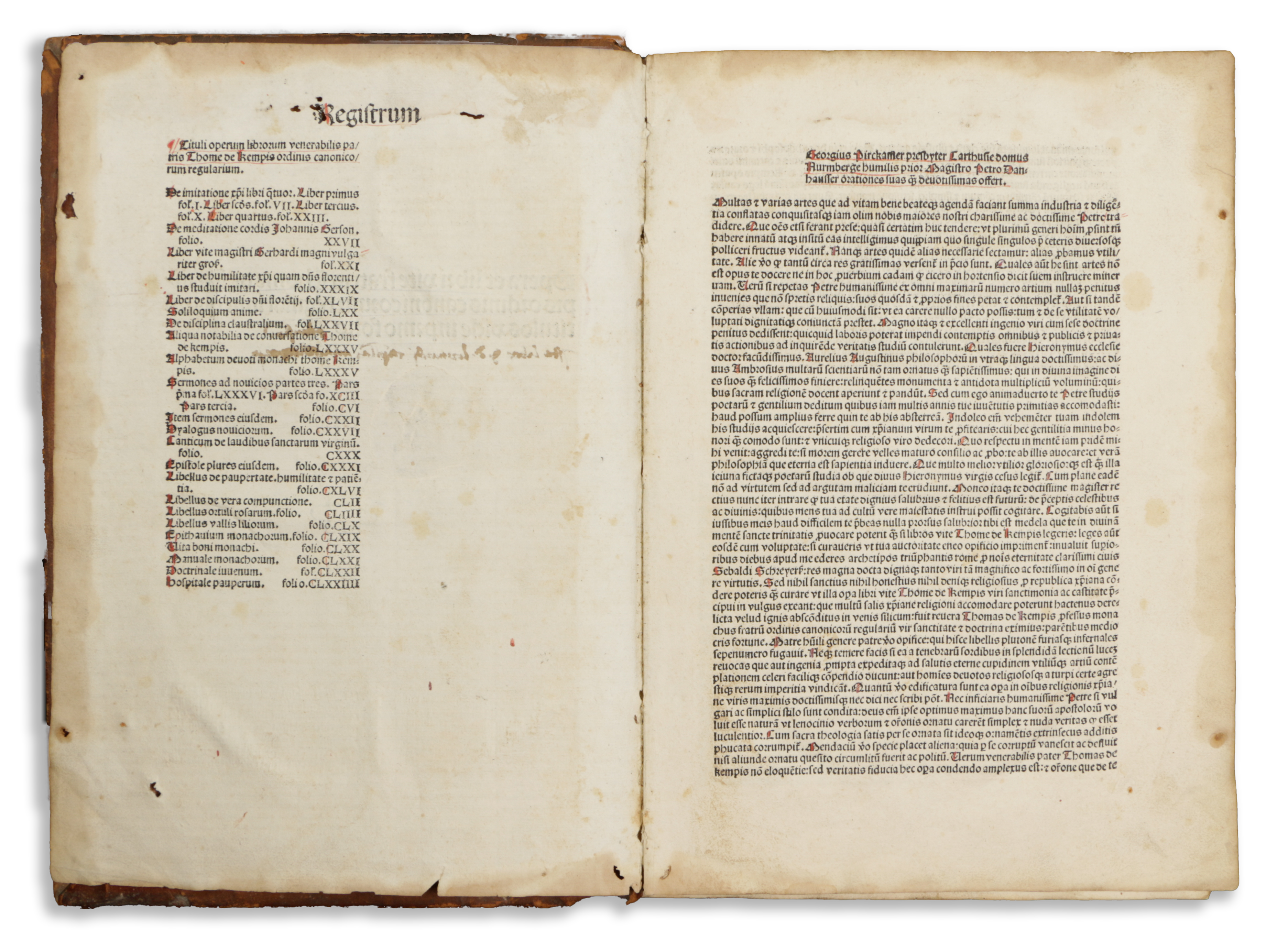
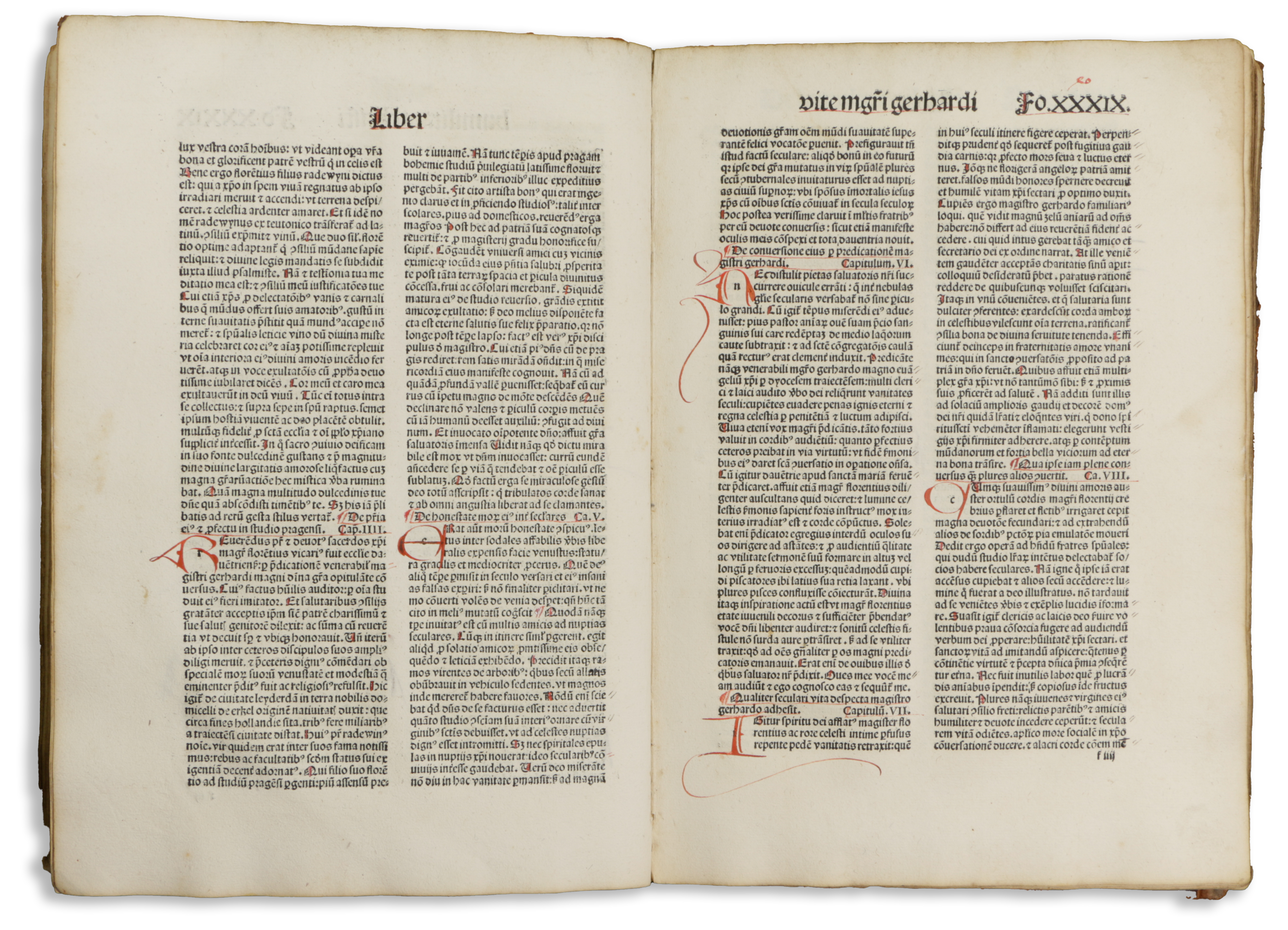
Két oszlopos szedéssel (kivéve előzéklevelek), 53 sorban gót betűs, latin nyelvű, végig rubrikázott szöveggel. A 8, 6 és 4 soros iniciálék vörös tollal, kézzel díszítve, ezenkívül a szövegben is számos helyen pirossal jelezve. A szövegben csak néhány kéziratos megjegyzés, javítás található.
Jól ismert az a középkori szokás, hogy egy névhez több művet is társítottak, és az Imitatio szerzőségének történetét a XV. század óta sokat vitatják. A jelen gyűjteményben található mintegy 23 tétel tartalomjegyzéke, amelyet "Kempis művei" általános címszó alatt csoportosítottak, felsorolja Jean Gerson műveit, Gerhard Groote, a Devotio moderna alapítójának Liber vitae-jét, valamint egy bizonyos Dominus Florentius műveit és más névtelen traktátusokat. A jelen kiadás tulajdonképpen a második gyűjteményes kiadás, és az első, amely a szerzőhöz kapcsolódó leghíresebb művet tartalmazza. A kötetet szerkesztő Peter Danhauserhez intézett előszavában Georg Pirckheimer, a nürnbergi karitász perjele és a híres humanista és Dürer barátjának, Willibald Pirckheimernek az unokatestvére, hangsúlyozza Thomas Kempis műveinek kinyomtatásának fontosságát, és némi fényt vet a korabeli nürnbergi kulturális légkörre. Ketelaer és de Leempt utrechti nyomdájában 1473 körül megjelent egy kötet, amely számos Kempisnek tulajdonított szöveget tartalmazott, de nem az Imitatio Christi-t, amelyet nagyjából ugyanebben az időben nyomtattak először Augsburgban. Danhauser (Danusius, Abietiscola), a fiatal jogász és asztrológus Ingolstadtban és Tübingenben tanult. 1491-ben részt vett Szent Anselm műveinek szerkesztésében, és ő volt a szerkesztője Gulielmus Parisiensis Postilla 1496-ban a Hochfeder-nyomdában készült kiadásának is.
Korabeli, három bordára fűzött bőrkötés fatáblákon, vaknyomásos keretdíszekkel. Gerince levált, táblái erősen kopottak. Kötése két helyen is megtört. A levelek széles margóval, tiszta állapotban. Modern vászontékában, gerincén vignetta. Ritka példánya ennek a fontos nürnbergi ősnyomtatványnak, amely az Imitatio Christi gondos korabeli olvasására utal.
BMC ii 475; IGI 9636; Polain 3777; Goff T352; C. Celtes, Der Briefwechsel... herausg. von H. Rupprich, Munich, C.H. Beck, 1934, pp. 23-24; W. Pirckheimer, Der Briefwechsel, herausg. Reimann & Reicke, Munich, C.H. Beck, 1940, i.
The medieval custom of associating several works with one name is well known, and the history of the authorship of the Imitatio has been much debated since the 15th century. The table of contents of some 23 items in the present collection, grouped under the general heading of "Kempis' works", lists the works of Jean Gerson, the Liber vitae of Gerhard Groote, the founder of the Devotio moderna, and the works of a certain Dominus Florentius and other anonymous treatises. The present edition is actually the second collected edition, and the first to contain the most famous work associated with the author. In his preface to the editor Peter Danhauser, Georg Pirckheimer, a Nuremberg Caritas prelate and cousin of the famous humanist and Dürer's friend Willibald Pirckheimer, emphasizes the importance of printing the works of Thomas Kempis's, and sheds some light on the cultural atmosphere in Nuremberg at the time. A volume was published in Utrecht by Ketelaer and de Leempt around 1473, which contained several texts attributed to Kempis, but not the Imitatio Christi, which was first printed in Augsburg around the same time. Danhauser (Danusius, Abietiscola), a young jurist and astrologer, studied in Ingolstadt and Tübingen. In 1491 he participated in the editing of the works of St. Anselm, and he was also the editor of the 1496 edition of Gulielmus Parisiensis Postilla at the Hochfeder press.
Contemporary Nuremberg pigskin binding on wooden boards, with blind-printed frame decorations. Raised bands, spine detached, boards badly worn. Binding broken in two places. Leaves with wide margins, clean. In its own folded box covered with fabric. A rare copy of this important Nuremberg early print, which indicates a careful contemporary reading of the Imitatio Christi. (300 x 210mm)
BMC ii 475; IGI 9636; Polain 3777; Goff T352; C. Celtes, Der Briefwechsel... herausg. von H. Rupprich, Munich, C.H. Beck, 1934, pp. 23-24; W. Pirckheimer, Der Briefwechsel, herausg. Reimann & Reicke, Munich, C.H. Beck, 1940, i.