

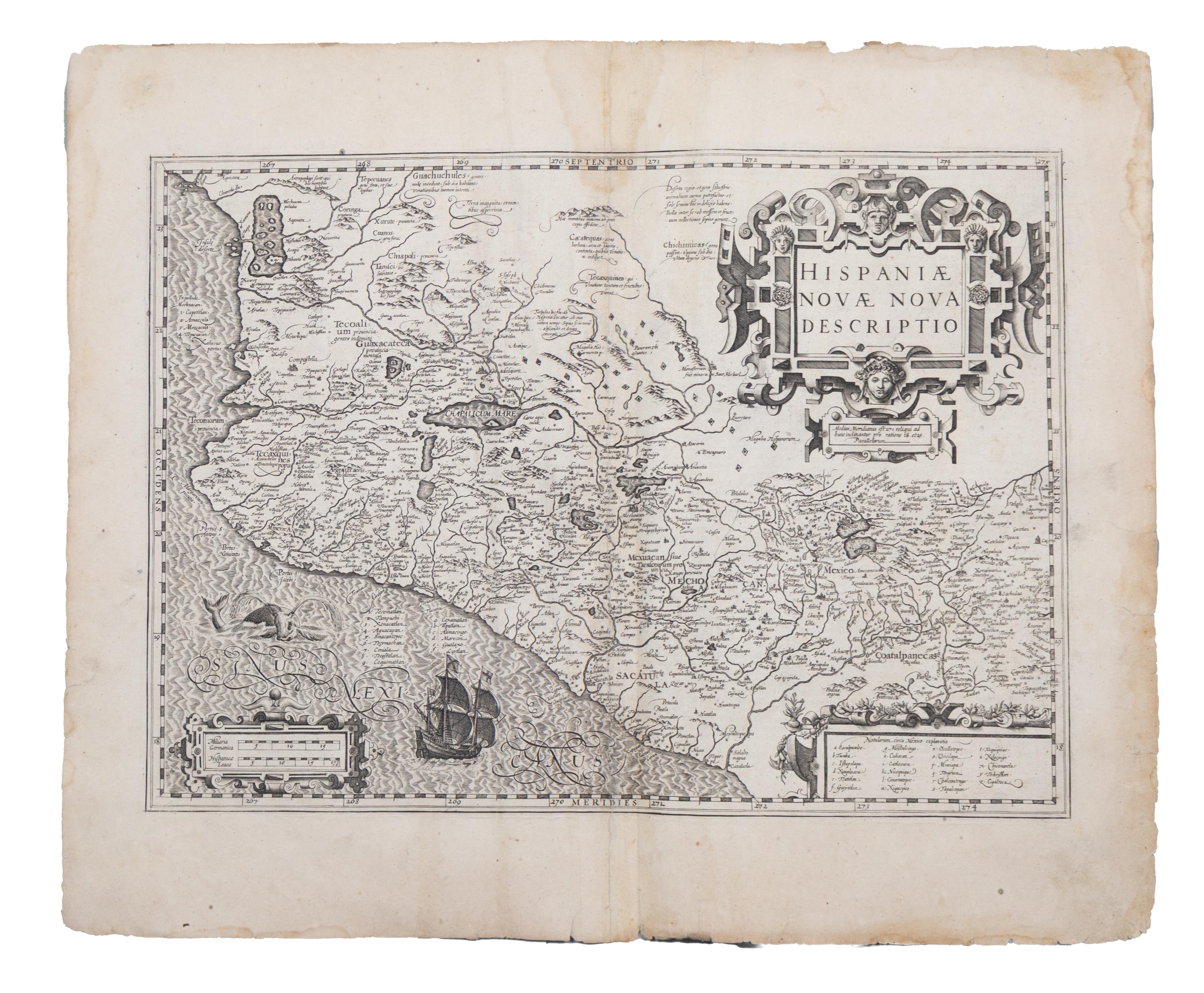
Hispaniae novae nova descriptio
Amsterdam, 1619.Páratlan rézmetszetű térkép Mexikóról, melyet díszes címerkartus és kettős mérföldskála (holland és spanyol) ékesít. A korai térképészet művészetének és a gyarmati képzeletvilágnak figyelemre méltó példája. Hondius Ortelius 1579-es térképéből merített ihletet, bár az eredeti kartográfiai források bizonytalanok.
A térkép rendkívül részletgazdag, számtalan várossal és településsel, melyek közül párat 1-9. számozással, illetve a-f. betűvel jelöl (legenda a tegneri szörny mellett). A jobb alsó sarokban egy másodlagos kartus sorol fel 26 konkrét helyszínt Mexikóváros körül, amelyet egy nagy tó partján ábrázol a térkép.
A Mexikói-öböl (Sinus Mexicanus) Hondius selyemszerű hullámmintáival, egy iránytűrózsával, egy spanyol vitorlással és egy tengeri szörnnyel van díszítve. A térkép közepén kis gyémánt alakú jelek spanyol táborhelyeket jelölnek. Az északi területek nagyrészt feltérképezetlenek maradtak, különös megjegyzésekkel, melyek szerint a bal felső sarok hegyeiben „Anthropophagi” (emberevők) és meztelen bennszülöttek élnek, míg a középső felföldek pedig ezüstkincsekről ismertek. A térkép továbbá kiemeli a Csendes-óceán parti gyöngyhalászatot, továbbá hangsúlyozza a sóstavak jelenlétét, valamint a cukornádtermesztést.
Megjelent: Gerardi Mercatoris - Atlas sive Cosmographicae Meditationes de Fabrica Mundi et Fabricati Figura. Amsterdam, J. Hondius, 1619. (Van der Krogt 1, 113)
Lapméret: 47,5×57,5 cm
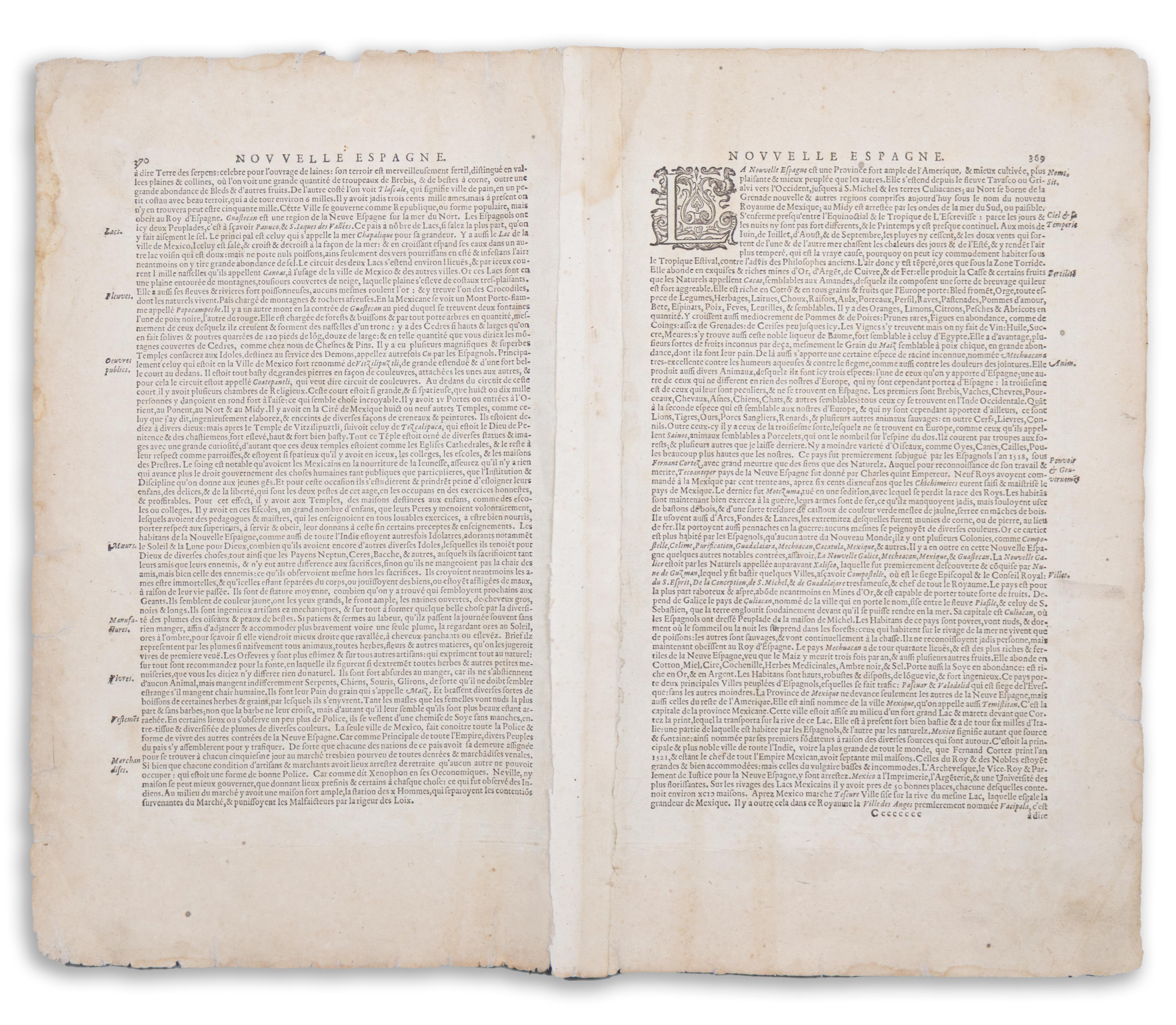
A hátoldalon francia nyelvű szöveg, oldalszám: 369, signum: Cccccccc. Széles margókkal. A hajtás mentén a verson megerősítve, alul és felül a hajtás mentén szakadással, mely nem érinti a térképmezőt.
Van der Krogt 1 - 9510:1.1
The map is richly detailed with numerous towns and cities, many identified by letters or numbers, particularly along the Pacific coast. A secondary cartouche in the lower right corner lists 26 specific locations surrounding Mexico City, which is illustrated on the shore of a large lake.
The ocean, labeled Sinus Mexicanus, is adorned with Hondius’ signature silk-like wave patterns, a compass rose, a Spanish sailing ship, and a sea monster adding both elegance and character.
At the map’s center, small diamond symbols indicate Spanish encampments. The northern territories remain largely uncharted, with curious annotations: the mountains in the upper left are home to "Anthropophagi" (cannibals) and unclothed inhabitants, while the central highlands are noted for rumored silver riches. Pearl fishing is highlighted along the Pacific coast, and the presence of salt lakes – renowned for producing exceptional salt through evaporation – as well as sugar cane cultivation, are emphasized.
From: Gerardi Mercatoris - Atlas sive Cosmographicae Meditationes de Fabrica Mundi et Fabricati Figura. Amsterdam, J. Hondius, 1619. (Van der Krogt 1, 113)
Sheet size: 47,5×57,5 cm
French text on verso, page number 369, signum: Cccccccc. Tear to the lower and upper margin along the fold, not affecting the map field. Reinforced along the fold on the verso.
Van der Krogt 1 - 9510:1.1