

![Duranti, Guillelmus: Rationale divinorum officiorum. [Egybekötve: három 15. századi, latin nyelvű, kézírásos teológiai értekezés Jordanus de Quedlinburgtól és Aquinói Szent Tamás-tól.] Vicenza, 1478. Hermann Lichtenstein.](http://kozpontiantikvarium.hu/sites/default/files/2025-09/rationaledivinorumofficiorum_kodex1.jpg "Duranti, Guillelmus: Rationale divinorum officiorum. [Egybekötve: három 15. századi, latin nyelvű, kézírásos teológiai értekezés Jordanus de Quedlinburgtól és Aquinói Szent Tamás-tól.] Vicenza, 1478. Hermann Lichtenstein.")
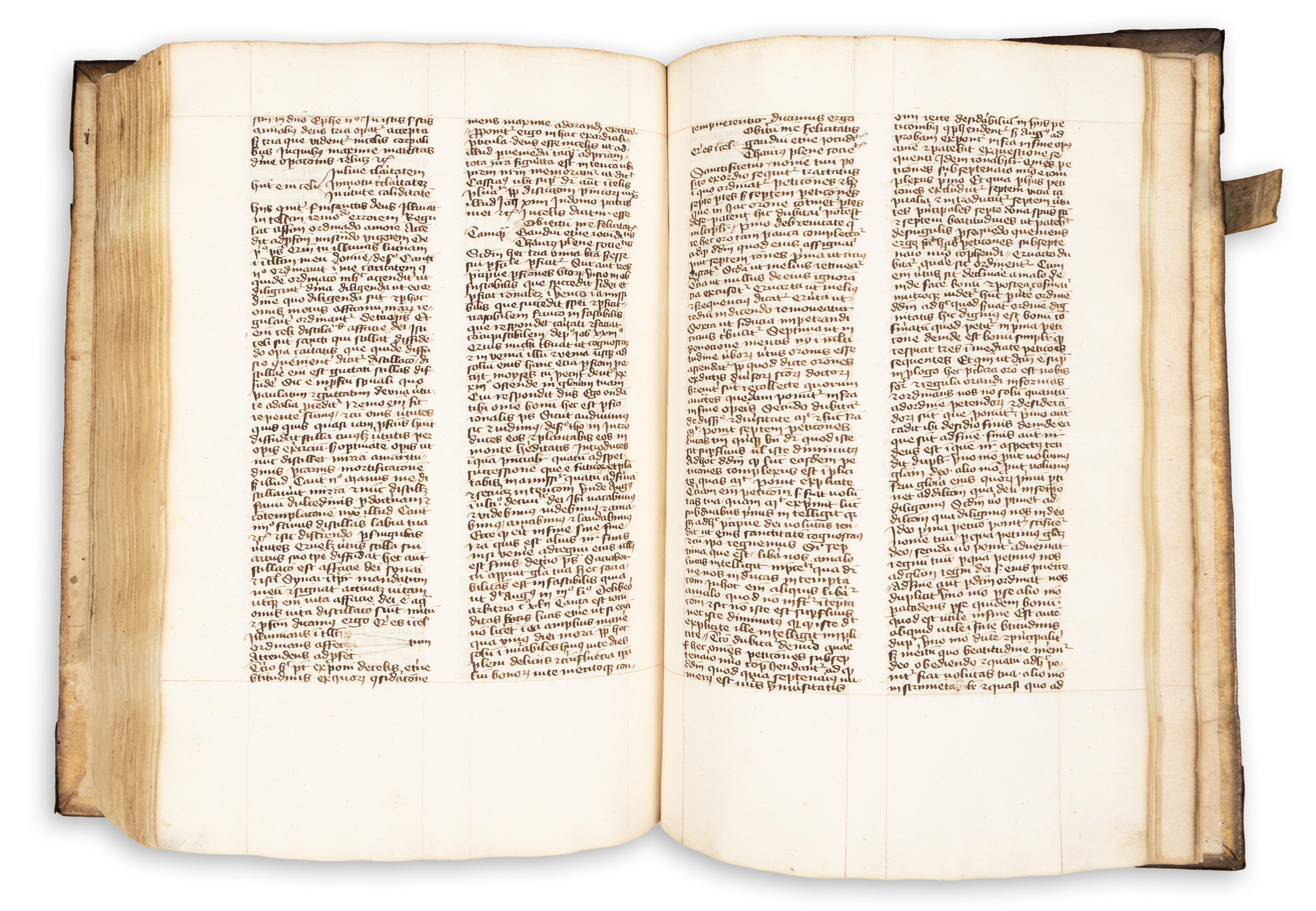
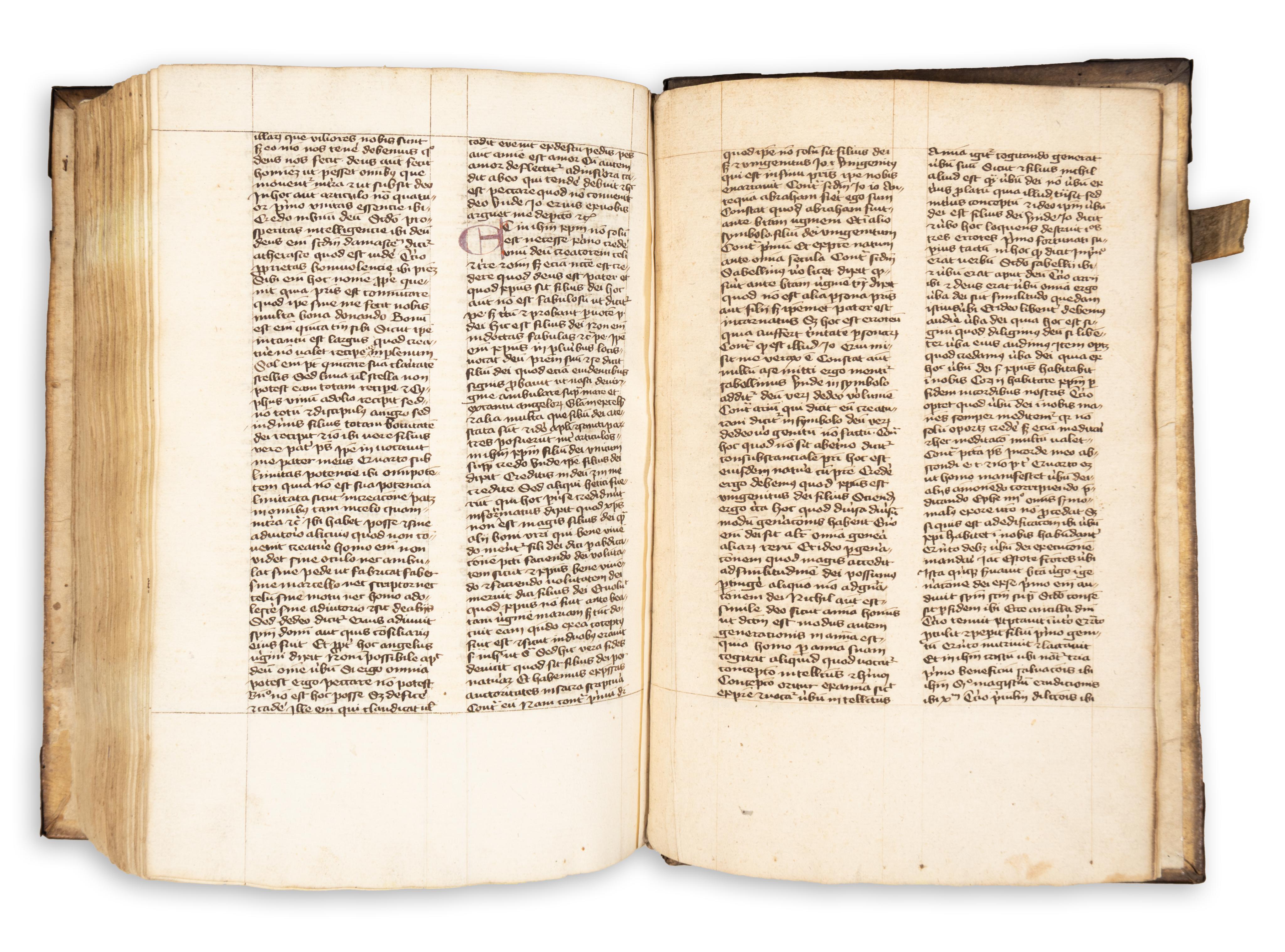
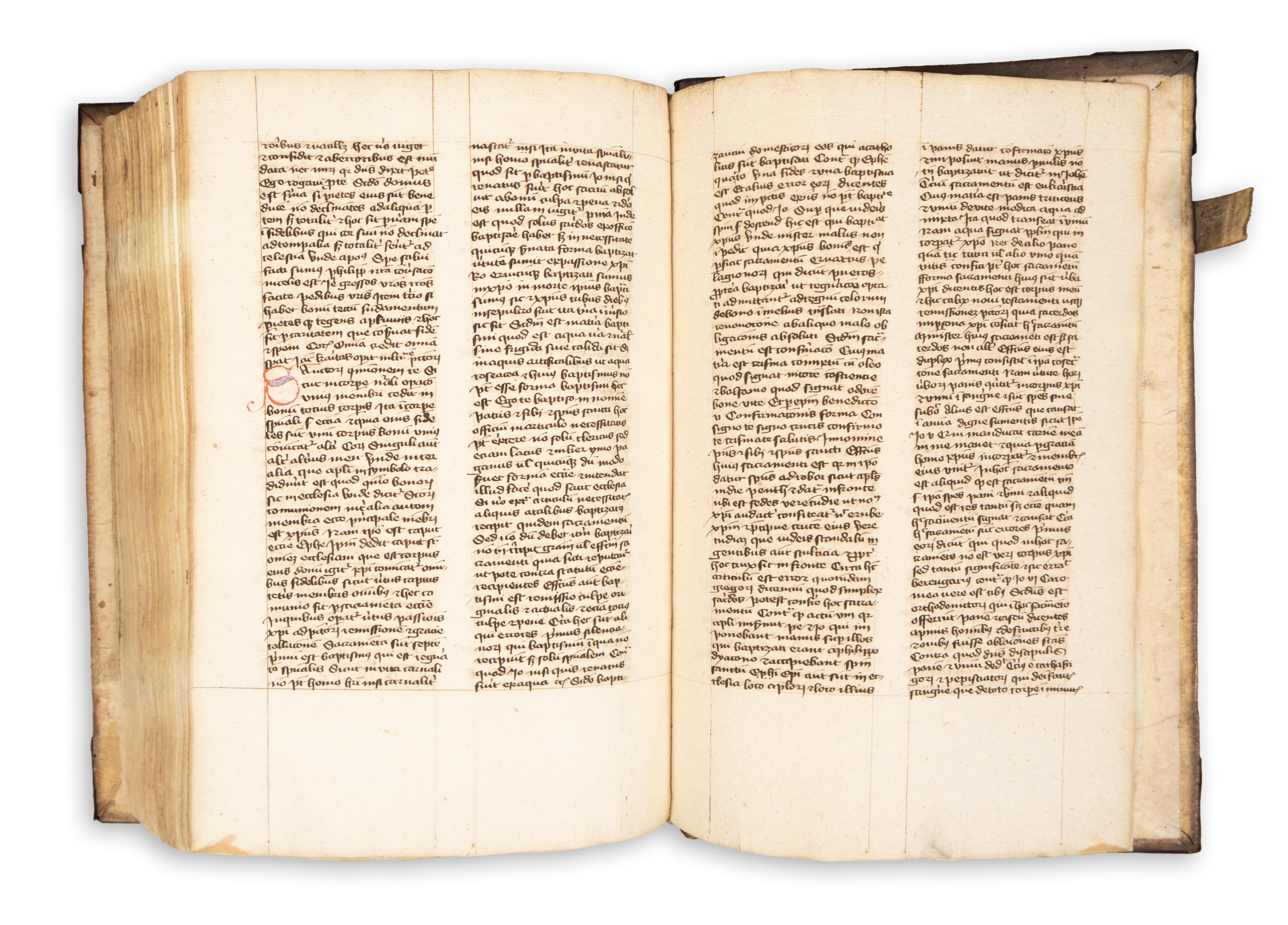
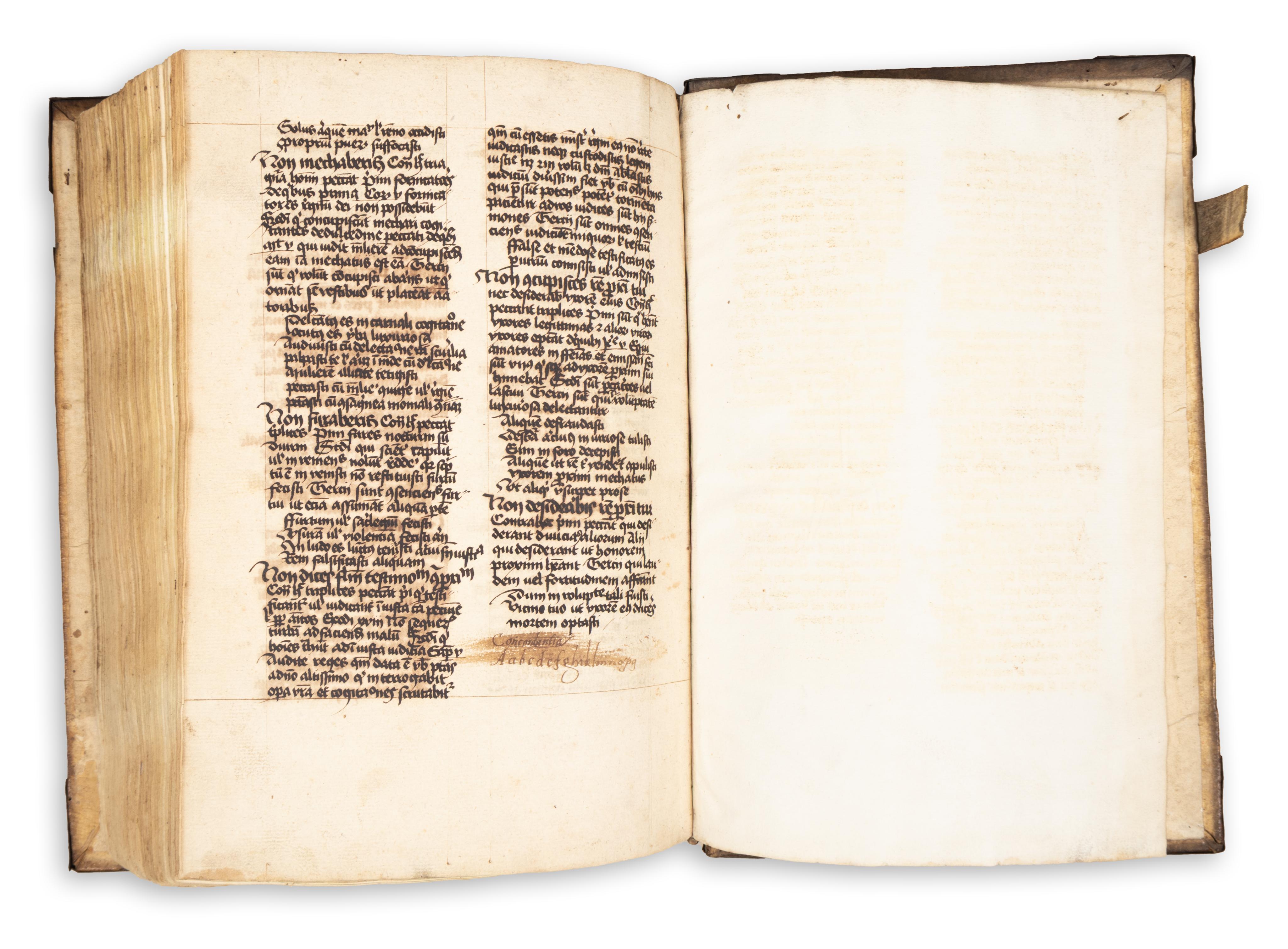
Rationale divinorum officiorum. [Egybekötve: három 15. századi, latin nyelvű, kézírásos teológiai értekezés Jordanus de Quedlinburgtól és Aquinói Szent Tamás-tól.]
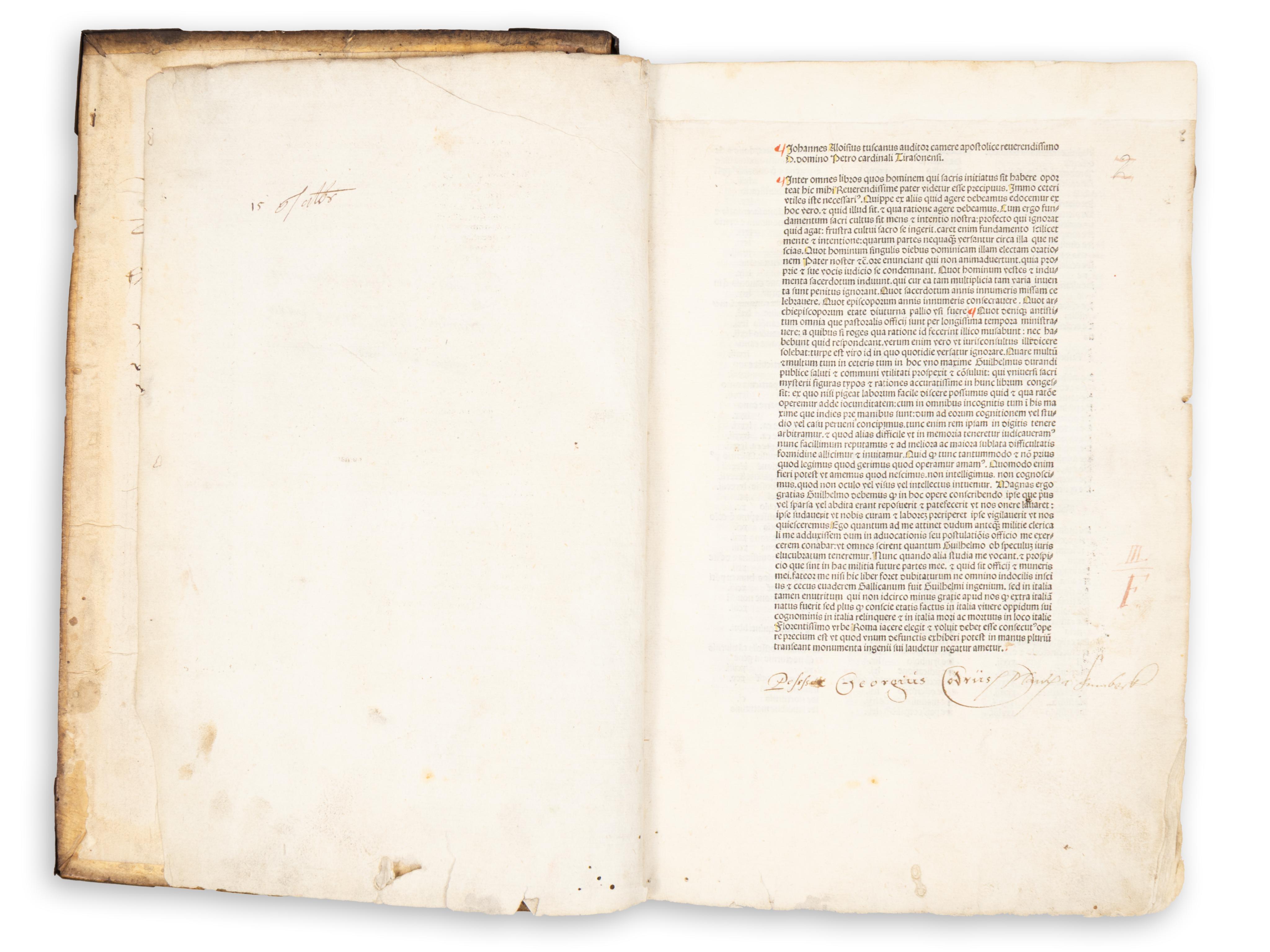
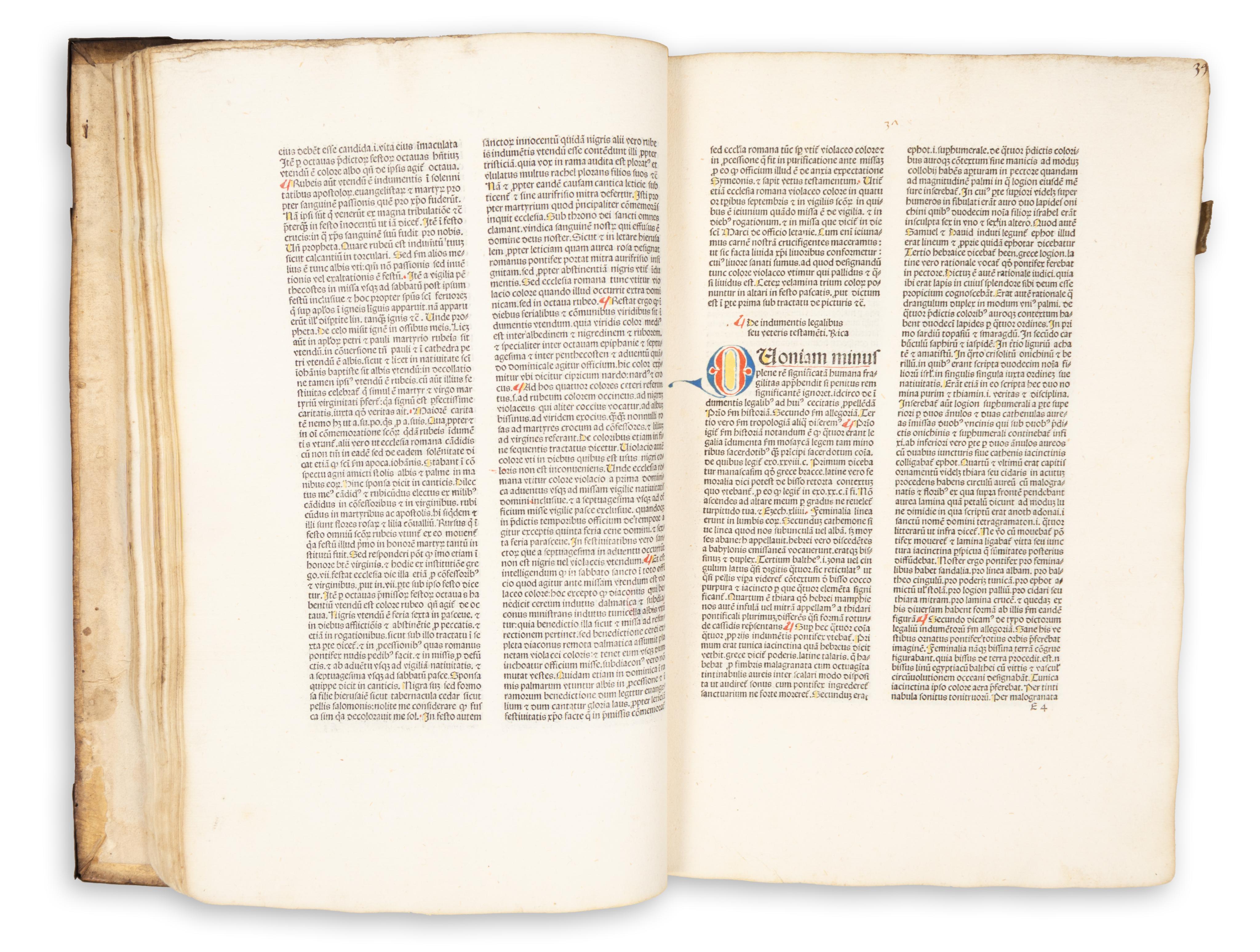
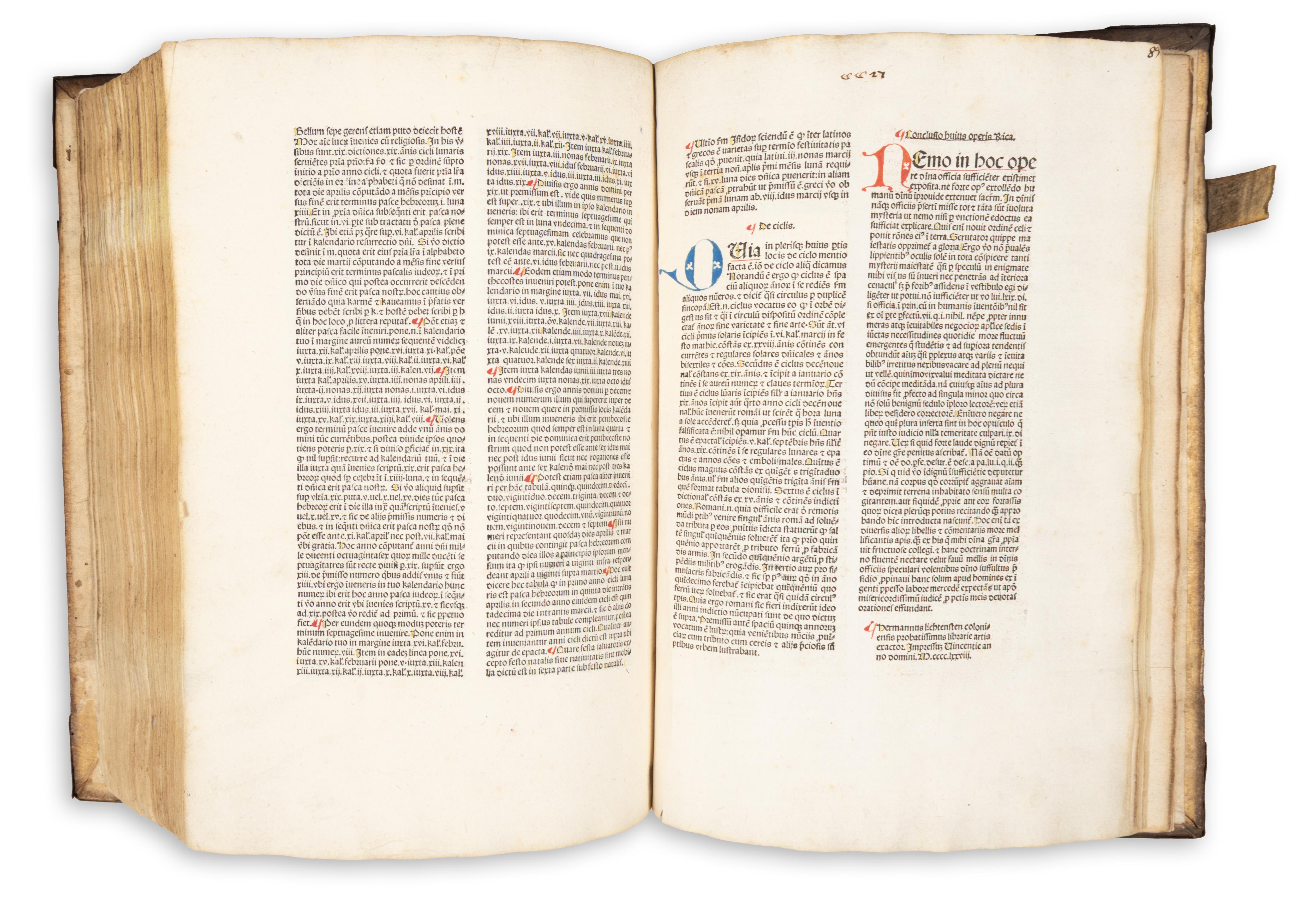
Vicenza, 1478. Hermann Lichtenstein.Ez a mű a XIII. század egyik legjelentősebb liturgikus és teológiai írása, amelyet Guillaume Durand (ca. 1230–1296), francia püspök és kánonjogász írt. A "Rationale divinorum officiorum" a keresztény liturgia szimbolikus és teológiai magyarázatát nyújtja. A mű célja az volt, hogy bemutassa az egyházi szertartások, a templomi építészet, a papok öltözetei, az ünnepek és szentségek mélyebb – spirituális és allegorikus – értelmét. Durand minden liturgikus elemhez teológiai és erkölcsi magyarázatot is fűz, ezzel segítve a papokat és híveket abban, hogy tudatosabban és mélyebb hittel vegyenek részt az istentiszteleten.
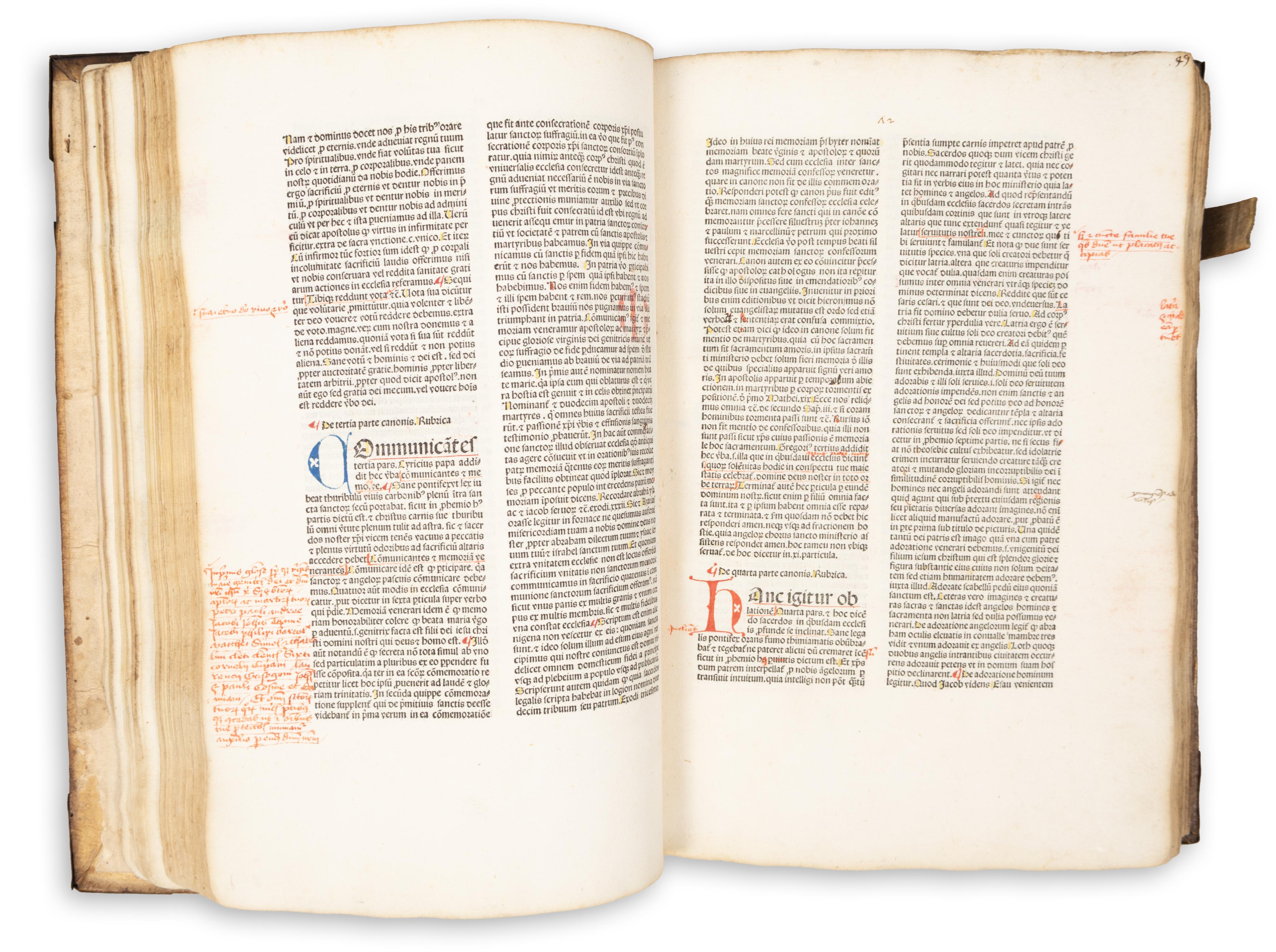
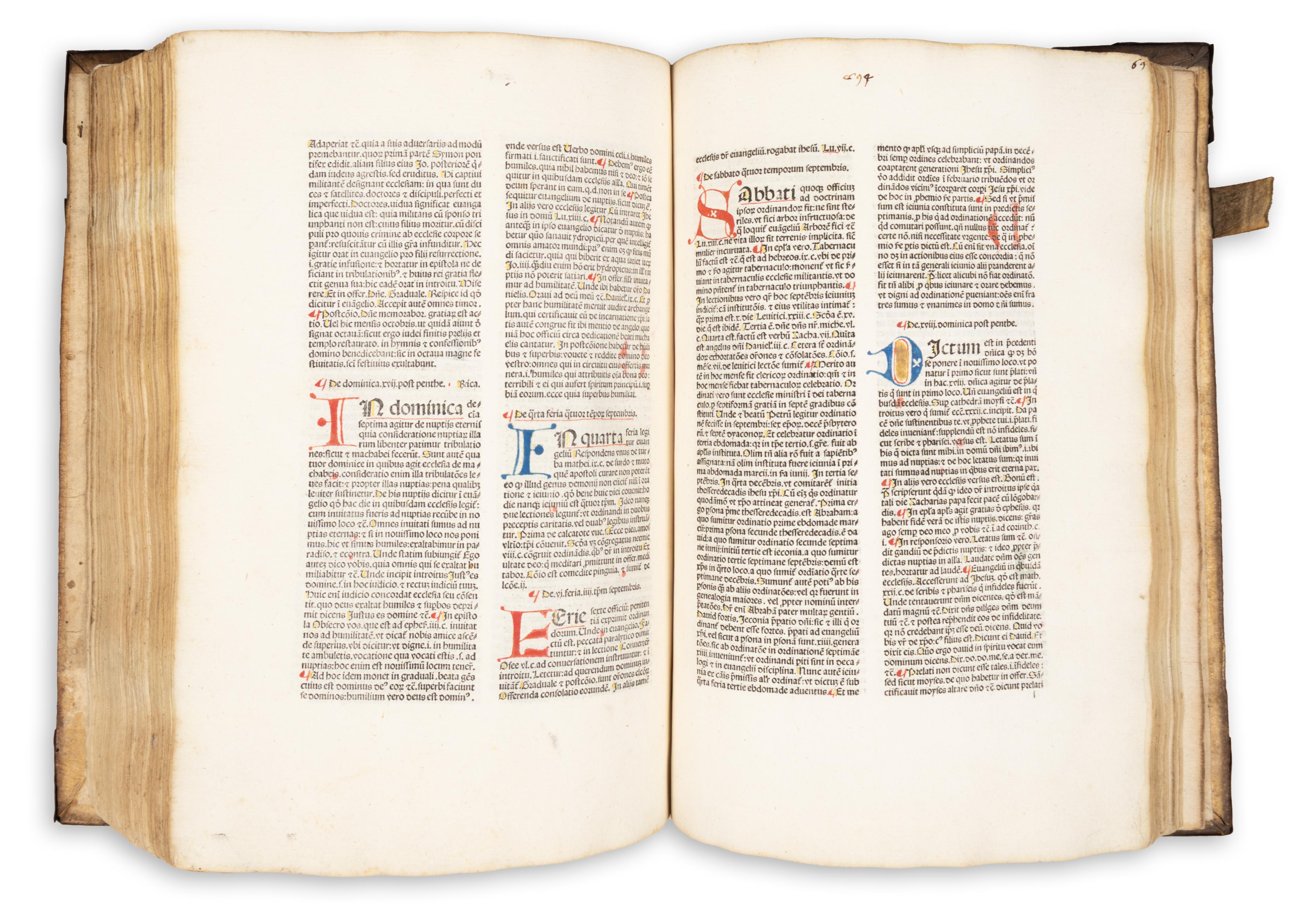
Teljes, csupán az első üres levél (A1) hiányzik, szövegveszteség nélkül. Tipográfia és díszítés, gót betűtípus, kb. 47–48 sor/hasáb; piros és kék iniciálék, piros bekezdésjelek. Erőteljes nyomat, kivételesen tiszta papír.
Prov.: kora újkori feljegyzés: „Martini Lutheri Dr. — Incipiunt canones” (nem Luther kézírása, hanem reformáció kori olvasói jegyzet). Vásárlási bejegyzés 1568-ból: „Anno salutis 68 libellum istum emi 1568 in vigilia Pentecostes a quodam pistore Agrano nomine” (Megvásárolva 1568 pünkösd vigíliáján egy „Agranus” nevű péktől). További kisebb jegyzetek a XVI. századból.
Hain 6480; Goff D-417; GW D-334; BMC VII, 1037; BSB-Ink D-334; Proctor 7155; Pellechet 4499; Polain 1375; EKW 9115.
Hozzákötve három teológiai értekezés:
Jordanus de Quedlinburg: Expositio orationis dominicae (közel teljes, az utolsó fejezet hiányzik), valamint Aquinói Szent Tamás két kisebb műve: a De articulis fidei et ecclesiae sacramentis (töredék, csak az első rész), valamint az In symbolum Apostolorum (teljes), továbbá a Tízparancsolat rövid magyarázattal kiegészített szövege. Latin kézirat papíron, gótikus kurzív (bastarda) írással, két hasábban, rubrikálva, piros lombard-iniciálékkal. [35] lev. Német területről, ca. 1450–1480.
Míg Aquinói Szent Tamás jelentősége nem szorul magyarázatra, Jordanus de Quedlinburg (kb. 1300–1380) Ágoston-rendi szerzetes és neves XIV. századi hitszónok volt, aki főként prédikációiról és vallási tanításairól ismert. Tanulmányait valószínűleg a Prágai Egyetemen végezte, és széles körben elterjedt prédikációgyűjteményei révén vált ismertté. Legfontosabb művei közé tartozik az Expositio orationis dominicae, azaz „Az Úr imádságának magyarázata”, amely a Miatyánk egyes részeinek teológiai és erkölcsi értelmezését nyújtja. A mű célja, hogy a hívek mélyebben megértsék az imádság jelentését és annak gyakorlati alkalmazását a mindennapi keresztény életben. Jordanus a Miatyánk szövegét példázatokkal és erkölcsi tanulságokkal bontja ki, közérthető módon, a laikus közönség számára is elérhető stílusban. A szöveg nagyrészt teljes, csupán az utolsó fejezet hiányzik. A 15. századi papírkéziratok között szokatlanul tiszta, széles margójú, friss fekete tintával, éles rubricálással. Kiemelkedően szép példány.
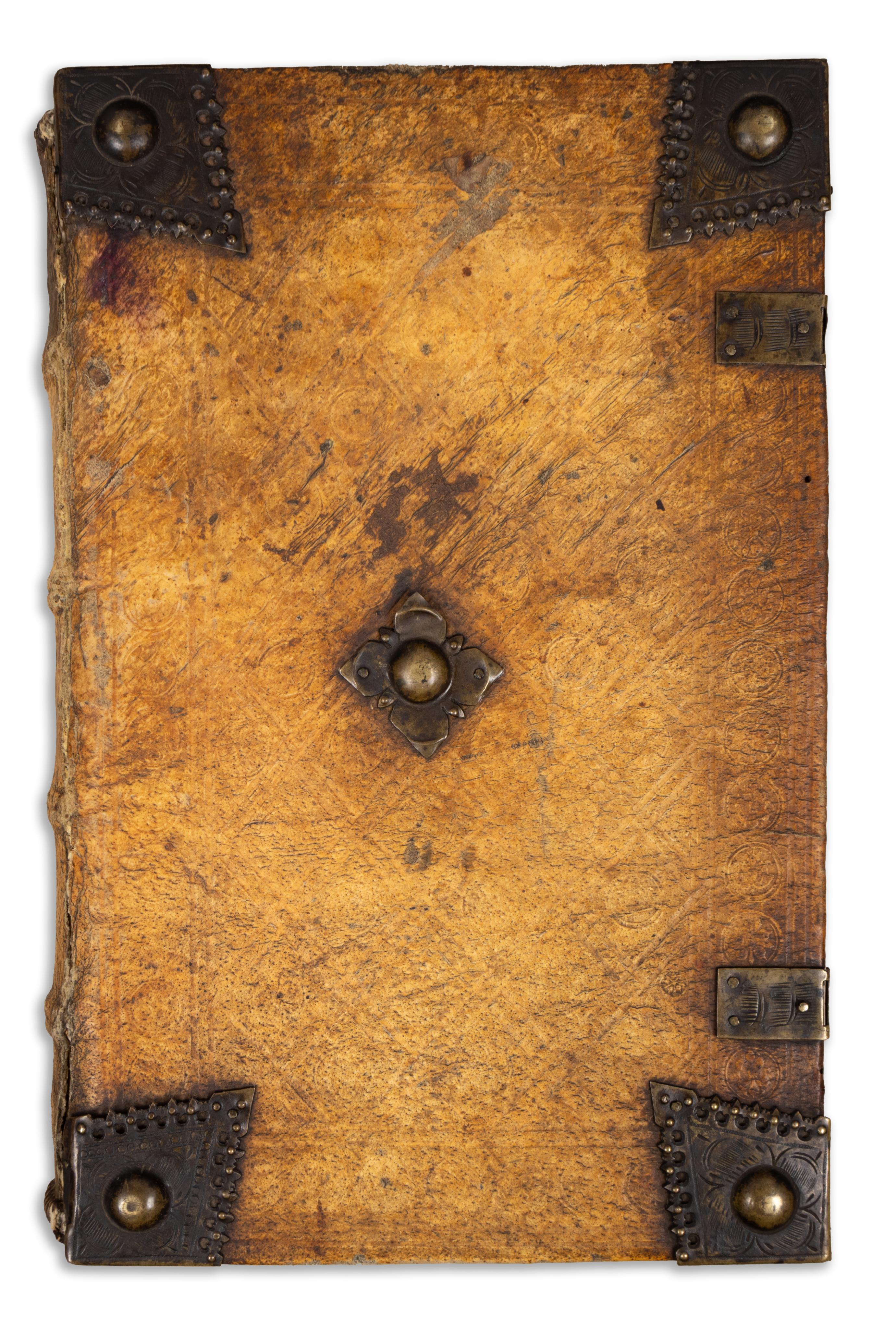
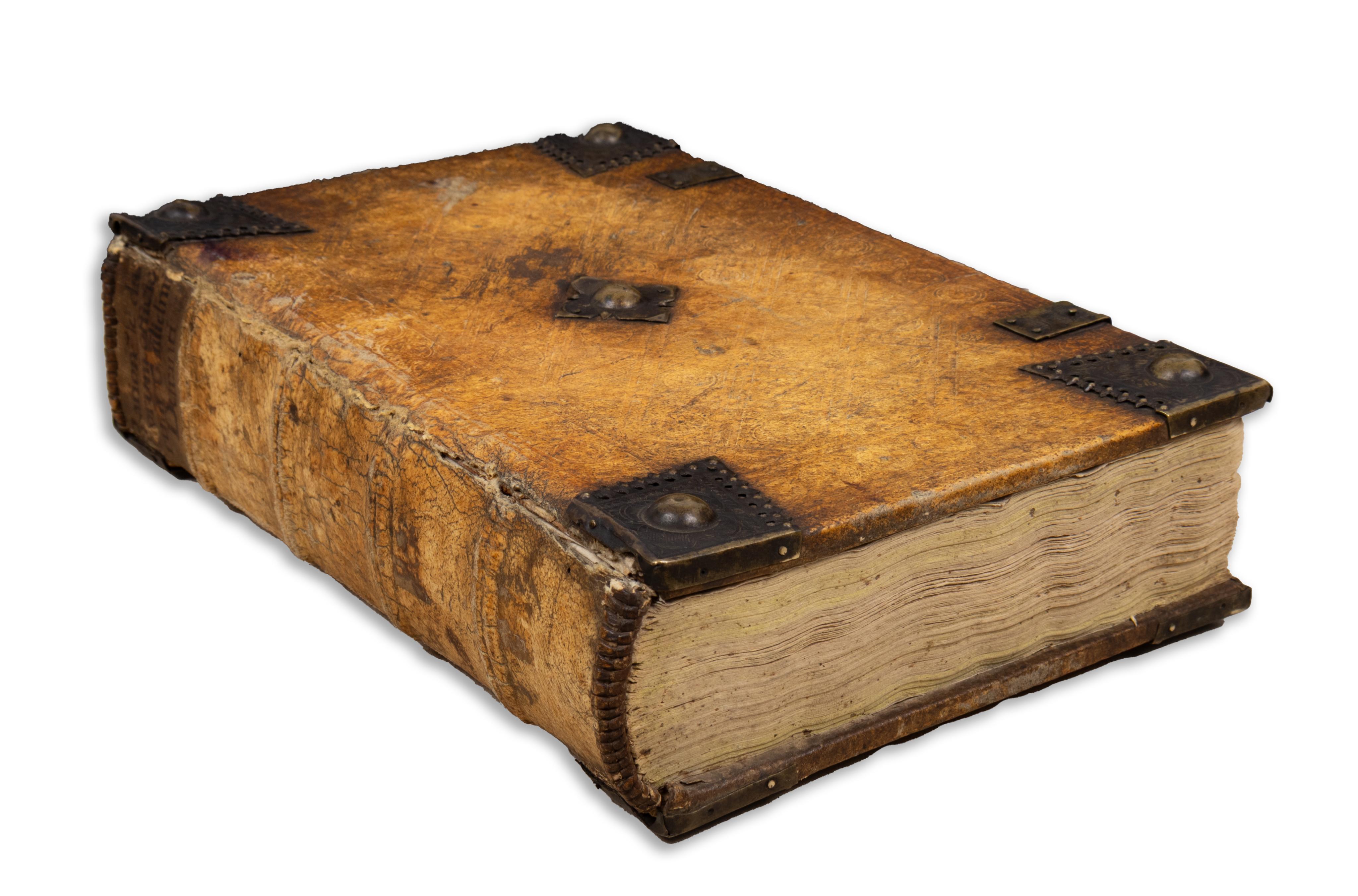
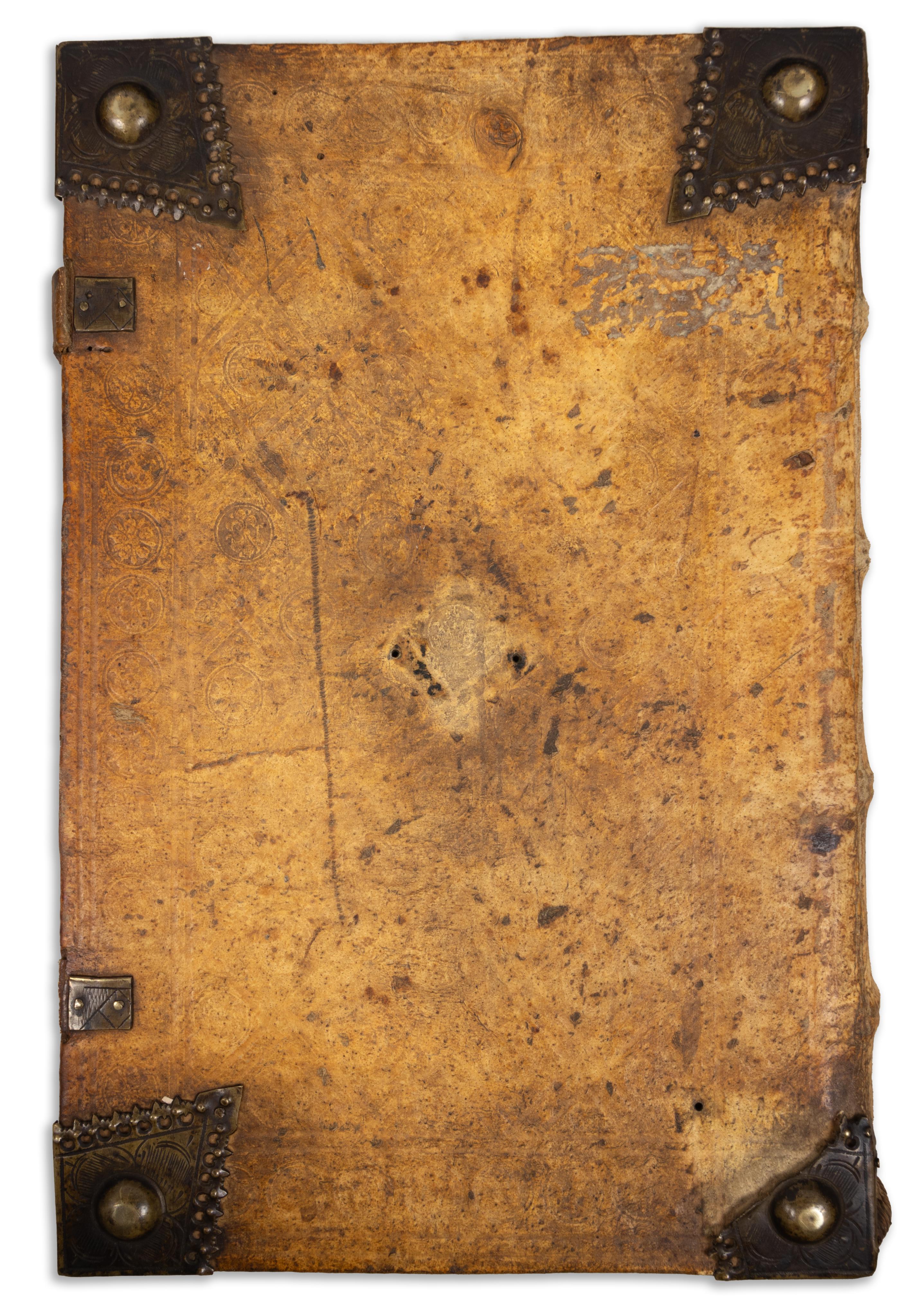
Korabeli, fatáblára vont egészbőr kötésben, rézveretes sarokdíszekkel és csúszógombokkal, csatok hiányzoznak. Gerince szakszerűen restaurálva.
Incunable Edition of Durand's Rationale. Bound with a late 15th-century manuscript miscellany.
An exceptionally clean copy of one of the most significant liturgical and theological writings of the 13th century, the Rationale divinorum officiorum by the French bishop and canon lawyer Guillaume Durand (c. 1230–1296).
This work is one of the most significant liturgical and theological writings of the 13th century, written by Guillaume Durand (c. 1230–1296), a French bishop and canon lawyer. The work provides a comprehensive symbolic and theological explanation of Christian liturgy, with the aim to present the deeper spiritual and allegorical meaning of church rituals, church architecture, vestments, holidays, and sacraments. Durand also adds theological and moral explanations to each liturgical element, helping priests and believers to participate in worship with greater awareness and deeper faith.
Complete, only the first blank leaf (A1) is missing. Gothic typography with approximately 47–48 lines per column, decorated with red and blue initials and red paragraph marks. Exceptionally clean paper.
Prov.: an early modern note referencing “Martini Lutheri Dr. – Incipiunt canones” (not Luther’s handwriting, but a reader’s note from the Reformation period), and a purchase entry from 1568: “Anno salutis 68 libellum istum emi 1568 in vigilia Pentecostes a quodam pistore Agrano nomine” (Purchased on Pentecost Eve 1568 from a baker named Agranus). Additional minor notes from the 16th century.
References: Hain 6480; Goff D-417; GW D-334; BMC VII, 1037; BSB-Ink D-334; Proctor 7155; Pellechet 4499; Polain 1375; EKW 9115.
Bound together with three manuscripts of 15th century theological treatises:
Jordanus de Quedlinburg: Expositio orationis dominicae (almost complete, the last chapter is missing) and two minor works of Thomas Aquinas: the De articulis fidei et ecclesiae sacramentis (fragment, the first part only) and the In symbolum Apostolorum (complete), plus a briefly commented text of the Ten Commandments.
Latin manuscripts on paper, Gothic cursive (bastarda), two columns, rubricated, with red Lombard initials. [35] leaves. German territory, approx. 1450–1480.
While Thomas Aquinas needs no introduction, Jordanus de Quedlinburg (c. 1300–1380) was a distinguished Augustinian monk and 14th-century preacher, esteemed primarily for his homilies and religious instruction. Likely educated at the University of Prague, he gained prominence through his widely circulated sermon collections. Among his most significant works is the Expositio orationis dominicae, which offers a theological and moral exegesis of the prayer's individual components. The work aims to provide the faithful with a deeper understanding of the prayer's meaning and its practical application in daily Christian life. Jordanus elucidates the text using parables and moral lessons in a lucid style accessible to a lay audience.
Damaged, restored Gothic wooden board binding with brass fittings; clasps are missing.