

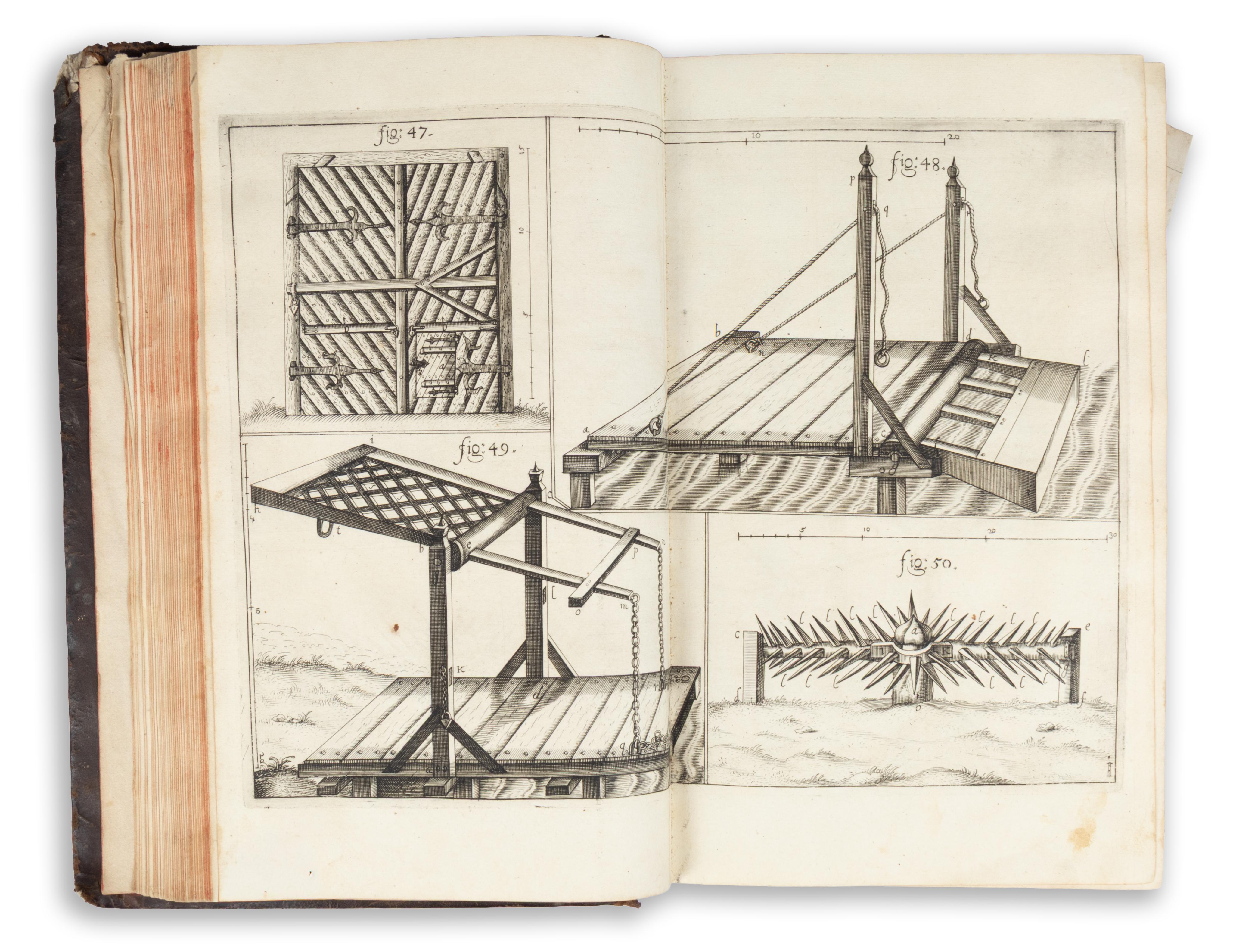
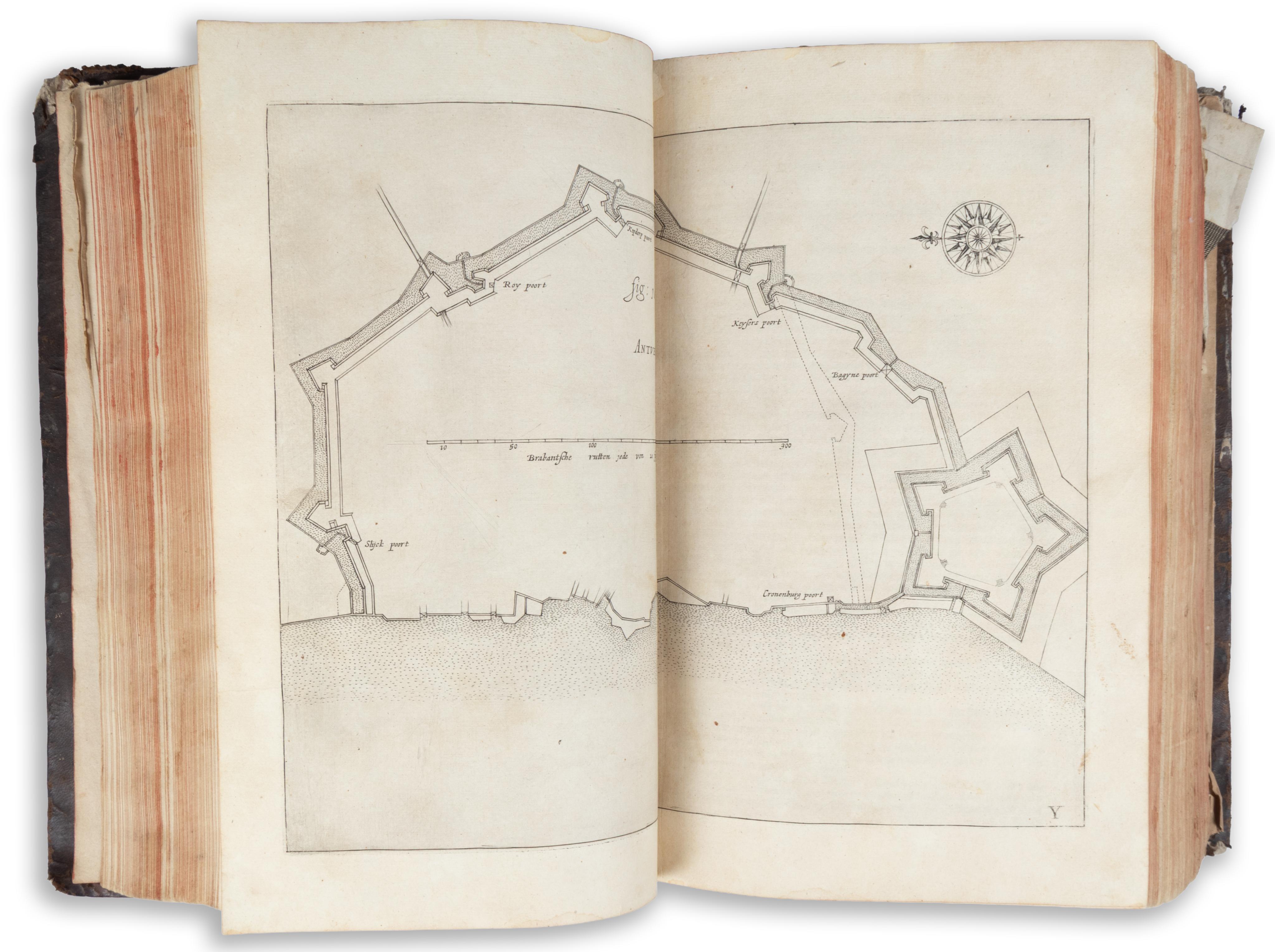
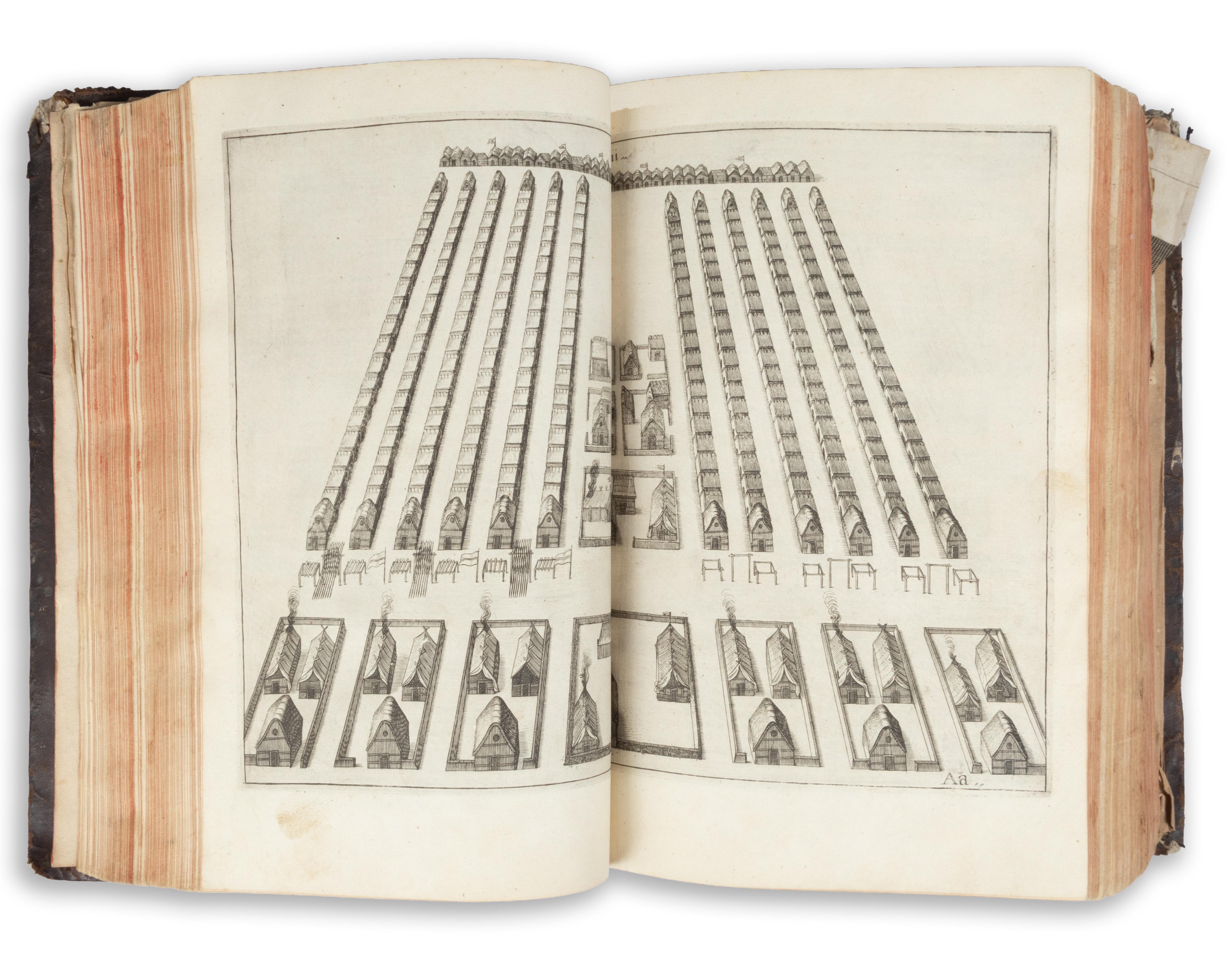
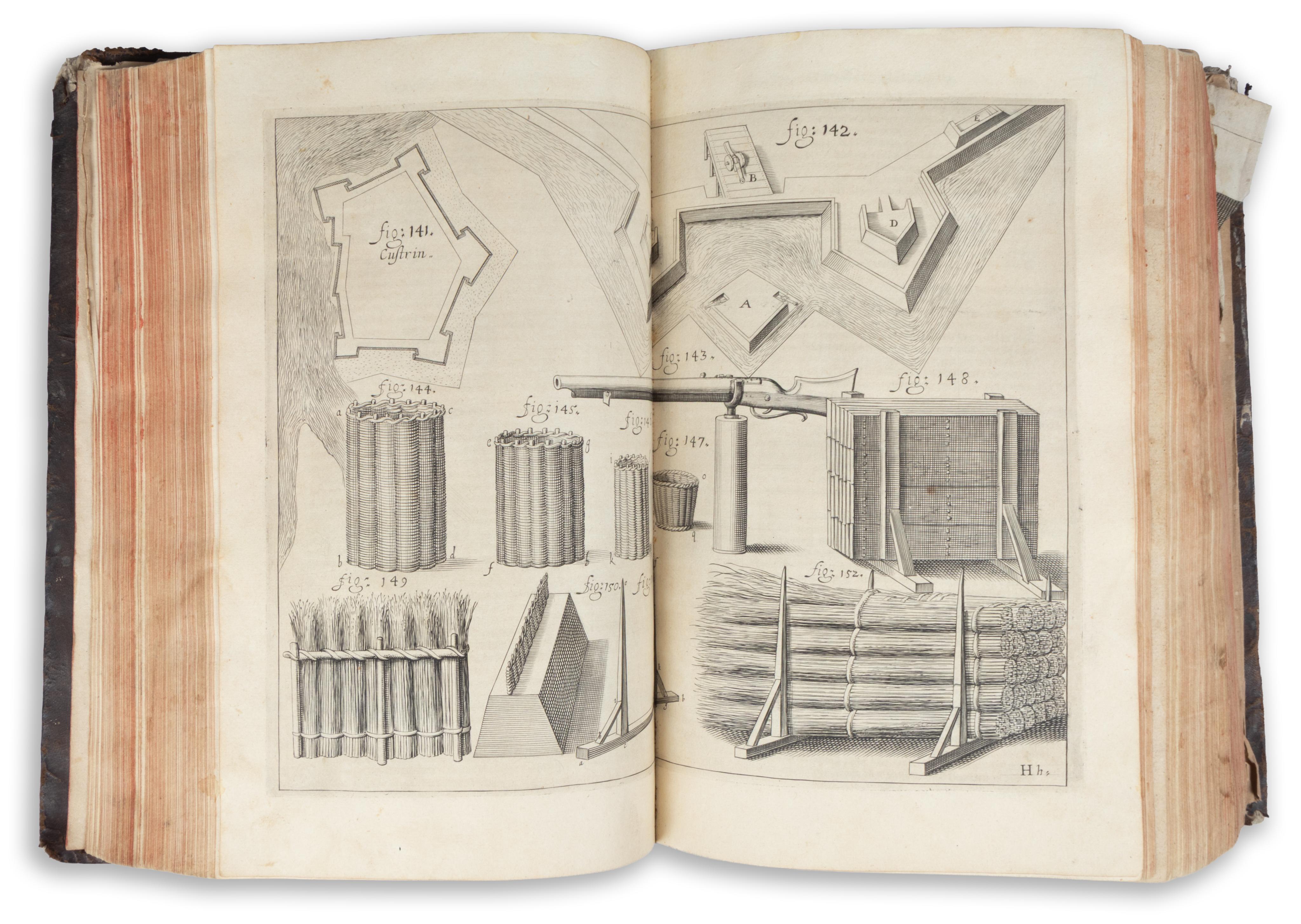
Négy XVII. századi hadtudományi mű kolligátuma
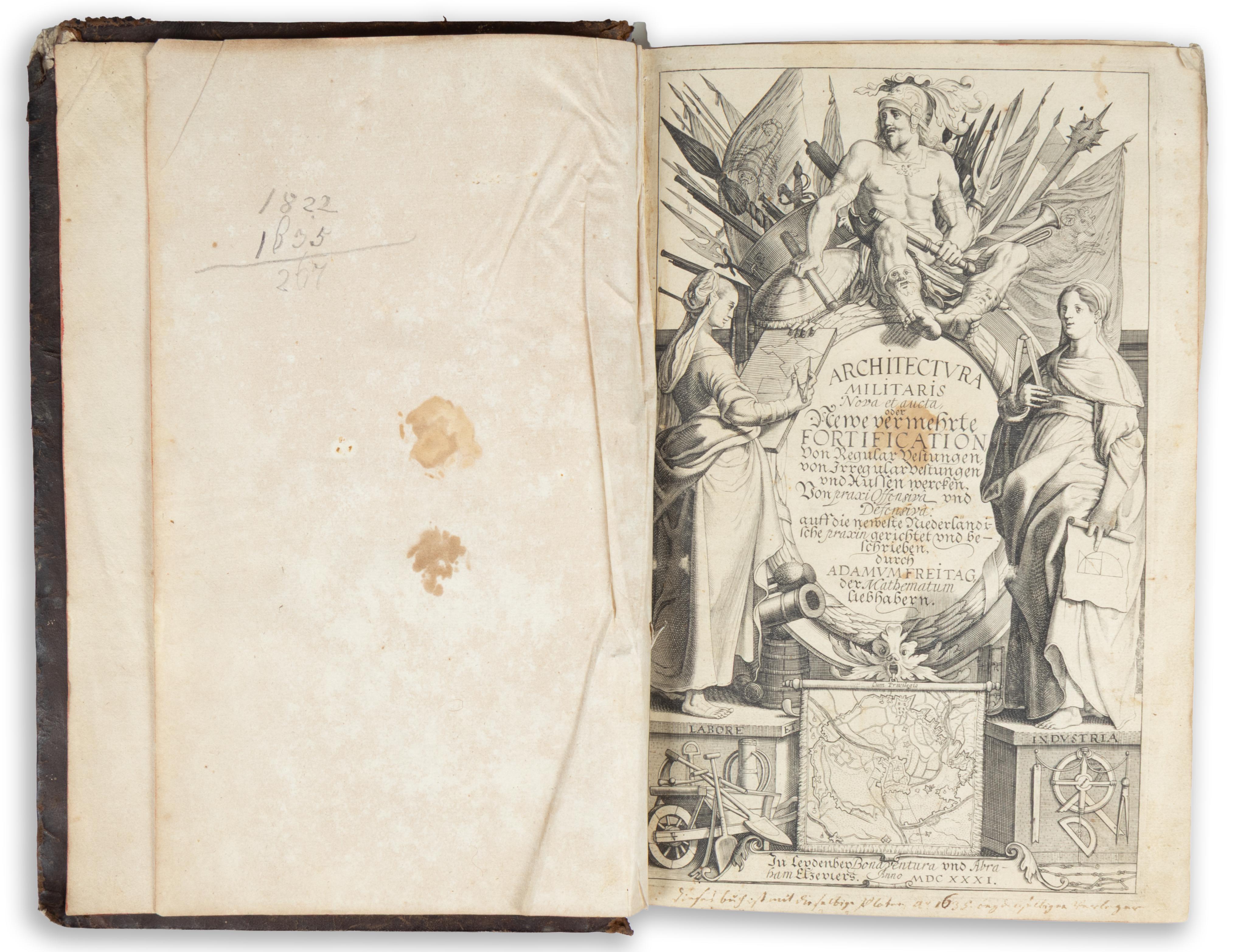
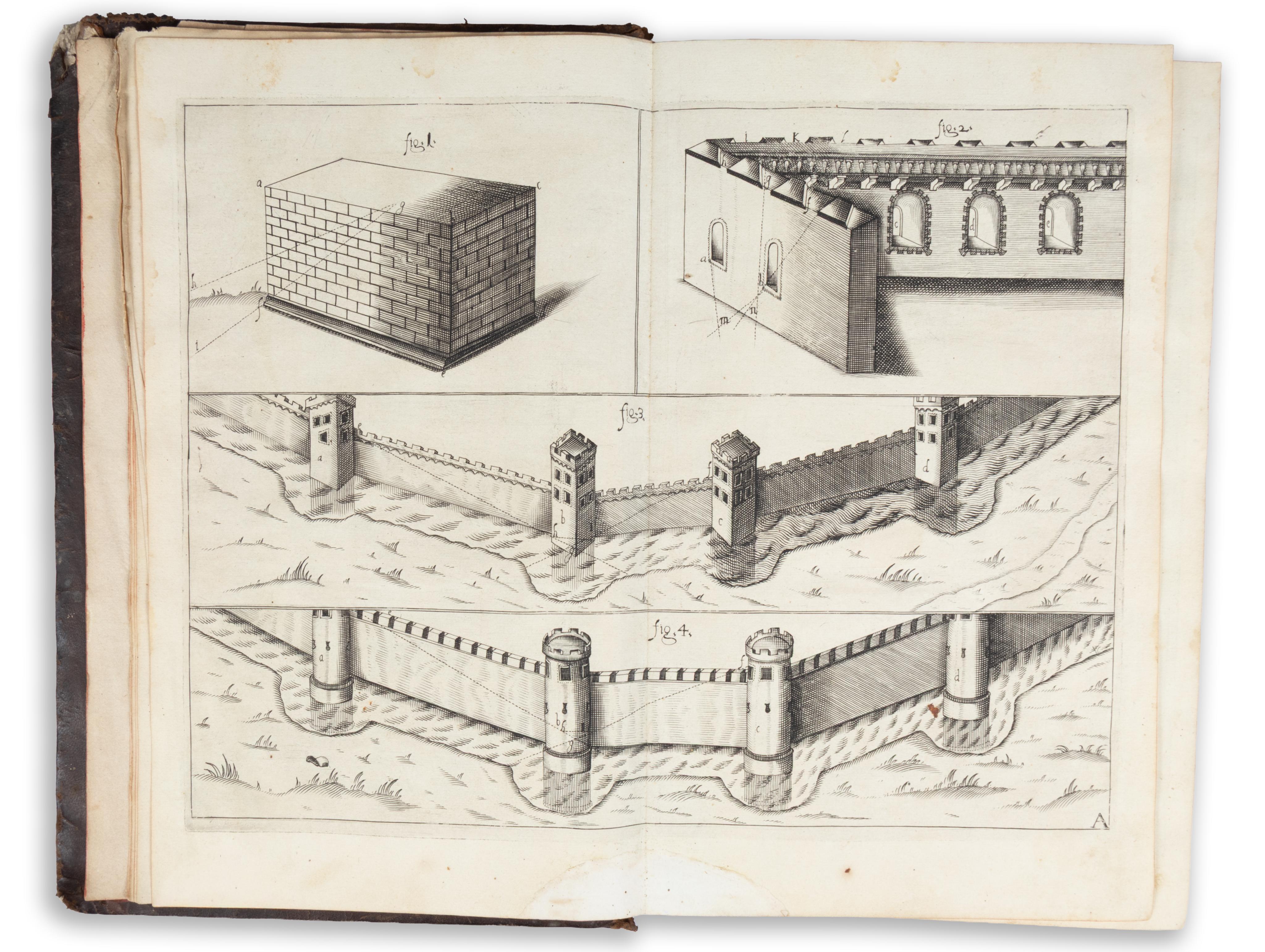
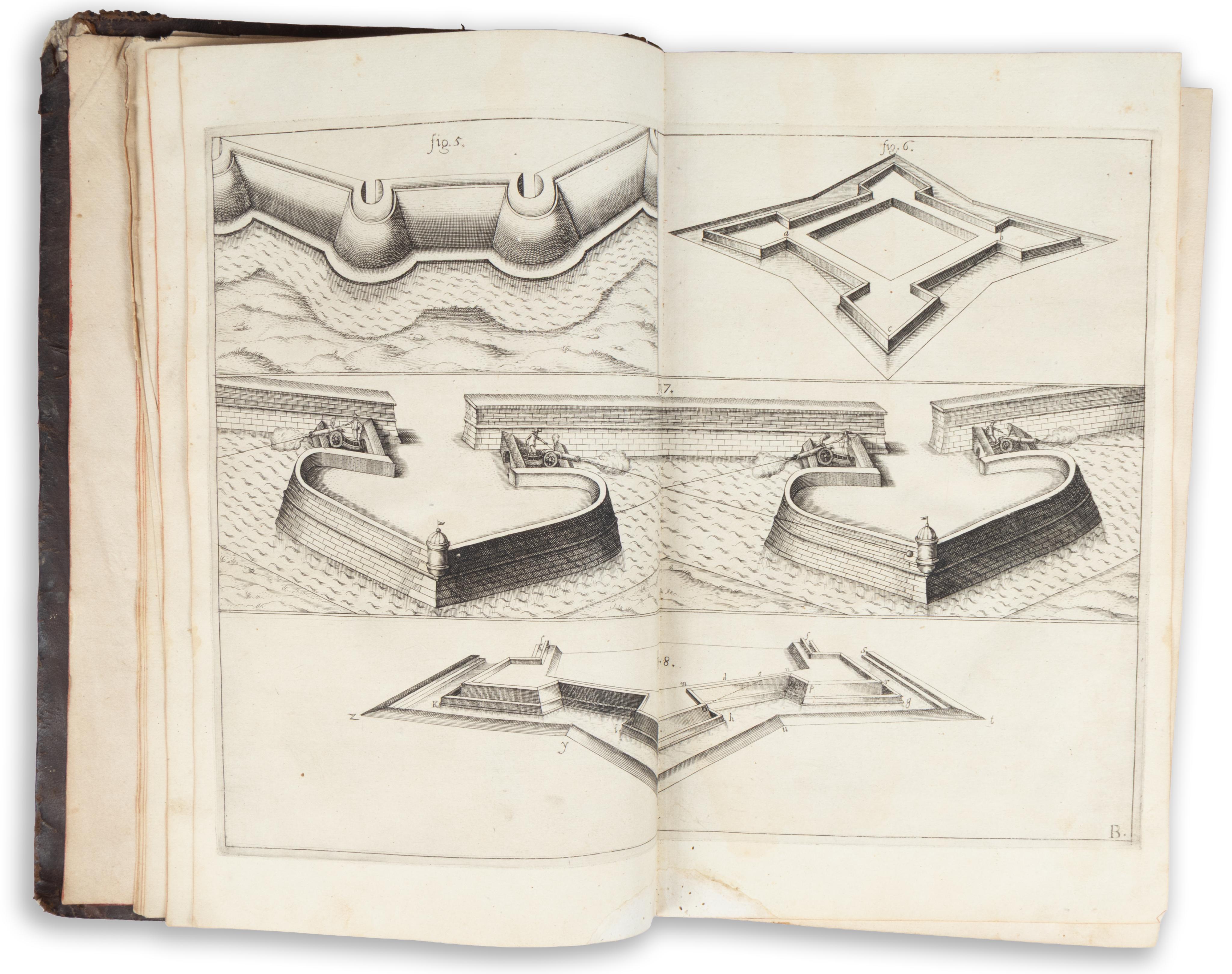
1.Freitag, Adam: Architectura militaris nova et aucta, oder newe vermehrte fortification...: auff die neweste Niederländische praxin gerichtet und beschrieben, durch -.-, der Mathematum liebhabern. I-III.
Leyden, 1631. Elzevier. 1 t. (rézmetszetű díszcímlap) + [6] + 194 [recte 186] + [2] + 35 t. (duplaoldalas rézmetszet tábla) + 8 t. (duplaoldalas táblázat).
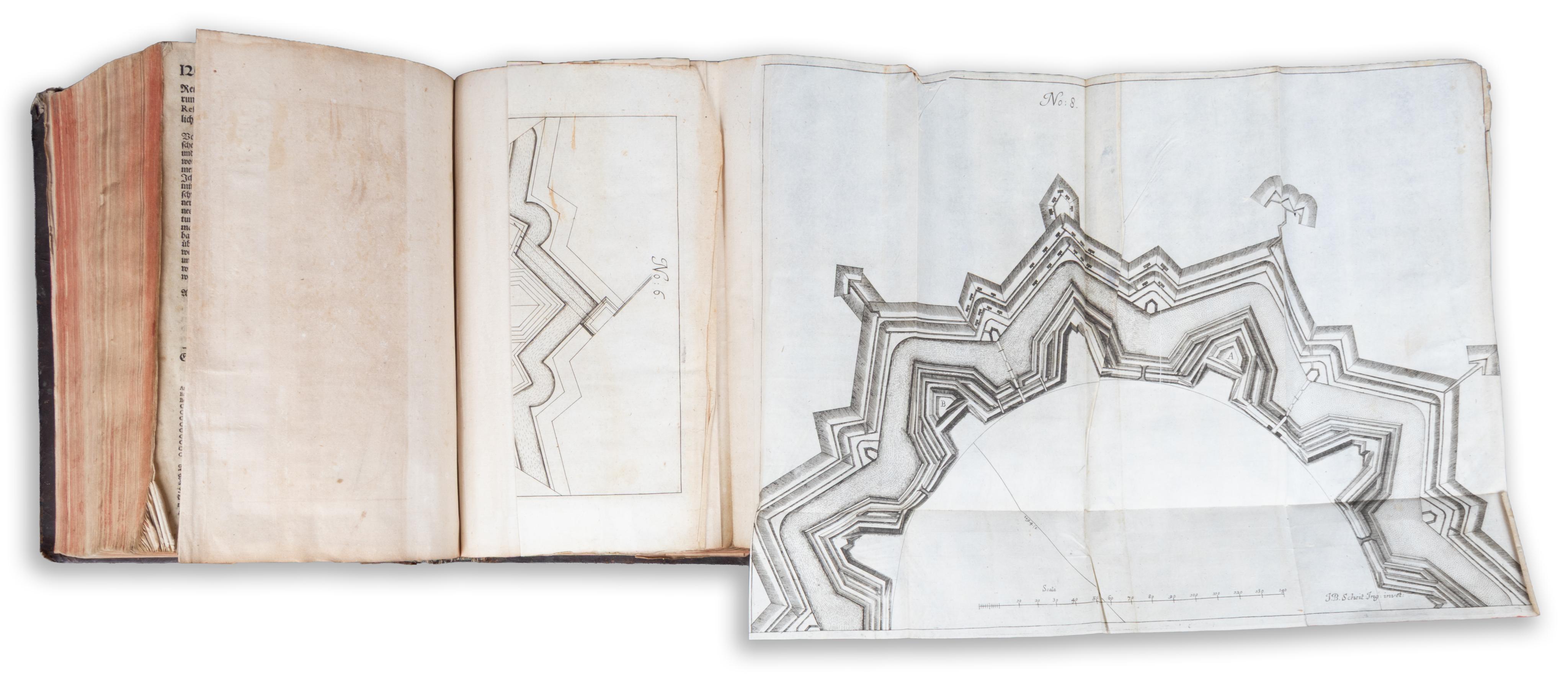
Első kiadás, megjelenése után kortársai egyből az erődítéstan alapvető műveinek egyikeként tartották számon. A „le célèbre Fritach” néven ismert szerző könyvéből nyolc kiadás jelent meg: négy német (1631, 1635, 1642, 1665) és négy francia nyelven (1635, 1640, 1657, 1668). Az utolsó kiadás még mindig szinte teljesen megegyezett a német editio princeps-szel, amelyet a tekintélyes leideni kiadó, Bonaventura és Abraham Elsevier jelentetett meg. A könyvben ismertetett elvek – melyeket gyakran „Freytag módszerének” is neveznek – valójában az úgynevezett régi-németalföldi (Old-Netherlands) erődítési rendszer általános és szabványos formáját tükrözték, amellyel a szerző a leideni katonamérnök-körökben ismerkedett meg. Ez a rendszer jelentős hatást gyakorolt a mérnökökre Európa-szerte – a Németalföldtől Lengyelországon és Skandinávián át Angliáig és Portugáliáig – valamint számos (főként holland és portugál) gyarmatváros tervezésében Afrikában, Ázsiában és Amerikában. Ebben az esetben a teória és a gyakorlat kölcsönösen erősítették egymást: Freitag könyve hozzájárult a holland rendszer kodifikálásához és terjesztéséhez, ugyanakkor azoknak az erődítményeknek a sikere, amelyeket e módszer alapján építettek, tovább növelte könyvének keresettségét.
Walther 54. Winterthur 458. Goldsmid II, 49. Rahir 533. Berghman 649. Copinger 1772. Karl & Faber 30, 351. Lengfeld 16. Lengertz 288.
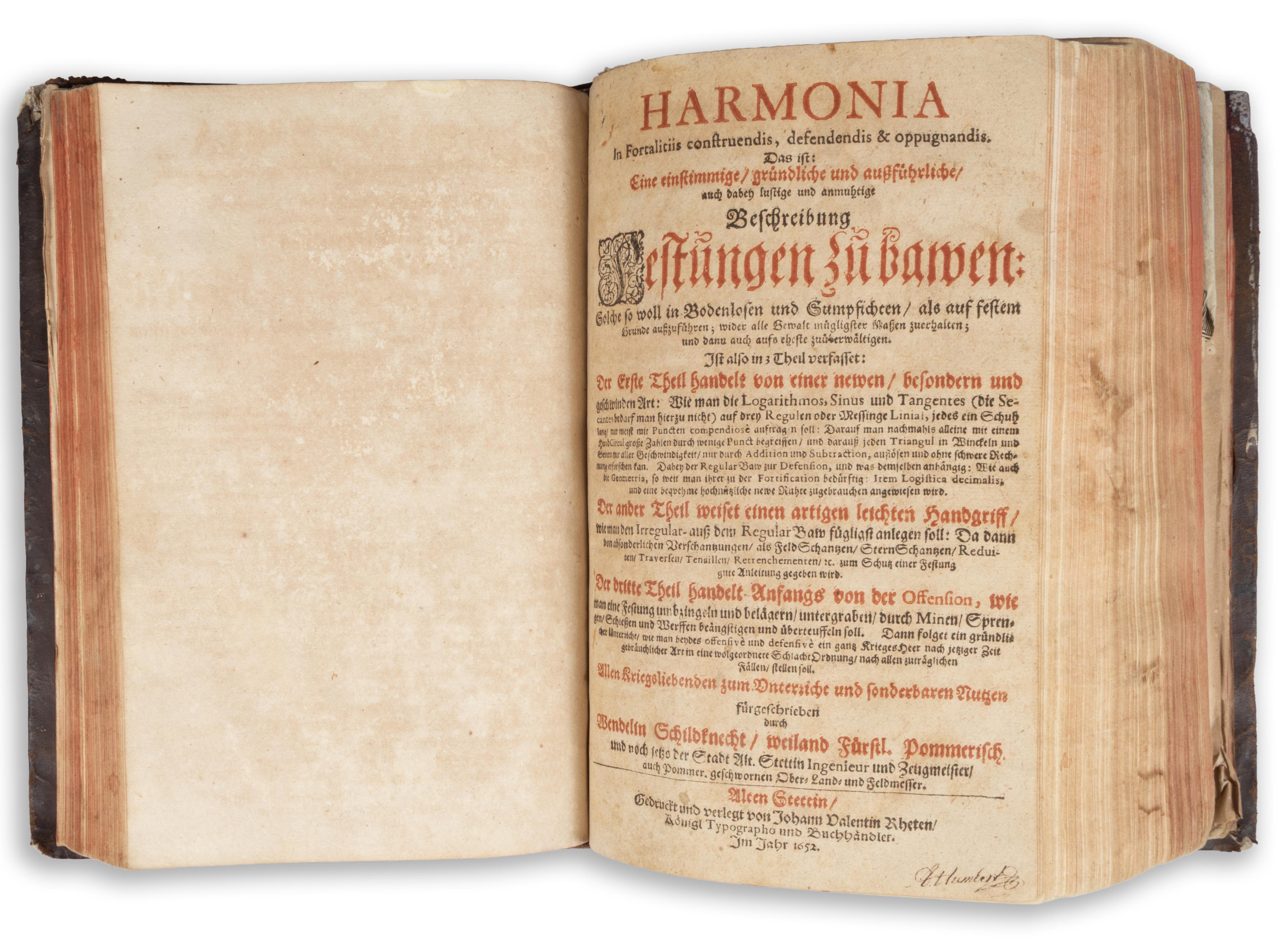
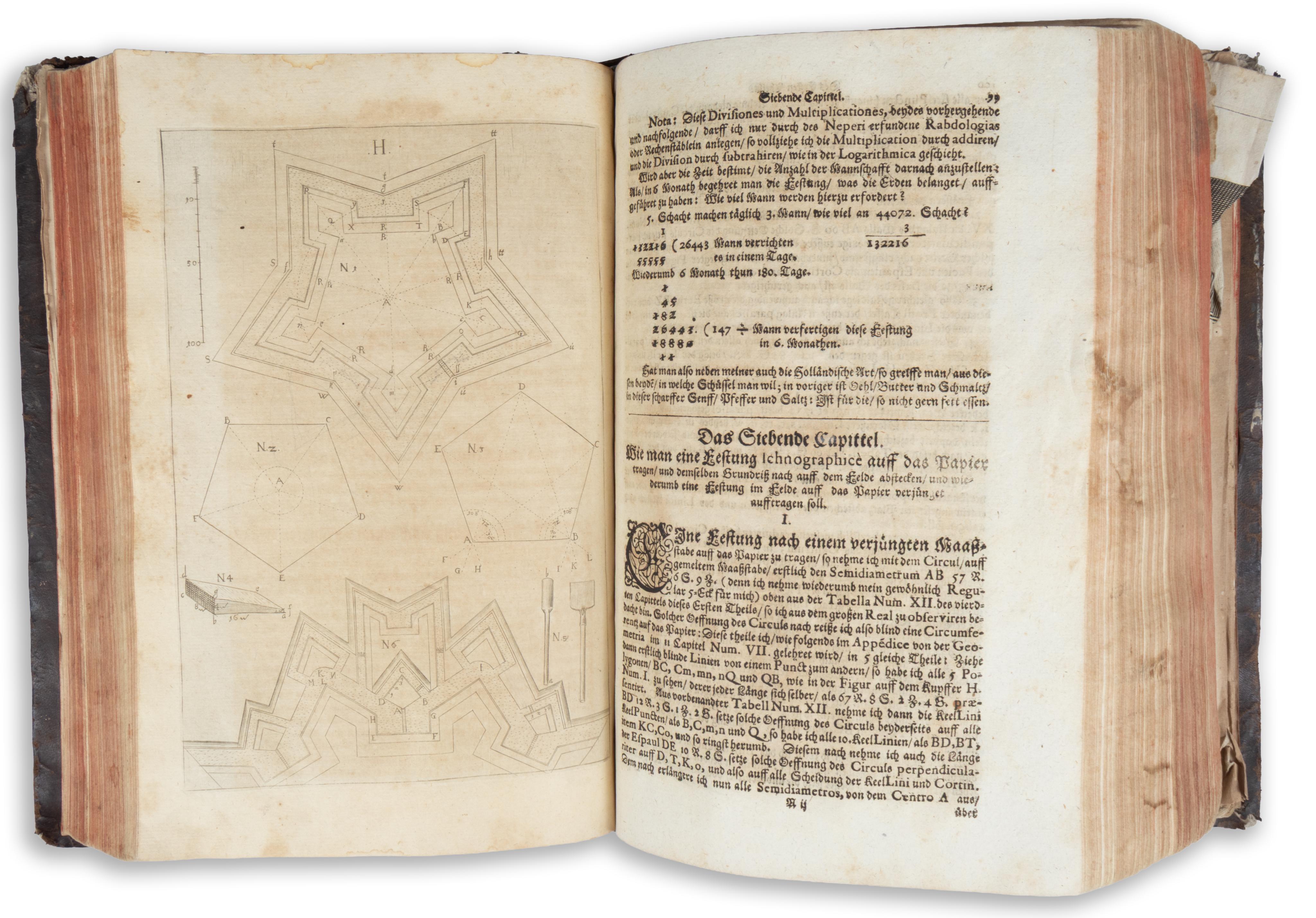
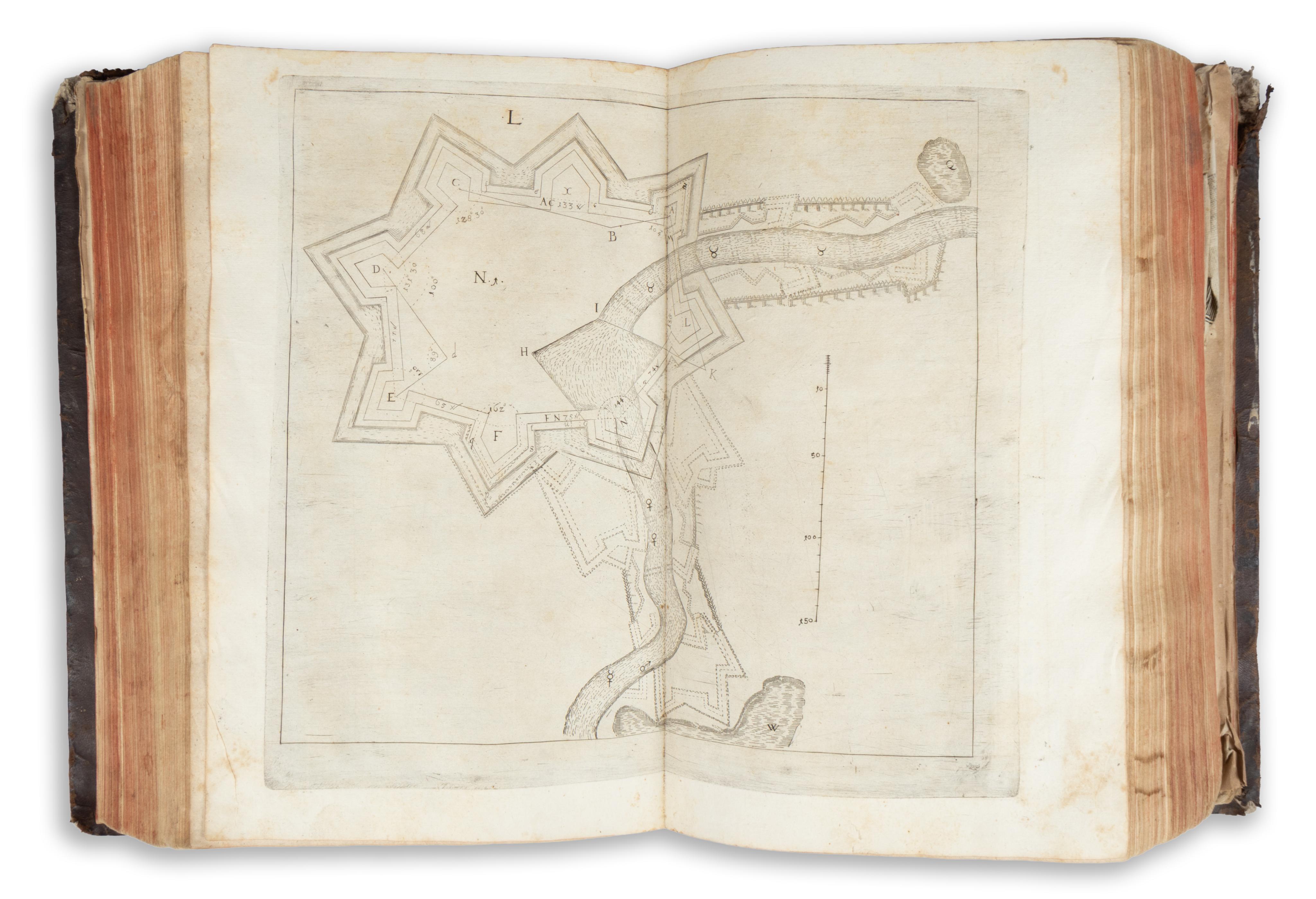
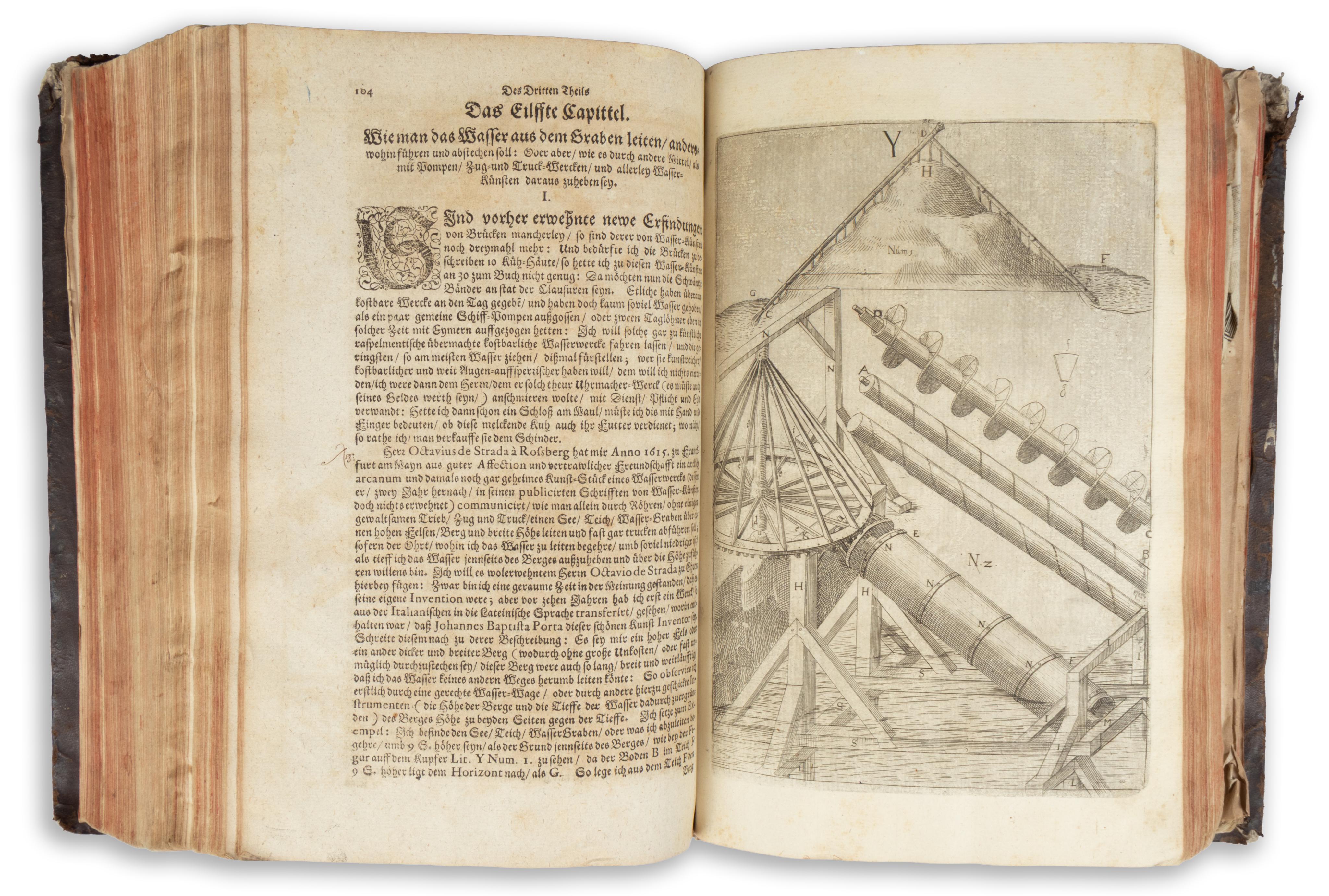
2. Schildknecht, Wendelin: Harmonia in fortalitiis construendis,defendendis & oppugnandis. Das ist: Eine einstimmige, gründliche und außführliche, auch dabey lustige und anmuhtige Beschreibung Festungen zu bawen... I-II.
Alt-Stettin, 1652. Johann Valentin Rheten. [12] + 195 (recte 196) p. + 13 t. + 254 p. + [26] t. (of which 4 t. is foldable).
"Wendelin Schildknecht (1592?–?) Alt-Stettin hadszertárosaként működött, de mégsem a tüzérség, hanem a hadiépítészet témakörében fejtett ki írói tevékenységet. Fiatalon katonának állt, és egész életét a hadseregben töltötte. Művében ő is a szokott sémát követi: szabályos erődítések, szabálytalan erődítések, végül az ostromtechnika, melynek során a szerző azonban csak a várvívás módszereit taglalja. A fennmaradó, amúgy nem csekély, a teljes munka mintegy negyedét kitevő részt a táborozás, a csatarend kialakítása és a taktika kérdéseinek szentelte. Az egyik első szakíró volt, akinek elképzelései már a később általánossá váló vonalharcászat irányába mutattak. Schildknecht nagy erőssége, hogy közérthetően írt, mintegy népszerűsítve az erődépítészet amúgy meglehetősen száraz tudományát. Elképzeléseiben nagyrészt Freitagra támaszkodott (lásd a kolligátum első tételét). Mint a németalföldi iskola követője, ő is nagy hangsúlyt helyezett a terepadottságokhoz való alkalmazkodásra. Mivel mintegy harmincéves tapasztalattal rendelkezett, nem csupán a tervezésről, hanem a gyakorlati kivitelezésről is írt." (Hadtörténeti közlemények 138. évfolyam, 2018, 21. old.)
VD17 12:642696D
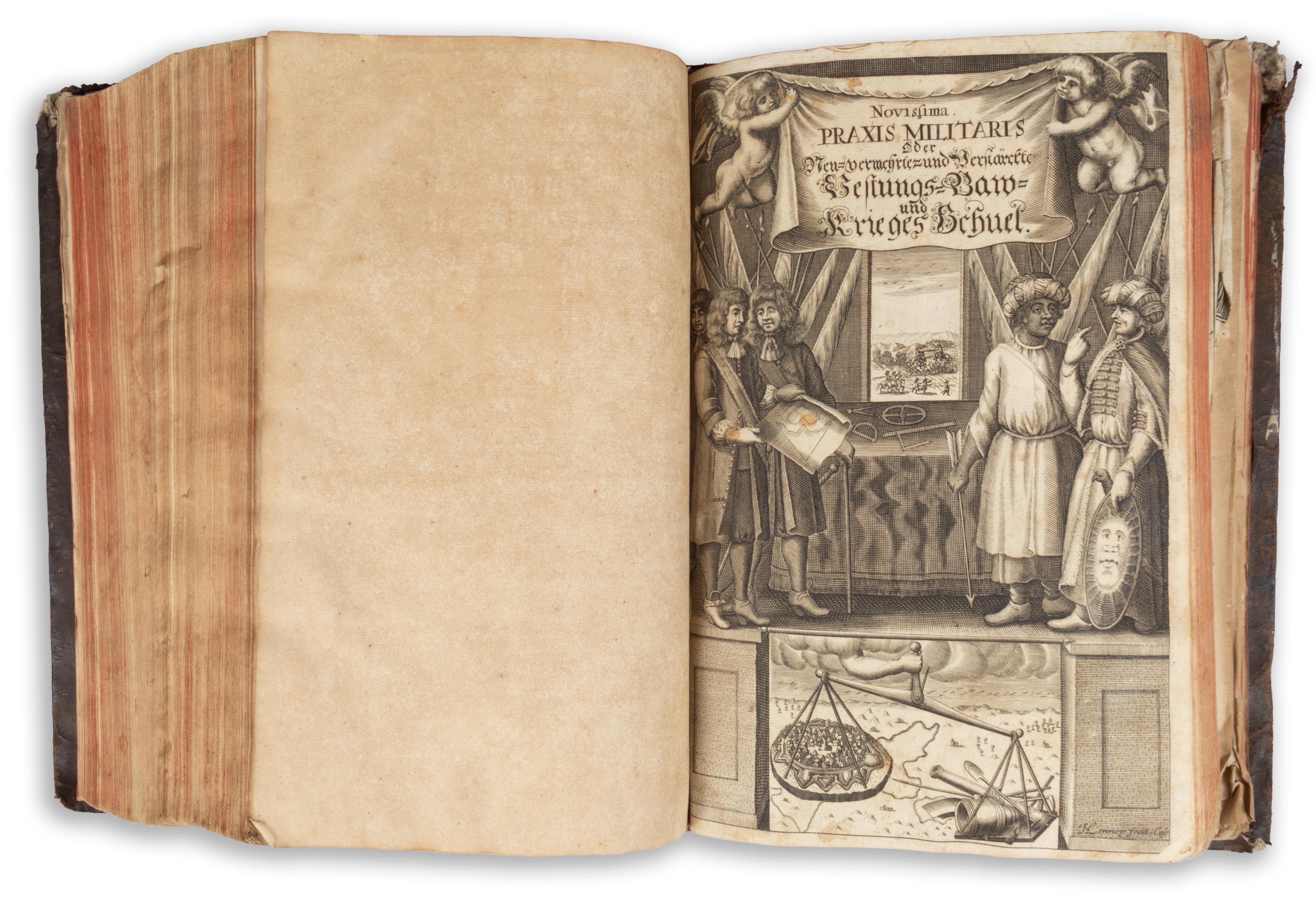
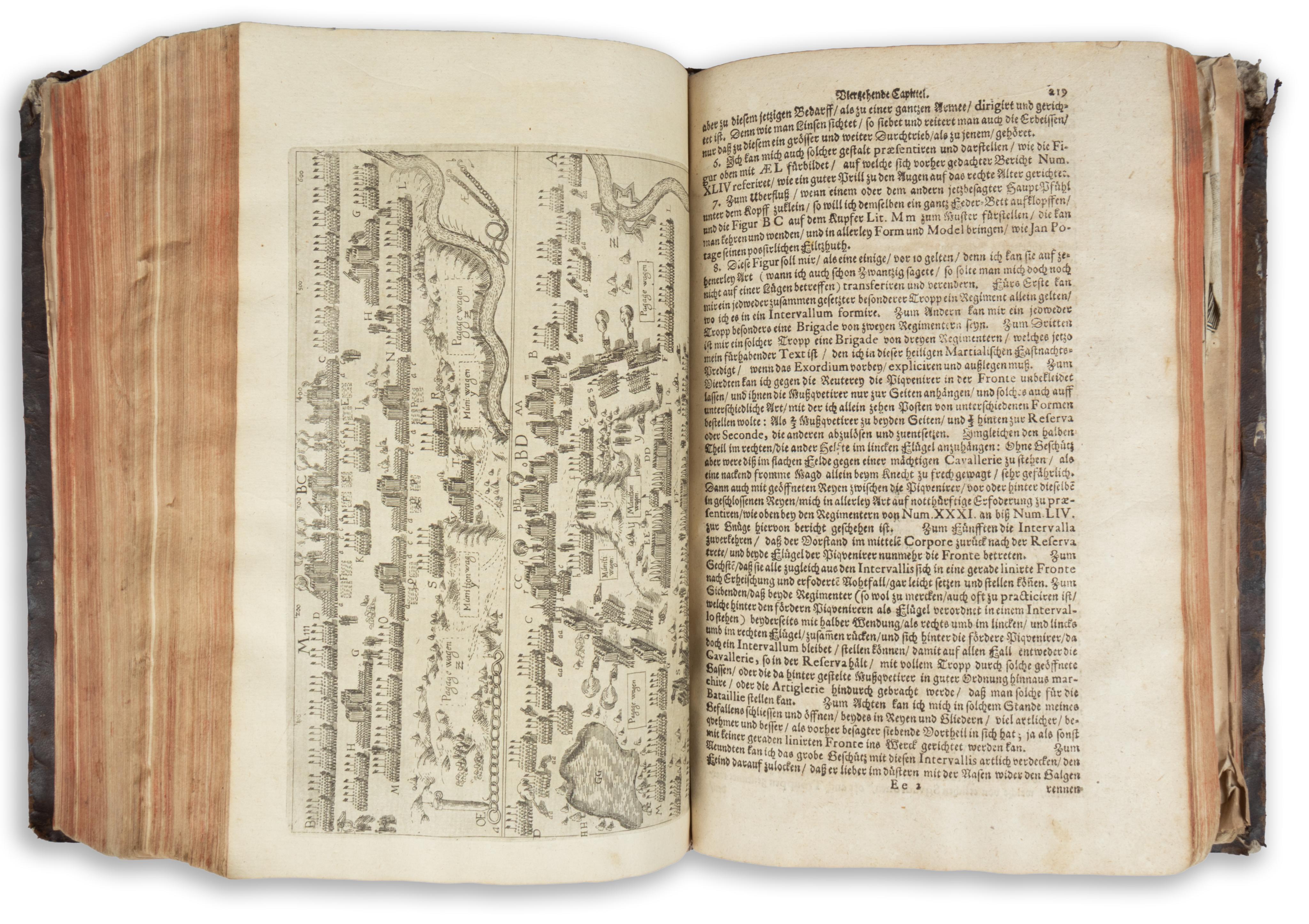
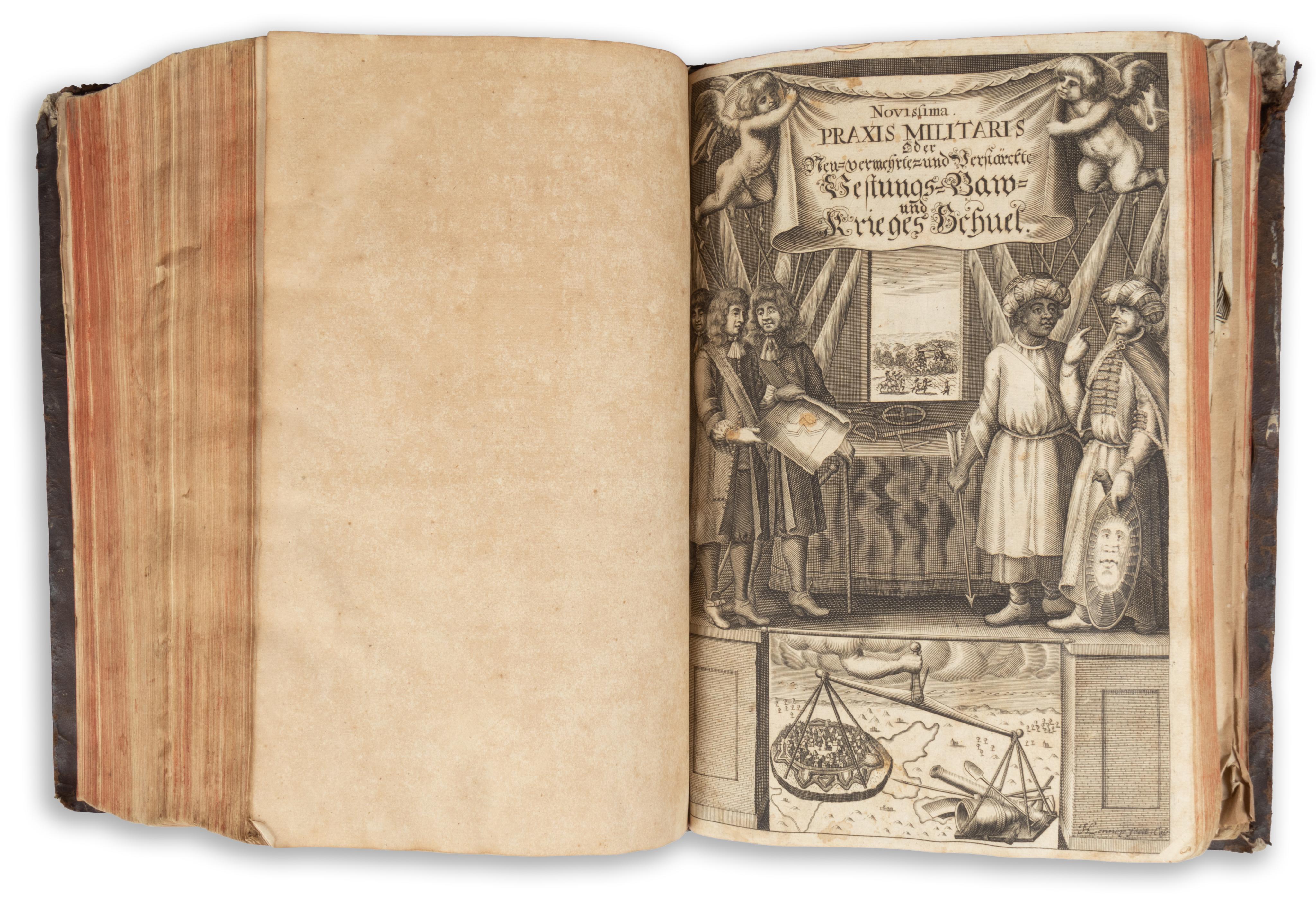
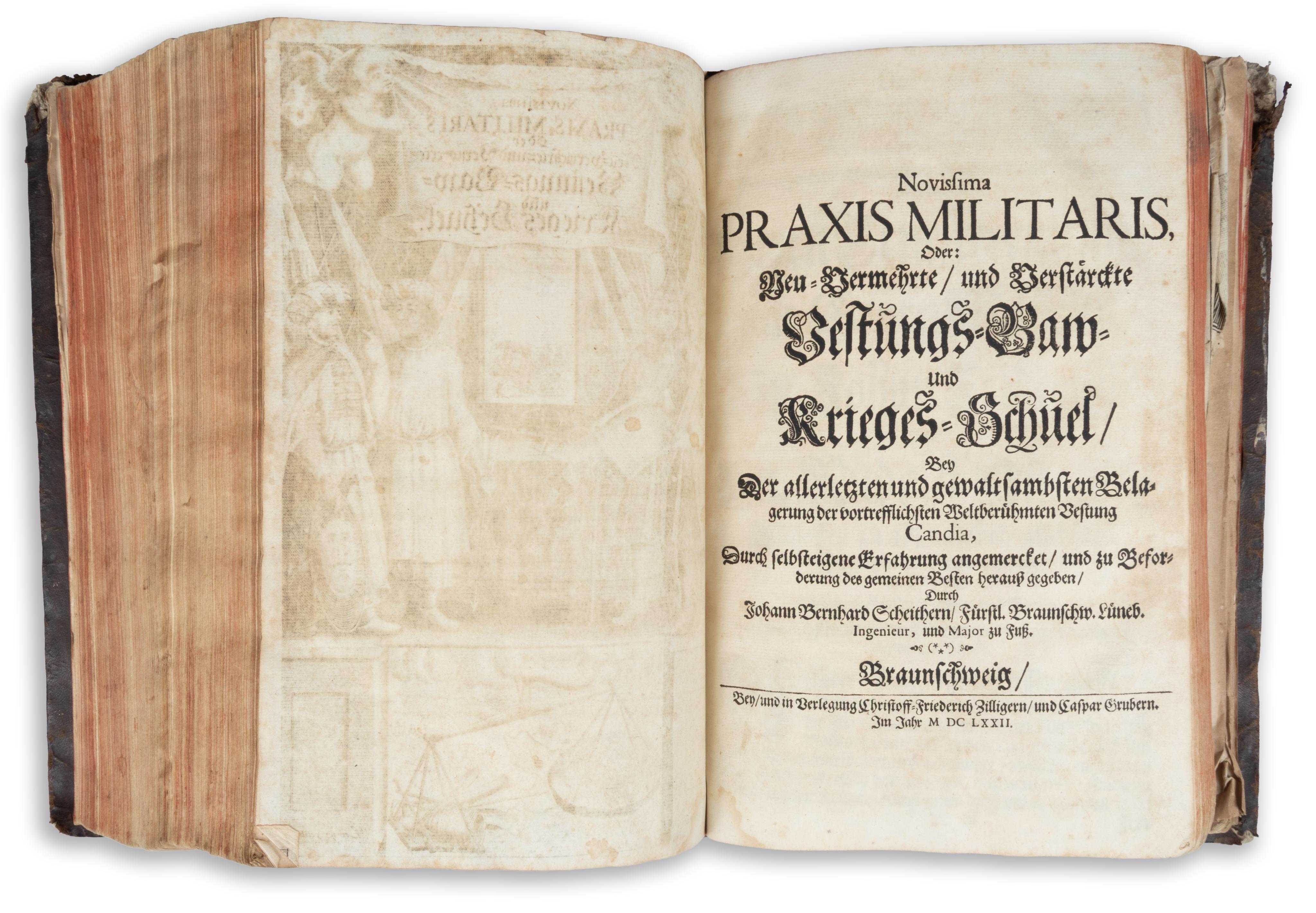
3. Scheither, Johann Bernhard von: Novissima Praxis Militaris, Oder: Neu-Vermehrte, und Verstärckte Vestungs-Baw- Und Krieges-Schuel : Bey Der allerletzten und gewaltsambsten Belagerung der vortrefflichsten Weltberühmten Vestung Candia...
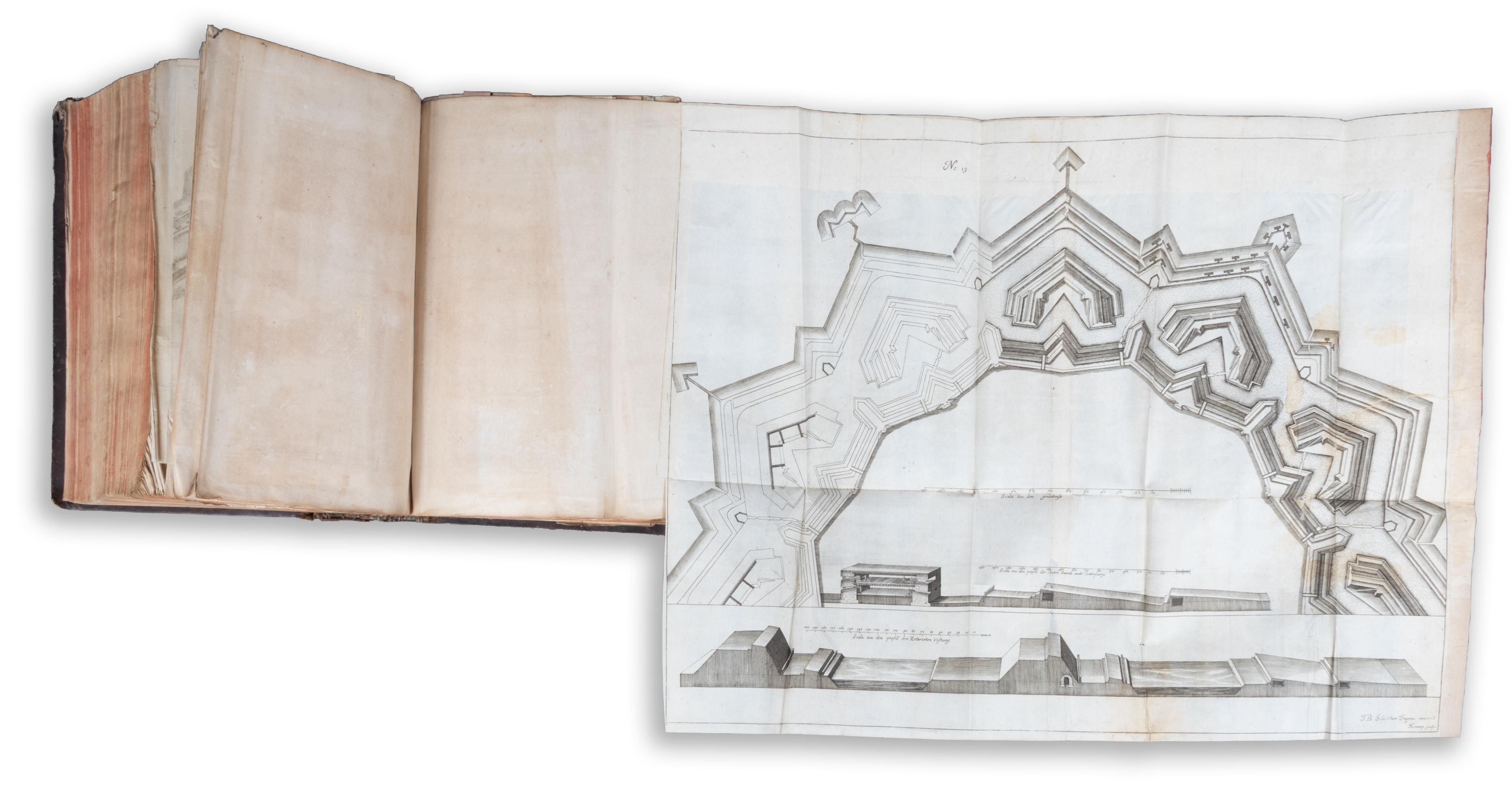
Braunschweig, 1672. Zilliger und Gruber. 1t. (díszcímlap) [6] + 120 p. + 42 rézmetszetű tervvel, alaprajzzal és profilokkal 23 többnyire hajtogatott táblán. 2 tábla (11.,12., 39., 40. számú ábrákat tartalmazó lapok) hiányoznak.
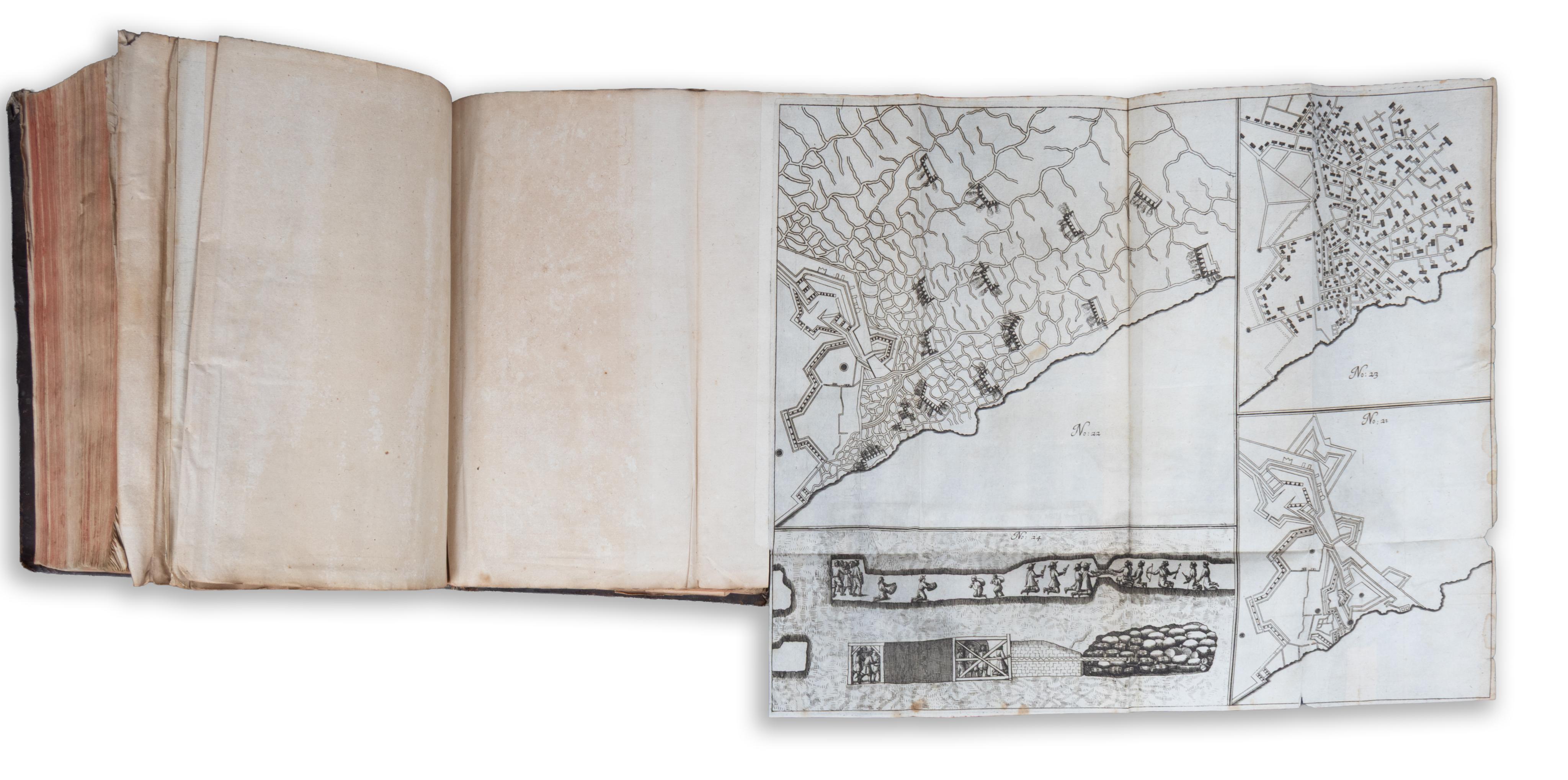
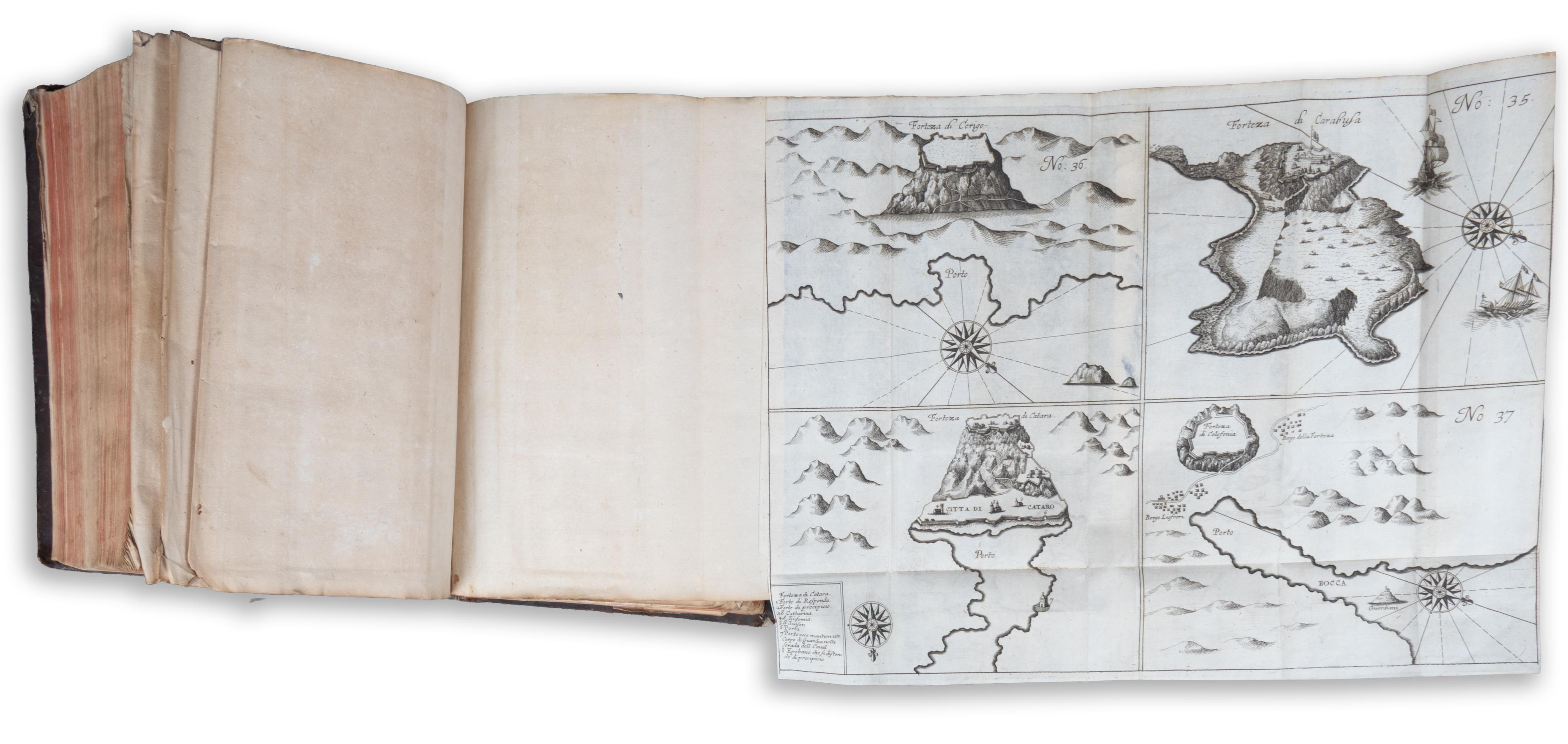
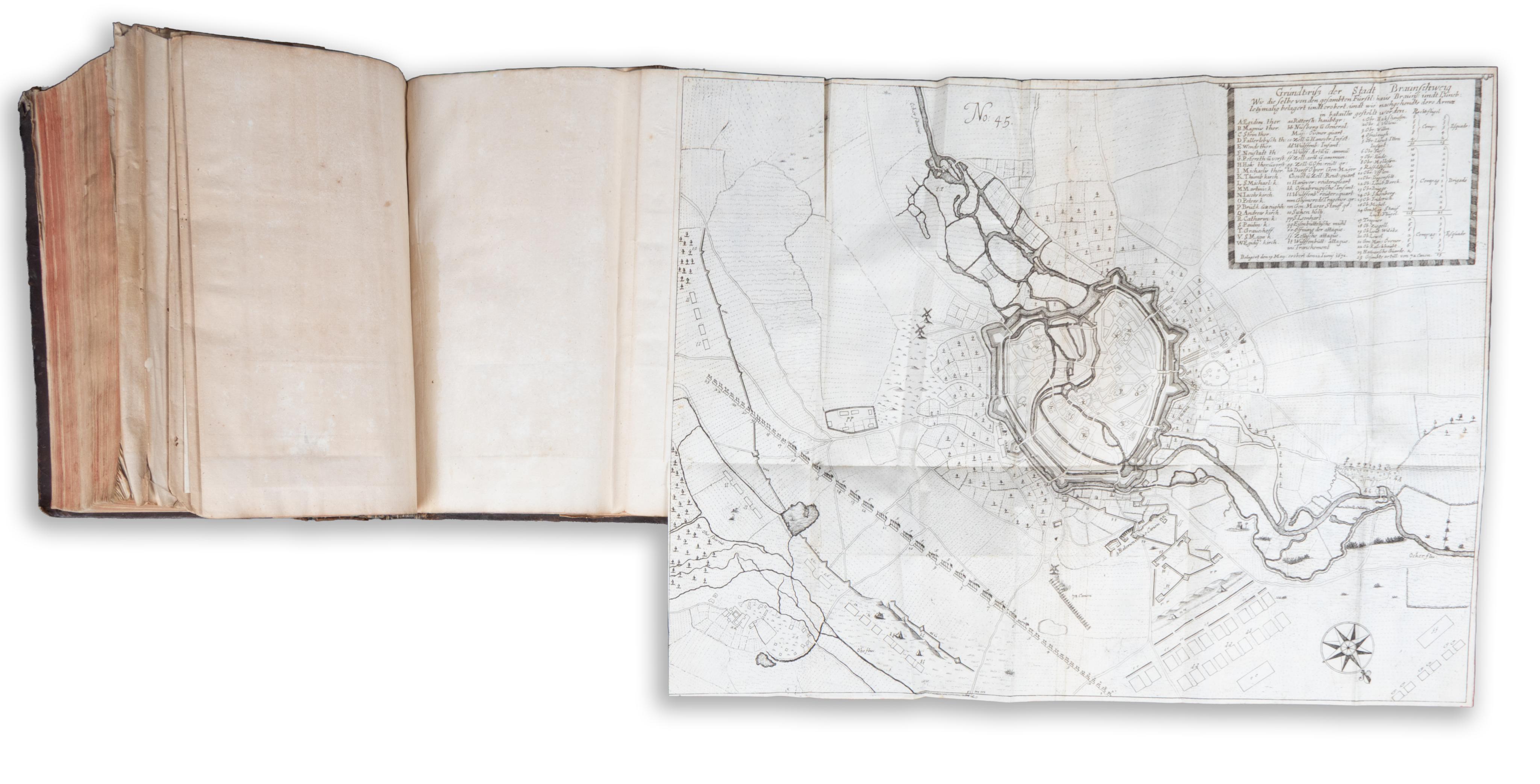
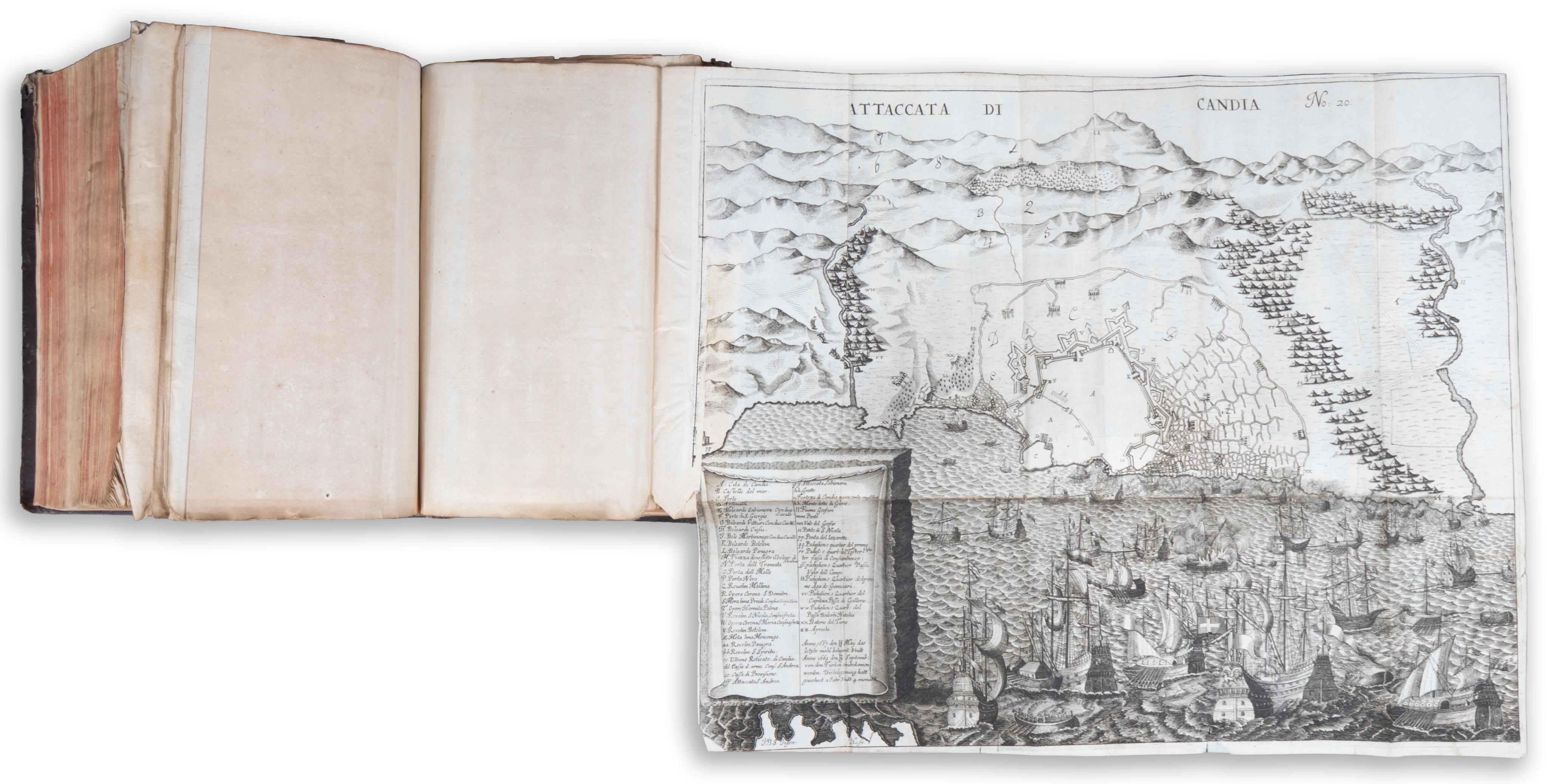
Gazdagon illusztrált mű az erődépítésről, különös tekintettel Kréta ostromára. Scheither mint tiszt és hadmérnök vett részt a braunschweig–lüneburgi segédcsapatokkal Kréta törökök elleni védelmében. A táblák között többek között megtalálható a „Attaccata di Candia” kéthasábos nagy méretű látképe gazdag hajóábrázolással, továbbá Spinalonga, Imeri Gramvousa, Kíthira, Zakinthosz stb. szigetek erődítményei, valamint Braunschweig ostromának terve.
VD 17 23:295343C; Jordan 3379; Jähns 1348 ff.; HAB, Architekt u. Ingenieur 327.
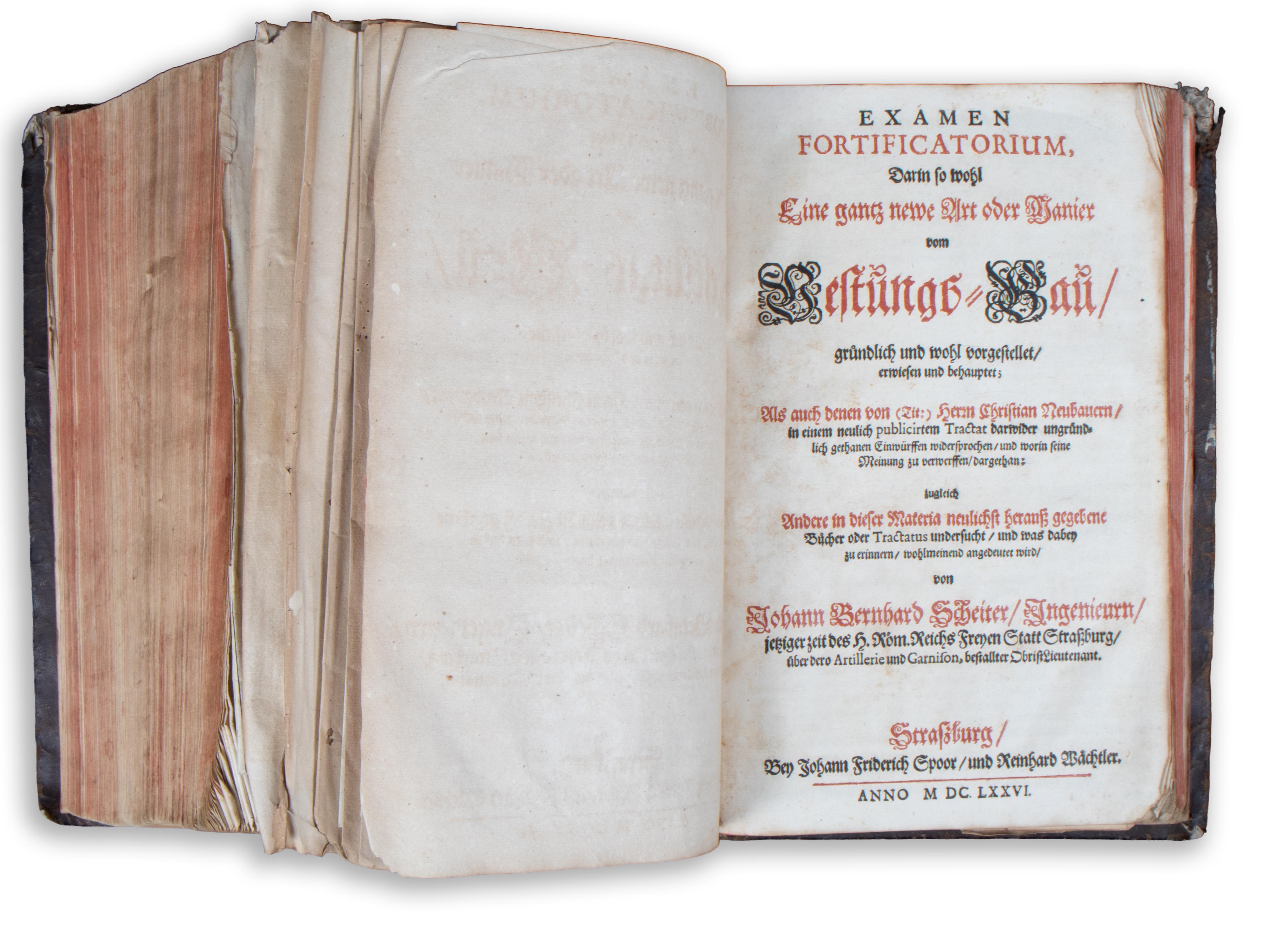
4. Scheither, Johann Berhard von: Examen fortificatorium : darin so wohl eine ganz newe Art oder Manier vom Vestungs-Bau, gründlich und wohl vorgestellet erwiesen und behauptet; als auch dene von (Tit:) Herrn Christian Neubauern, in einem neulich publicirtem Tractat darwider ungründlich gethanen Einwürffen widersprochen, und worin seine Meinung zu verwerffen, dargethan : zugleich andere in dieser Materia neulichst herauss gegebene Bücher oder Tractatus undersucht…
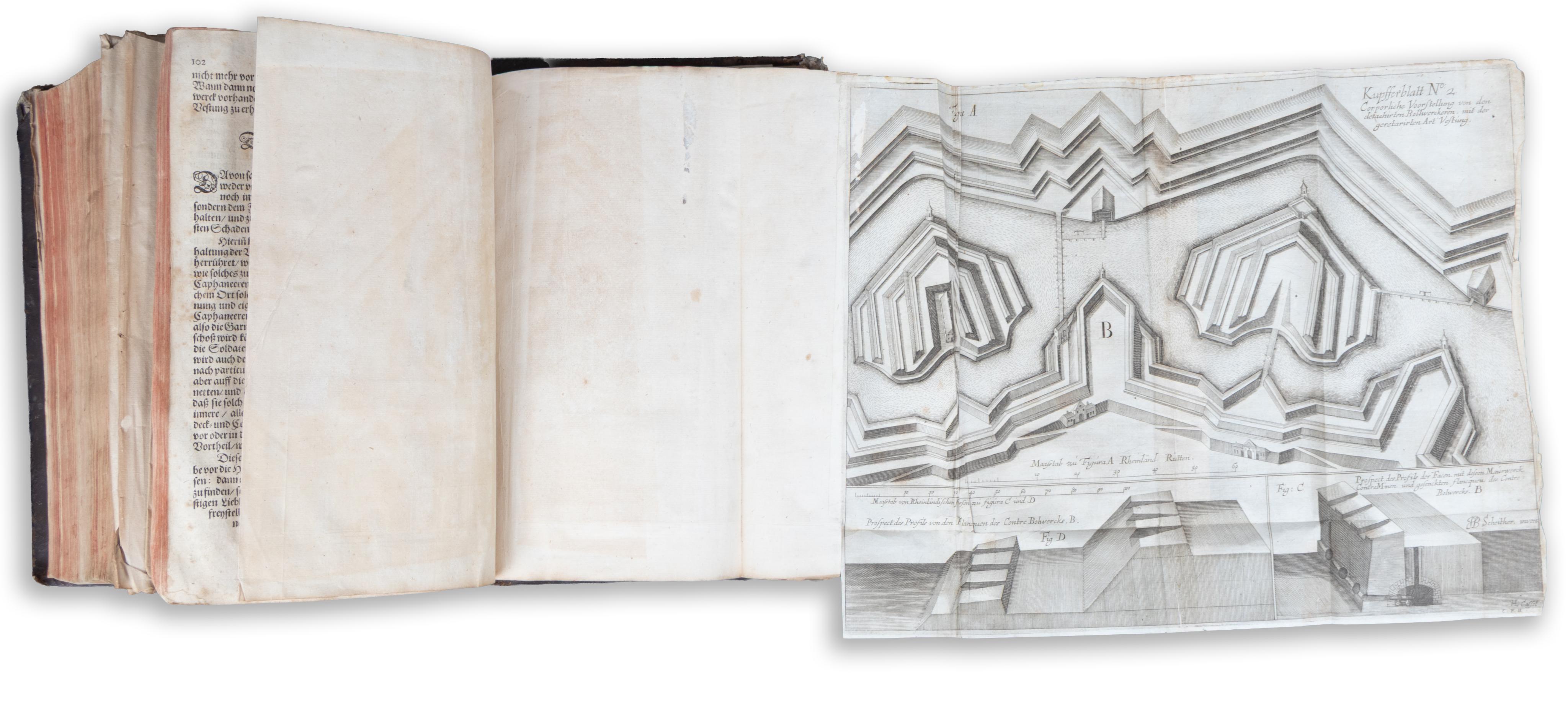
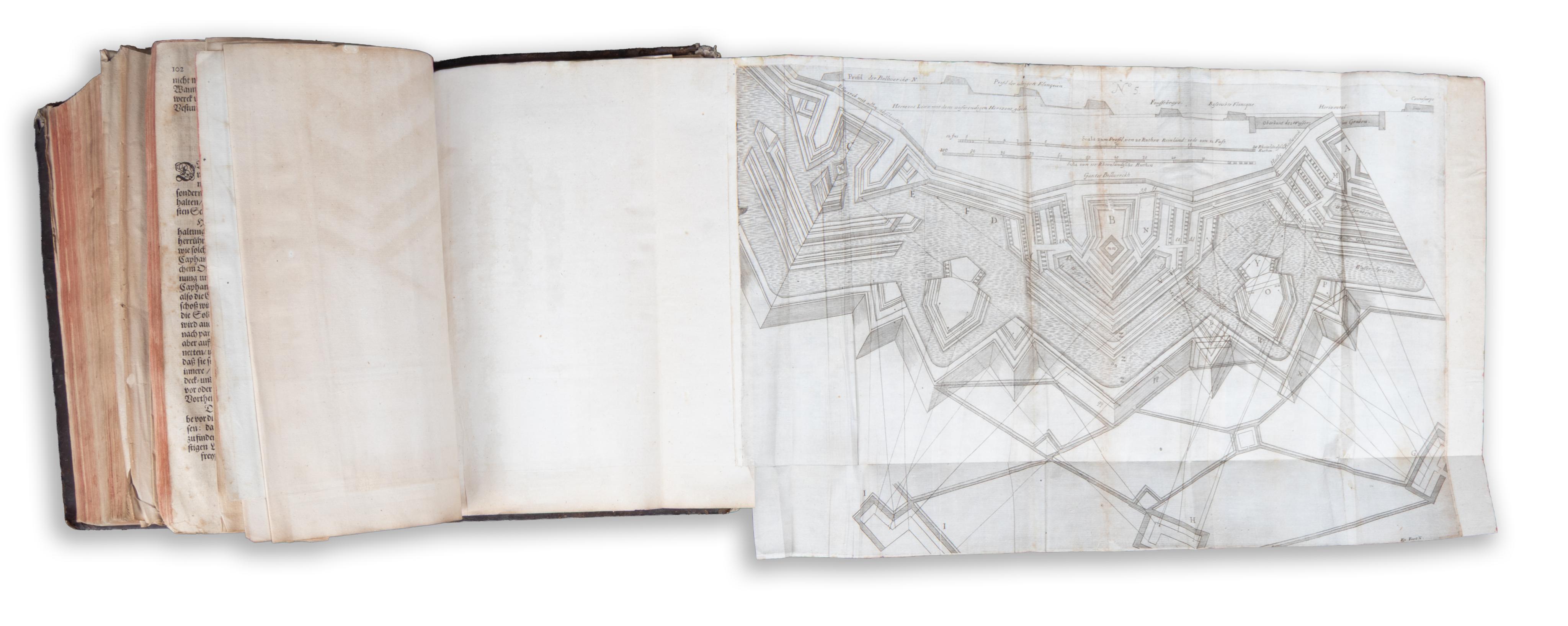
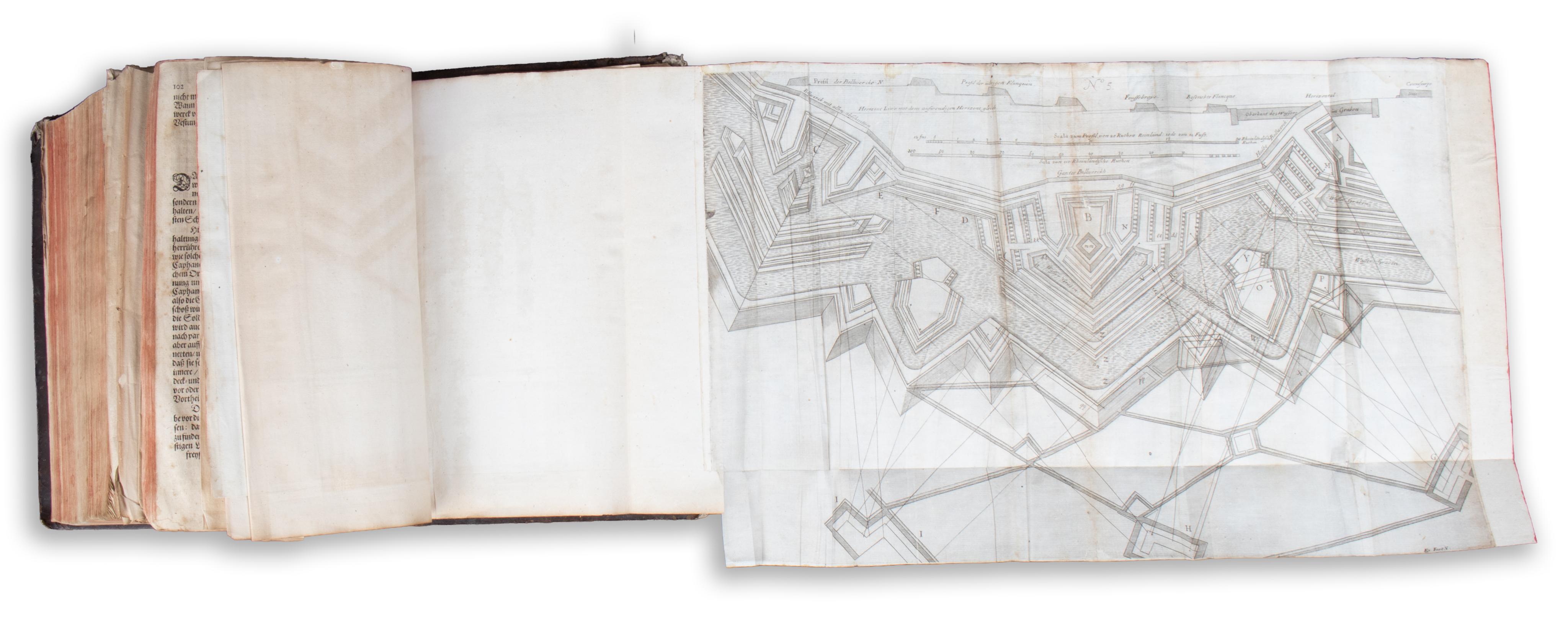
Strassburg, 1676. Johann Friderich Spoor und Reinhard Wächtler. [4] + 102 p. + 8 t. (hajtogatott vagy kétleveles rézmetszetű táblák)
Első kiadás. Következő évben még egy kiadása jelent meg címlapcserés utánnyomással. Johann Bernhard Scheither (?-1677) előző műve miatt, Novissima Praxis militaris (1672) heves támadásban részesült Christian Neubauer részéről, és a jelen művel válaszolt erre. „Két nagy tudású és harcedzett híve az óholland erődítési módnak … éles vitába keveredett. Vitájuk túllépte a tudományos diszkusszió kereteit, és elsőbbségi vitává vált arról, melyik módszer a legerősebb és egyben a legköltséghatékonyabb. Más szakszerzők is bekapcsolódtak.” (HAB, p. 48, a vonatkozó írások és ellenírások felsorolásával.)
VD 17 23:321627Y; Jordan 240; HAB, Architekt u. Ingenieur S. 374, Nr. 328; Jähns 1350
XVIII. századi egészbőr kötésben, bordázott és aranyozott gerinc, aranyozott bőrcímvognettával. A gerinc felső és alsó része enyhén sérült. A táblák kopottasak. Belül helyenkénti foxing, pár hajtogatott táblánál szakadások és gyűrődések. A négy mű így egyben igazi hadtörténeti ritkáságnak számít, amely lefedi a XVII. századi ostromirodalom jelentős részét.
1. Freitag, Adam: Architectura militaris nova et aucta, oder newe vermehrte fortification...: auff die neweste Niederländische praxin gerichtet und beschrieben, durch -.-, der Mathematum liebhabern. I-III.
Leyden, 1631. Elzevier. 1 t. (engraved decorative title) + [6] + 194 [recte 186] + [2] + 35 t. (double‑page engraved plates) + 8 t. (double‑page tables).
First edition. Immediately after its publication, contemporaries recognized it as one of the fundamental works on fortification. The author, known as ‘le célèbre Fritach’, saw eight editions of his book: four in German (1631, 1635, 1642, 1665) and four in French (1635, 1640, 1657, 1668). The final edition still closely corresponded to the German editio princeps, published by the prestigious Leiden publisher Bonaventura and Abraham Elsevier.
The principles presented in the book—often referred to as the ‘Freytag method’—essentially reflected the general and standardized form of the so-called Old Netherlands fortification system, with which the author became acquainted in the circles of military engineers in Leiden. This system exerted significant influence on engineers across Europe—from the Netherlands to Poland and Scandinavia, and even to England and Portugal—as well as in the design of numerous colonial cities (primarily Dutch and Portuguese) in Africa, Asia, and the Americas.
In this case, theory and practice reinforced each other: Freitag’s book contributed to the codification and dissemination of the Dutch system, while the success of the fortifications built according to this method further increased the demand for his book.
Walther 54. Winterthur 458. Goldsmid II, 49. Rahir 533. Berghman 649. Copinger 1772. Karl & Faber 30, 351. Lengfeld 16. Lengertz 288.
2. Schildknecht, Wendelin: Harmonia in fortalitiis construendis,defendendis & oppugnandis. Das ist: Eine einstimmige, gründliche und außführliche, auch dabey lustige und anmuhtige Beschreibung Festungen zu bawen... I-II.
Alt-Stettin, 1652. Johann Valentin Rheten.
Wendelin Schildknecht (1592?–?) served as an ordnance officer in Alt-Stettin, yet it was not artillery but military architecture in which he produced written works. He joined the army at a young age and spent his entire life in military service. In his book, he follows the usual structure: regular fortifications, irregular fortifications, and finally siege techniques, although in the latter case, the author discusses only the methods of besieging fortresses. The remaining part, amounting to roughly one quarter of the entire work, is devoted to the issues of encampment, the formation of battle order, and tactics. He was among the first military writers whose ideas already pointed towards the linear tactics that would later become widespread. Schildknecht’s great strength lies in his clear and accessible writing style, effectively popularising the otherwise rather dry science of fortification. In his conceptions, he relied largely on Freitag (see the first item of the colligate volume). As a follower of the Dutch school, he too placed great emphasis on adapting plans to the features of the terrain. Possessing around thirty years of experience, he wrote not only about design but also about practical execution.” (Hadtörténeti Közlemények, Vol. 138, 2018, p. 21)
VD17 12:642696D
3. Scheither, Johann Bernhard von: Novissima Praxis Militaris, Oder: Neu-Vermehrte, und Verstärckte Vestungs-Baw- Und Krieges-Schuel : Bey Der allerletzten und gewaltsambsten Belagerung der vortrefflichsten Weltberühmten Vestung Candia...
Braunschweig, 1672. Zilliger und Gruber. 1t. (engraved titlepage) [6] + 120 p. + With 42 engraved plans, fortifications, sieges, and fortification profiles on 23 mostly folded plates. Two plates (the leaves containing engravings 11, 12, 39 and 40) are missing.
A richly illustrated work on fortification, with particular emphasis on the siege of Crete. Scheither, serving as an officer and engineer, took part in the defence of Crete against the Turks with the Brunswick–Lüneburg auxiliary troops. Among the plates is the large, double-page view of ‘Attaccata di Candia’ with its richly detailed depiction of ships, as well as the fortifications on the islands of Spinalonga, Imeri Gramvousa, Kythira, Zakynthos, and others, together with a siege plan of Brunswick.
VD 17 23:295343C; Jordan 3379; Jähns 1348 ff.; HAB, Architekt u. Ingenieur 327.
4. Scheither, Johann Berhard von: Examen fortificatorium : darin so wohl eine ganz newe Art oder Manier vom Vestungs-Bau, gründlich und wohl vorgestellet erwiesen und behauptet; als auch dene von (Tit:) Herrn Christian Neubauern, in einem neulich publicirtem Tractat darwider ungründlich gethanen Einwürffen widersprochen, und worin seine Meinung zu verwerffen, dargethan : zugleich andere in dieser Materia neulichst herauss gegebene Bücher oder Tractatus undersucht…
Strassburg, 1676. Johann Friderich Spoor und Reinhard Wächtler. [4] + 102 p. + 8 t. (folded or double‑page engraved plates).
First edition. The following year, another edition was published with a replaced title page. Johann Bernhard Scheither (?-1677), due to his previous work, Novissima Praxis militaris (1672), was fiercely attacked by Christian Neubauer, and he responded with the present work. "Two highly knowledgeable and battle‑experienced adherents of the Old Dutch method of fortification … became involved in a sharp dispute. Their debate went beyond the scope of a scholarly discussion and turned into a priority dispute over which method was the strongest and most cost‑effective. Other expert authors also joined in.’ (HAB, p. 48, with a listing of related writings and counter‑writings.)”
VD 17 23:321627Y; Jordan 240; HAB, Architekt u. Ingenieur S. 374, Nr. 328; Jähns 1350
In an 18th-century full leather binding, with raised bands and gilt spine, and a gilt leather spine label. The upper and lower parts of the spine are slightly damaged. The boards are somewhat worn. Inside, occasional foxing; some of the folded plates show tears and creases. Taken together, the four works form a true rarity of military history, covering a substantial portion of 17th-century siege literature.