

Epistolae familiares. De Duobus amantibus Euryalo et Lucretia. Descriptio urbis Viennensis.
Nürnberg, 1486. Anton Koberger.______________________________________________
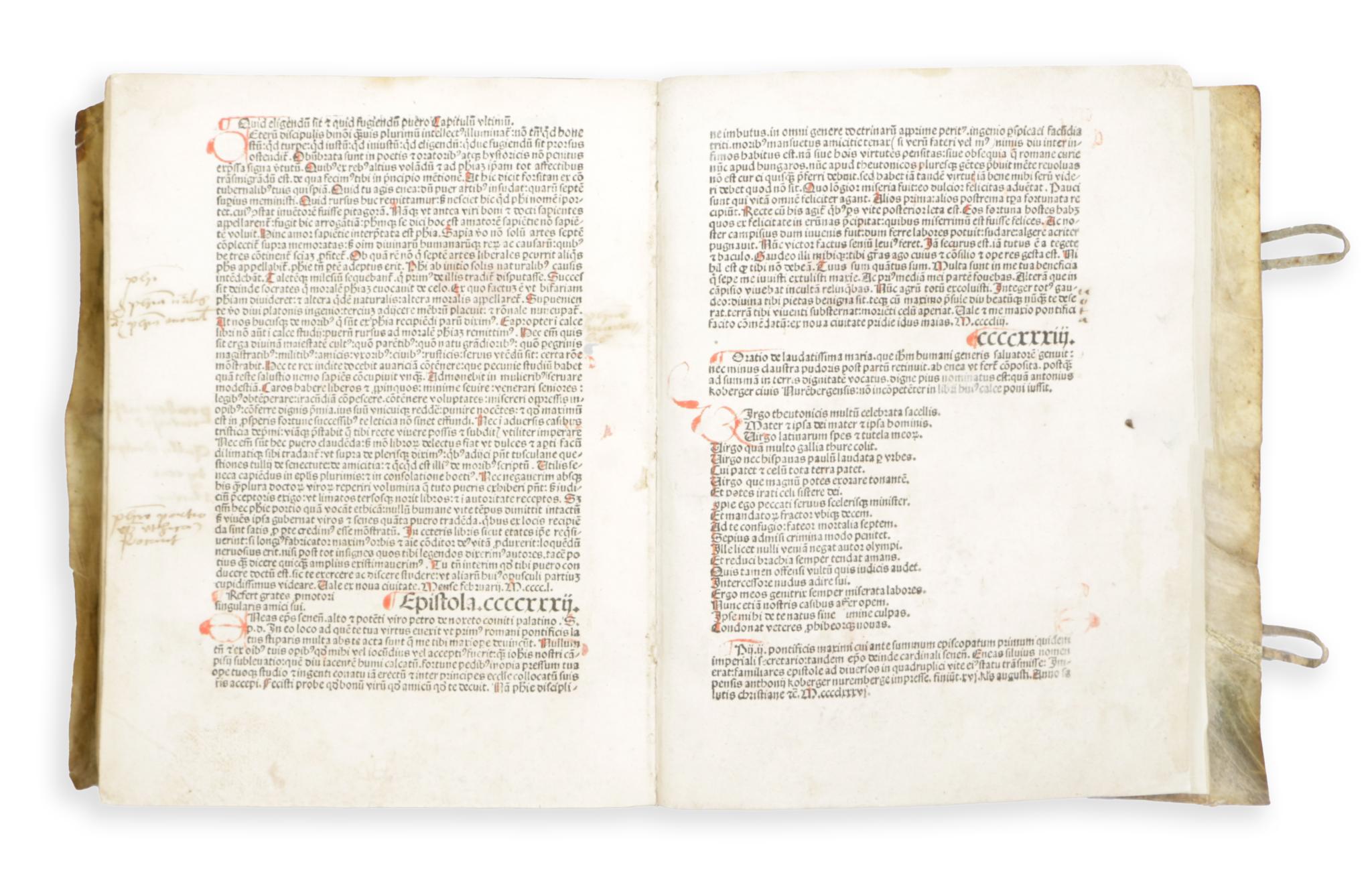
Cím és impresszum az utolsó 245a levélen: Pij ij pontificis maximi cui ante summum episcopatumprimum quidem imperiali secreta rio: tandem episcopo deinde cardinali senensi. Eneas siluius nomen erat, familiäres epistole ad diuersos in quadruplici vite eius statu trans misse: Impensis Antonij Koburger Nure[m]berge, imp[re]sse finiu[n]t xvj k[a]l[enda]s Octobris [16 Sept.] anno salutis Christiane [et] c[etera] Mcccclxxxvi [1486]
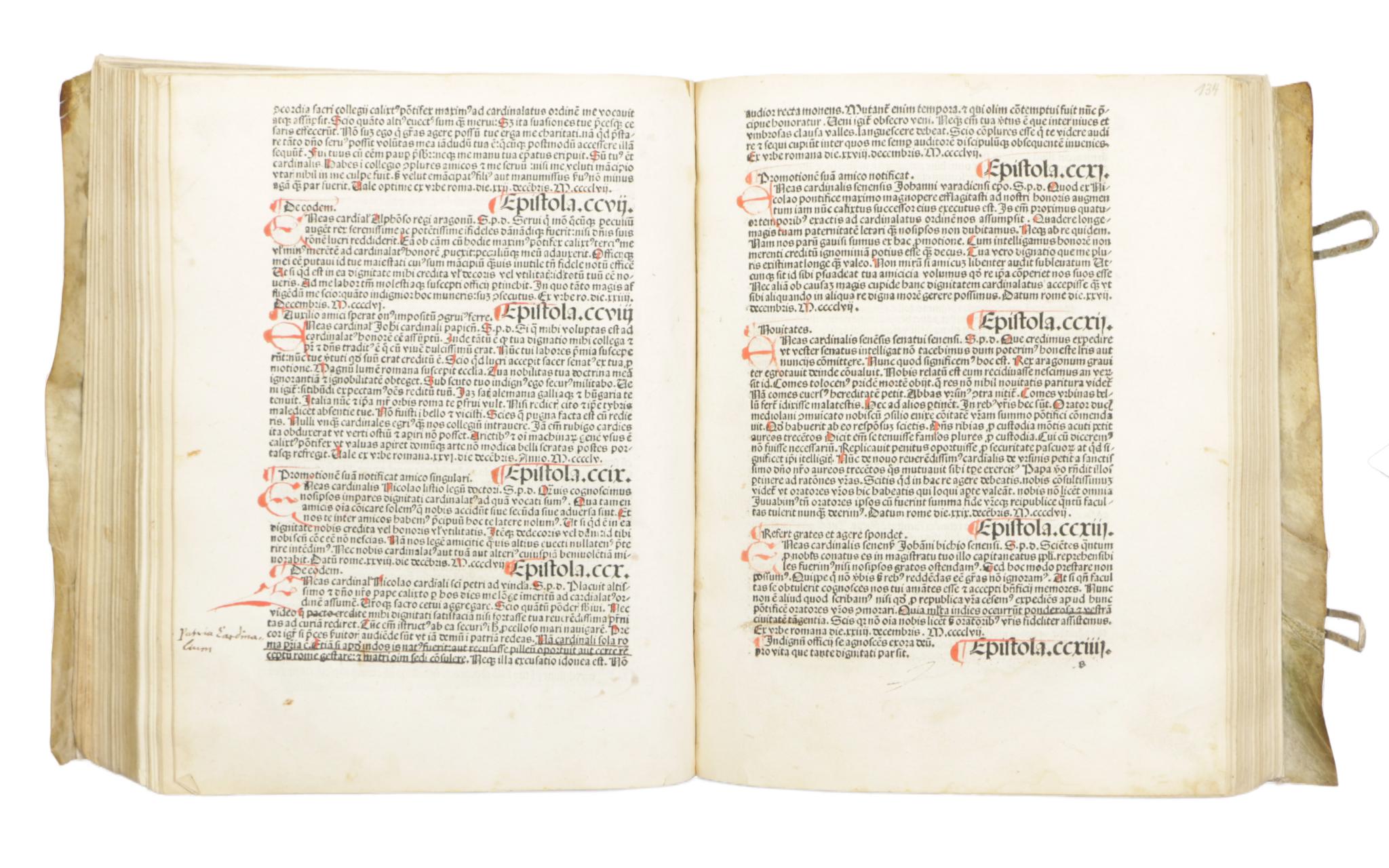
Ívrétű, 245 számozatlan levélből álló nyomtatvány díszes gót betűkkel, egyhasábos szedéstükörrel és csinosan festett piros iniciálékkal. A levelek sem szignaturával, sem custosokkal, sem számjegyekkel nincsenek jelölve. A könyv lapjain végig korabeli, kéziratos marginalizálással.
A szerző II. Piusz pápa, született Enea Silvio Bartolomeo Piccolomini, 1458. augusztus 19-től haláláig a katolikus egyház feje és a pápai államok uralkodója volt. Aeneas Silvius néven író, diplomata és szónok, valamint V. Félix antipápa, majd III. Frigyes császár, majd IV. Eugénius pápa magántitkára volt. Pápaként a humanizmus korának eszményképe volt. Igazi reneszánsz polihisztor, a régészet és a művészet pártolója, mindemellett az emberi élet elkötelezett híve.
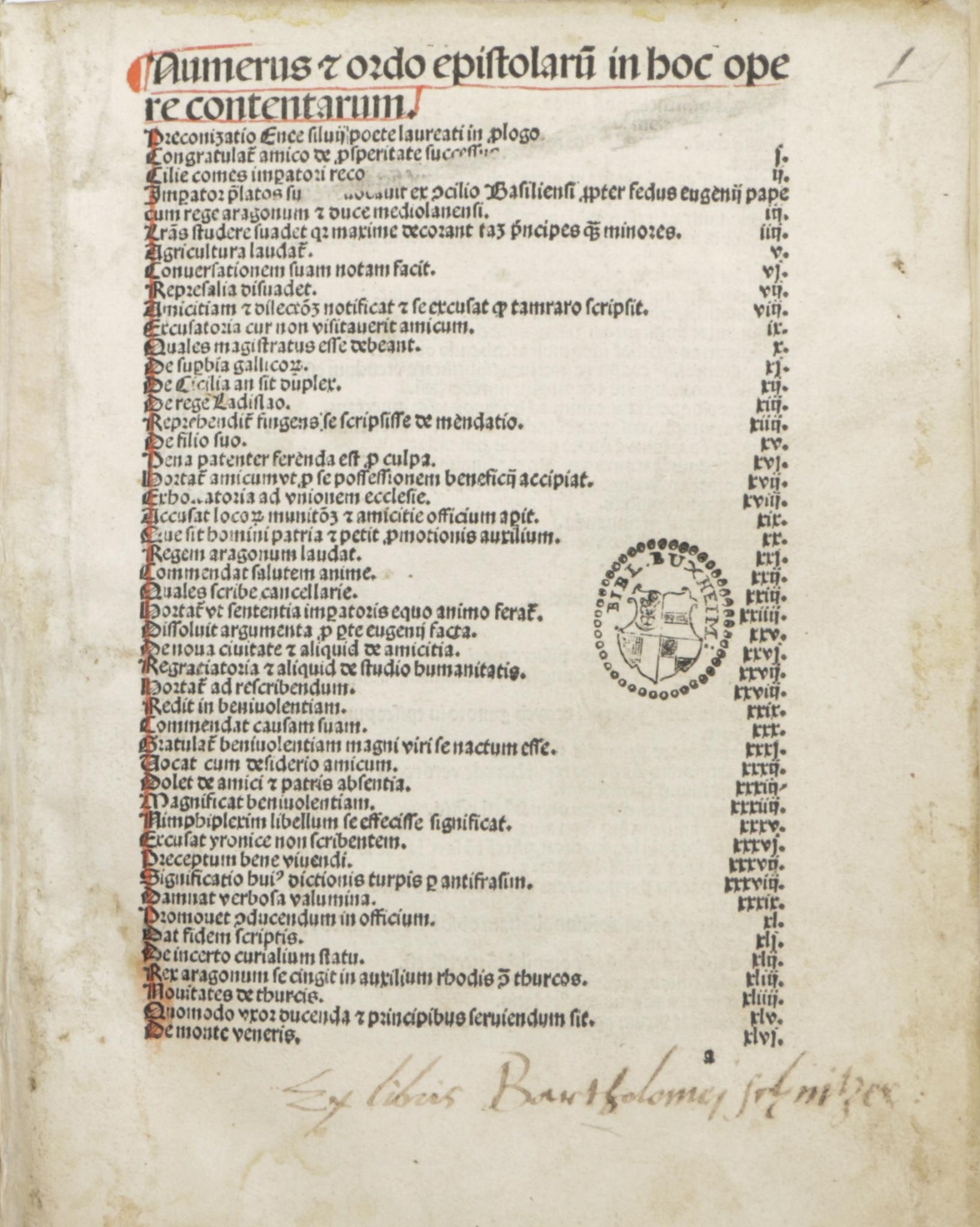
A könyv Aeneas Sylvius levelezéseit tartalmazza összesen 432 epistolában. Külön címlapja nincs, hanem mindjárt : »Numerus et ordo epistolarum in hoc opere contentarum« felirattal, a tartalomjegyzékkel kezdődik. E tartalomjegyzékben mintegy 30 magyar vagy magyarországi vonatkozású bejegyzés olvasható: »De rege Ladislao... 52. lev. »Bello thurcorum et vngarorum rex polouie et cardinalis... 63. Nouitates vngarie et de conventu nurembergensi. 78. Hortatur legatos regni vngarie vt Ladislaum absque conditione regein recipiant. 81. Ungari spreto Ladislao regni herede verő regis polonie... 93. De rebus vngarie et ecclesie auizamentum…
A 21. levélen minimális hiány a 107. levél javított, egy-kettőn kisebb folt.
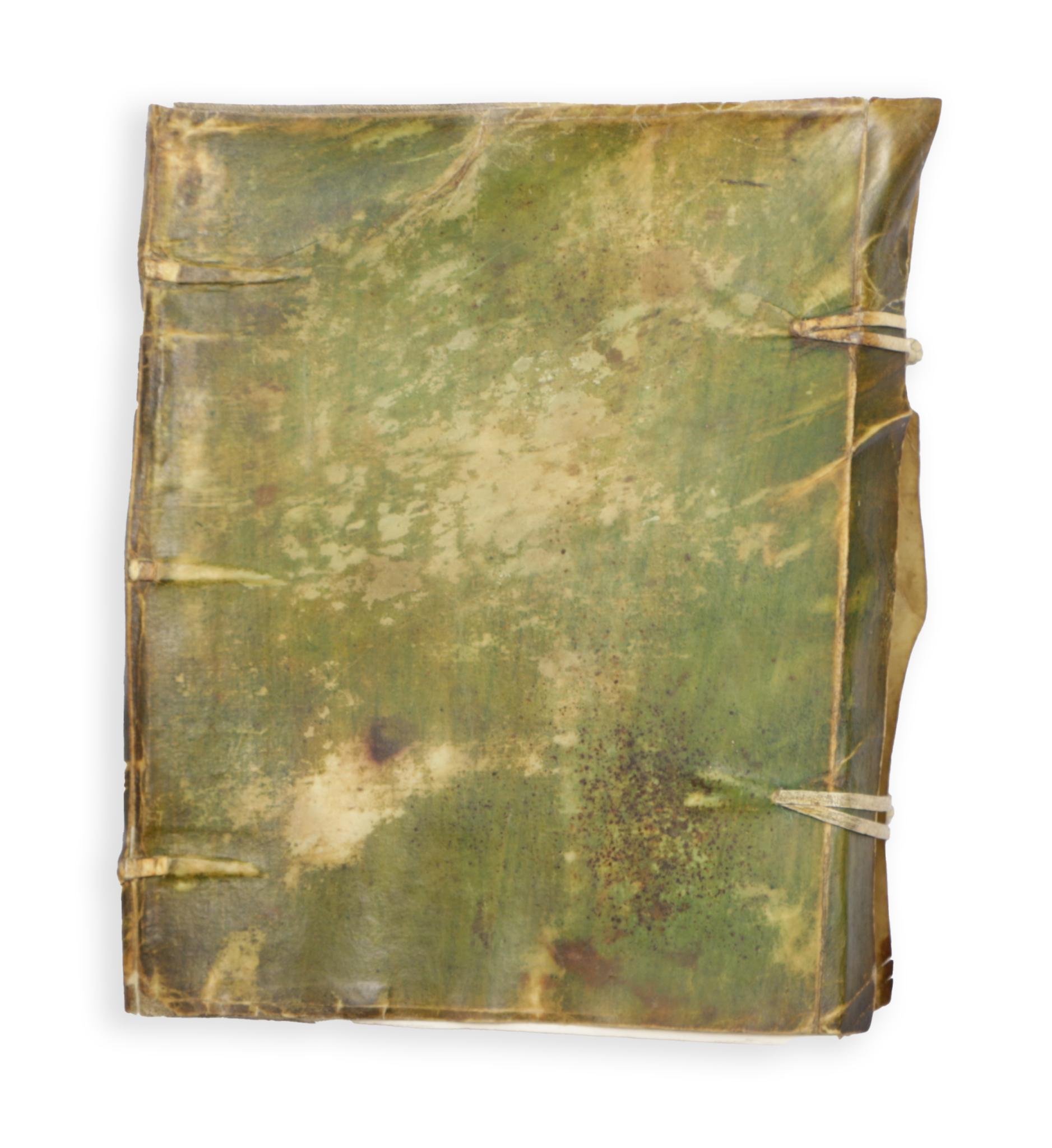
Korabeli, javított pergamenkötésben, új előzékekkel és két zsinóros átkötő hurokkal. Nagyon szép példány, rendkívül ritka értékes ősnyomtatvány magyar vonatkozásokkal.
ISTC No. ip00719000; Goff P719; Sajó-Soltész 2744; HC 154*; Pell 94; Hillard 1634; Zehnacker 1888; IBP 4455; Kotvan 971;
(Magyar Könyvszemle Ötödik évfolyam 1. füzet, 1880. 27-34o.)
Pij ij pontificis maximi cui ante summum episcopatumprimum quidem imperiali secreta rio: tandem episcopo deinde cardinali senensi. Eneas siluius nomen erat, familiäres epistole ad diuersos in quadruplici vite eius statu trans misse: Impensis Antonij Koburger Nure[m]berge, imp[re]sse finiu[n]t xvj k[a]l[enda]s Octobris [16 Sept.] anno salutis Christiane [et] c[etera] Mcccclxxxvi [1486]
Folio, a printed work consisting of 245 unnumbered leaves with ornate Gothic letters, a single-column text block and neatly painted red initials. The leaves are marked with neither signatures, nor catchwords, nor numerals. Throughout the pages of the book, there is contemporary handwritten marginalization.
The author is Pope Pius II, born Enea Silvio Bartolomeo Piccolomini, head of the Catholic Church and ruler of the Papal States from August 19, 1458, until his death. Writing under the name Aeneas Silvius, he was a diplomat and orator, as well as private secretary to Antipope Felix V, then Emperor Frederick III, and subsequently Pope Eugenius IV. As Pope, he was the ideal of the age of humanism. A true Renaissance polymath, a patron of archaeology and the arts, and alongside all this, a committed devotee of human life.
The book contains the correspondence of Aeneas Sylvius in a total of 432 epistles. It has no separate title page, but rather begins immediately with the table of contents under the inscription: »Numerus et ordo epistolarum in hoc opere contentarum«.
In this table of contents, some 30 entries regarding Hungarians or Hungary can be read:
»De rege Ladislao... (fol. 52)
»Bello thurcorum et vngarorum rex polouie et cardinalis... (fol. 63)
»Nouitates vngarie et de conventu nurembergensi. (fol. 78)
»Hortatur legatos regni vngarie vt Ladislaum absque conditione regein recipiant. (fol. 81)
»Ungari spreto Ladislao regni herede verő regis polonie... (fol. 93)
»De rebus vngarie et ecclesie auizamentum…
On the 21st leaf, minimal loss; the 107th leaf is repaired; on one or two, a smaller stain.
In contemporary, repaired parchment binding, with new endpapers and two cord tie loops. A very beautiful copy, an extremely rare, valuable incunable with Hungarian references.
ISTC No. ip00719000; Goff P719; Sajó-Soltész 2744; HC 154; Pell 94; Hillard 1634; Zehnacker 1888; IBP 4455; Kotvan 971;